


Metagenomic Approaches for Public Health Surveillance of Foodborne Infections: Opportunities and Challenges
Supporting Files
Public Domain

-
June 06 2019
-
File Language:
English
Details
-
Alternative Title:Foodborne Pathog Dis
-
Personal Author:
-
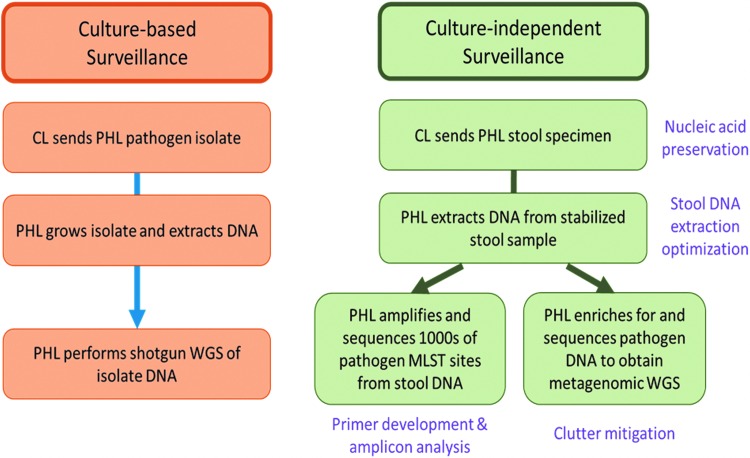
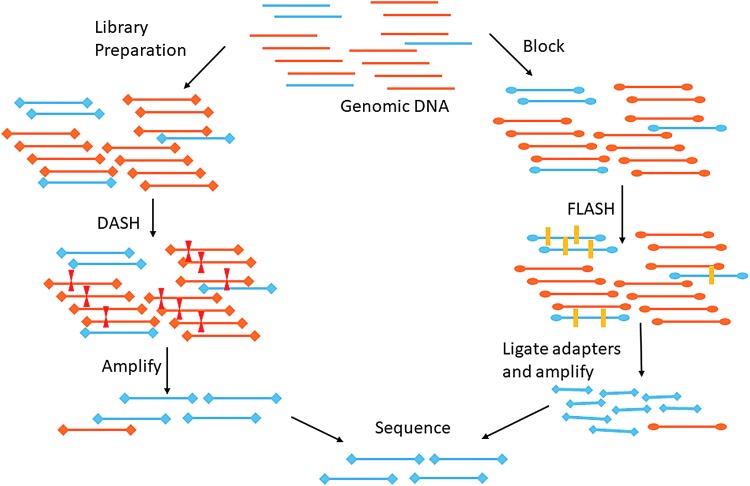
Description:Foodborne disease surveillance in the United States is at a critical point. Clinical and diagnostic laboratories are using culture-independent diagnostic tests (CIDTs) to identify the pathogen causing foodborne illness from patient specimens. CIDTs are molecular tests that allow doctors to rapidly identify the bacteria causing illness within hours. CIDTs, unlike previous gold standard methods such as bacterial culture, do not produce an isolate that can be subtyped as part of the national molecular subtyping network for foodborne disease surveillance, PulseNet. Without subtype information, cases can no longer be linked using molecular data to identify potentially related cases that are part of an outbreak. In this review, we discuss the public health needs for a molecular subtyping approach directly from patient specimen and highlight different approaches, including amplicon and shotgun metagenomic sequencing.
-
Subjects:
-
Source:Foodborne Pathog Dis. 2019; 16(7):474-479
-
Pubmed ID:31170005
-
Pubmed Central ID:PMC6653786
-
Document Type:
-
Volume:16
-
Issue:7
-
Collection(s):
-
Main Document Checksum:urn:sha256:d3f0f9c2250111d61fe07c315d19e68dccef41fdf04f44211cb052c0dcd28395
-
Download URL:
-
File Type:
 [PDF
- 338.95 KB
]
[PDF
- 338.95 KB
]


File Language:
English
ON THIS PAGE


CDC STACKS serves as an archival repository of CDC-published products including
scientific findings,
journal articles, guidelines, recommendations, or other public health information authored or
co-authored by CDC or funded partners.
As a repository, CDC STACKS retains documents in their original published format to ensure public access to scientific information.
As a repository, CDC STACKS retains documents in their original published format to ensure public access to scientific information.
You May Also Like
COLLECTION
CDC Public Access