


Prostate Cancer in World Trade Center Responders Demonstrate Evidence of an Inflammatory Cascade
Supporting Files

-
8 2019
-
File Language:
English
Details
-
Journal Article:Mol Cancer Res
-
Personal Author:Gong, Yixuan ; Wang, Li ; Yu, Haocheng ; Alpert, Naomi ; Cohen, Mitchell D. ; Prophete, Colette ; Horton, Lori ; Sisco, Maureen ; Park, Sung-Hyun ; Lee, Hyun-Wook ; Zelikoff, Judith ; Chen, Lung-Chi ; Suarez-Farinas, Mayte ; Donovan, Michael ; Aaronson, Stuart A. ; Galsky, Matthew ; Zhu, Jun ; Taioli, Emanuela ; Oh, William K.
-
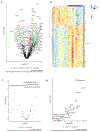
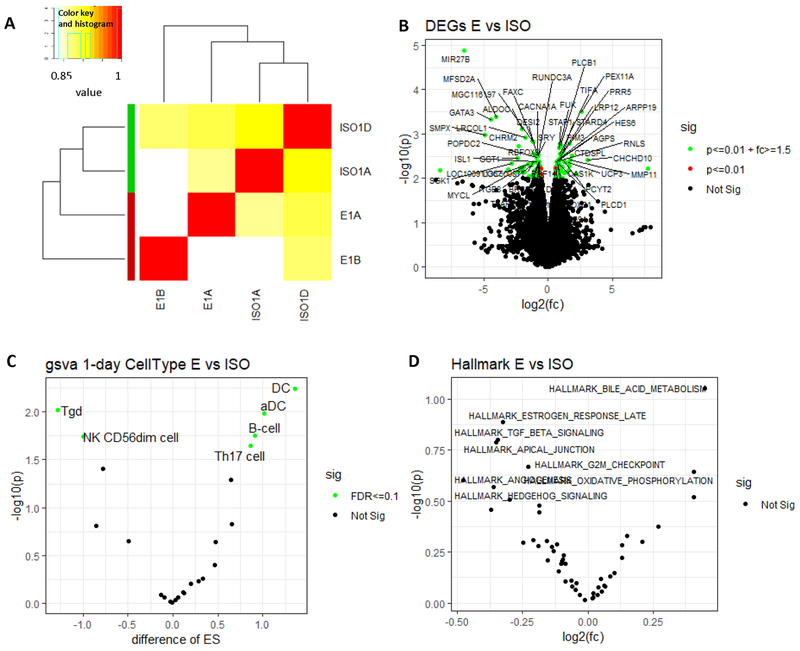
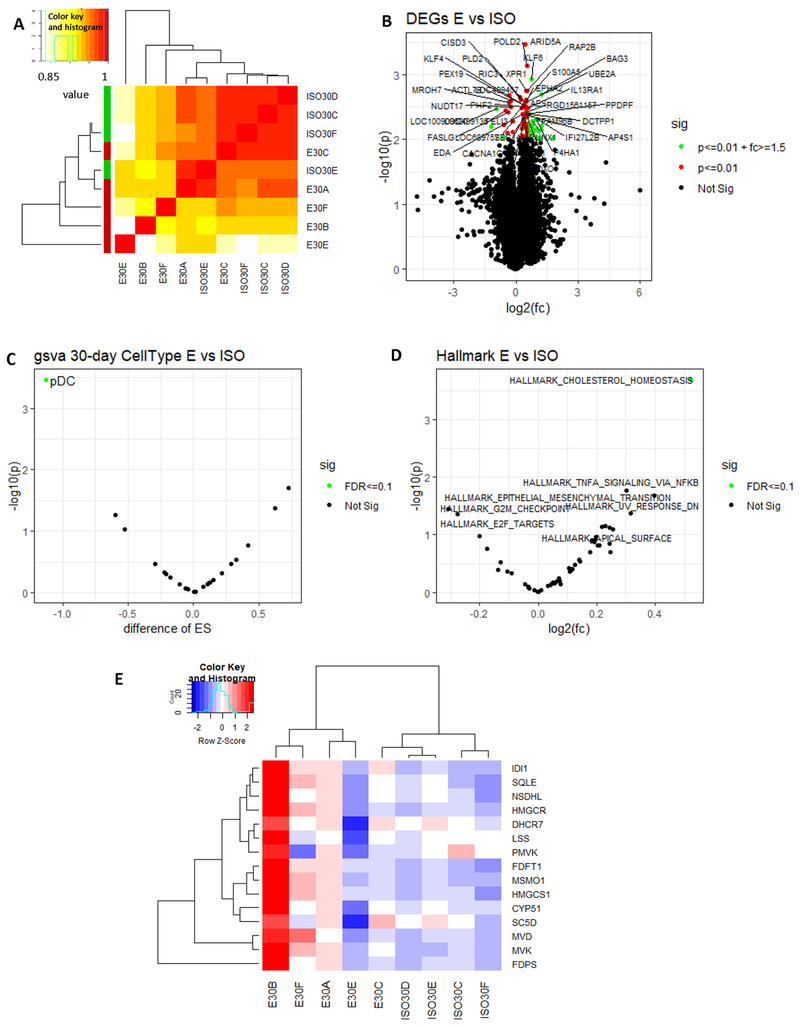
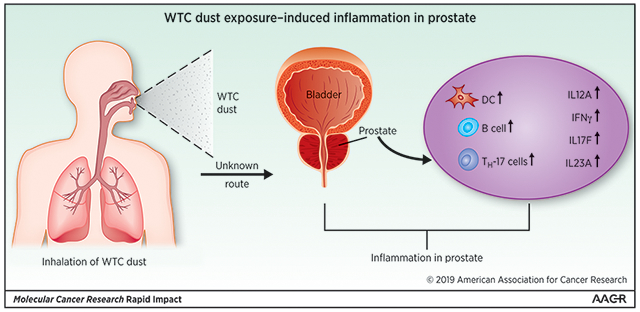
Description:An excess incidence of prostate cancer has been identified among World Trade Center (WTC) responders. In this study, we hypothesized that WTC dust, which contained carcinogens and tumor-promoting agents, could facilitate prostate cancer development by inducing DNA damage, promoting cell proliferation, and causing chronic inflammation. We compared expression of immunologic and inflammatory genes using a NanoString assay on archived prostate tumors from WTC Health Program (WTCHP) patients and non-WTC patients with prostate cancer. Furthermore, to assess immediate and delayed responses of prostate tissue to acute WTC dust exposure via intratracheal inhalation, we performed RNA-seq on the prostate of normal rats that were exposed to moderate to high doses of WTC dust. WTC prostate cancer cases showed significant upregulation of genes involved in DNA damage and G|-M arrest. Cell-type enrichment analysis showed that Th17 cells, a subset of proinflammatory Th cells, were specifically upregulated in WTC patients. In rats exposed to WTC dust, we observed upregulation of gene transcripts of cell types involved in both adaptive immune response (dendritic cells and B cells) and inflammatory response (Th17 cells) in the prostate. Unexpectedly, genes in the cholesterol biosynthesis pathway were also significantly upregulated 30 days after acute dust exposure. Our results suggest that respiratory exposure to WTC dust can induce inflammatory and immune responses in prostate tissue. IMPLICATIONS: WTC-related prostate cancer displayed a distinct gene expression pattern that could be the result of exposure to specific carcinogens. Our data warrant further epidemiologic and cellular mechanistic studies to better understand the consequences of WTC dust exposure.| http://mcr.aacrjournals.org/content/molcanres/17/8/1605/F1.large.jpg.
-
Subjects:
-
Keywords:
-
Source:Mol Cancer Res. 17(8):1605-1612
-
DOI:
-
Pubmed ID:31221798
-
Pubmed Central ID:PMC6684261
-
Document Type:
-
Funding:U01 OH010396/OH/NIOSH CDC HHSUnited States/ ; P30 ES000260/ES/NIEHS NIH HHSUnited States/ ; U01 OH011328/OH/NIOSH CDC HHSUnited States/ ; U01OH010396/ACL/ACL HHSUnited States/ ; R01 OH010921/OH/NIOSH CDC HHSUnited States/ ; R21 ES026731/ES/NIEHS NIH HHSUnited States/ ; R01OH010921/ACL/ACL HHSUnited States/
-
Genre:
-
Volume:17
-
Issue:8
-
Collection(s):
-
Main Document Checksum:urn:sha-512:567184bd36dae54a3675a99d7d4c6e547b977d3e0332fd61f8ac552468655a78c6102da05f1c5d4896f51d3f1f91d020f5e5edc30facfc8707f8c7bd4afdf780
-
Download URL:
-
File Type:
 [PDF
- 1.39 MB
]
[PDF
- 1.39 MB
]
Supporting Files


File Language:
English
ON THIS PAGE


CDC STACKS serves as an archival repository of CDC-published products including
scientific findings,
journal articles, guidelines, recommendations, or other public health information authored or
co-authored by CDC or funded partners.
As a repository, CDC STACKS retains documents in their original published format to ensure public access to scientific information.
As a repository, CDC STACKS retains documents in their original published format to ensure public access to scientific information.
You May Also Like
COLLECTION
CDC Public Access