



Rapid Bioorthogonal Chemistry Enables in Situ Modulation of Stem Cell Behavior in 3D without External Triggers
Supporting Files

-
July 30 2018
-
Available in CDC Stacks on August 08, 2019, 12:00 AM
File Language:
English
Details
-
Alternative Title:ACS Appl Mater Interfaces
-
Personal Author:
-
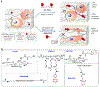
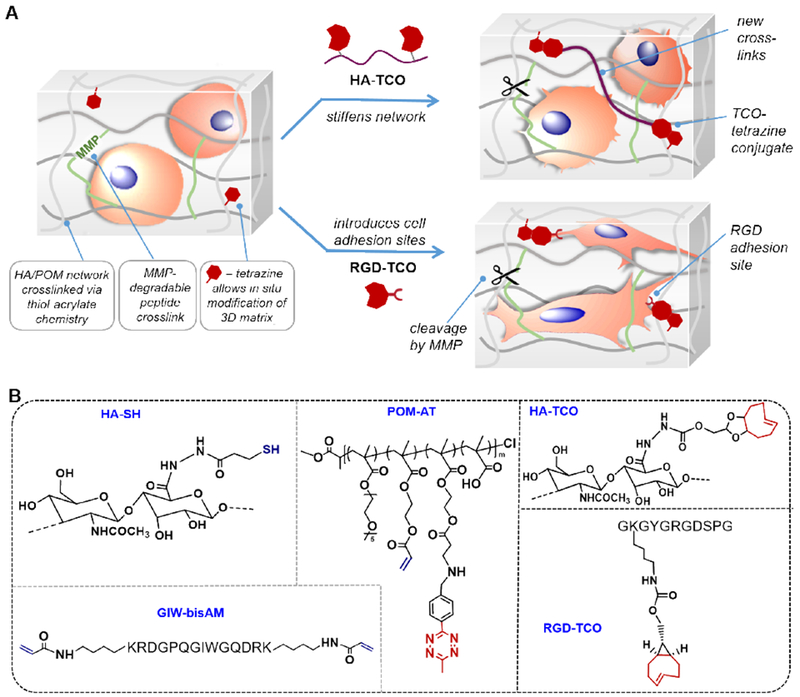
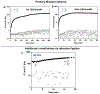
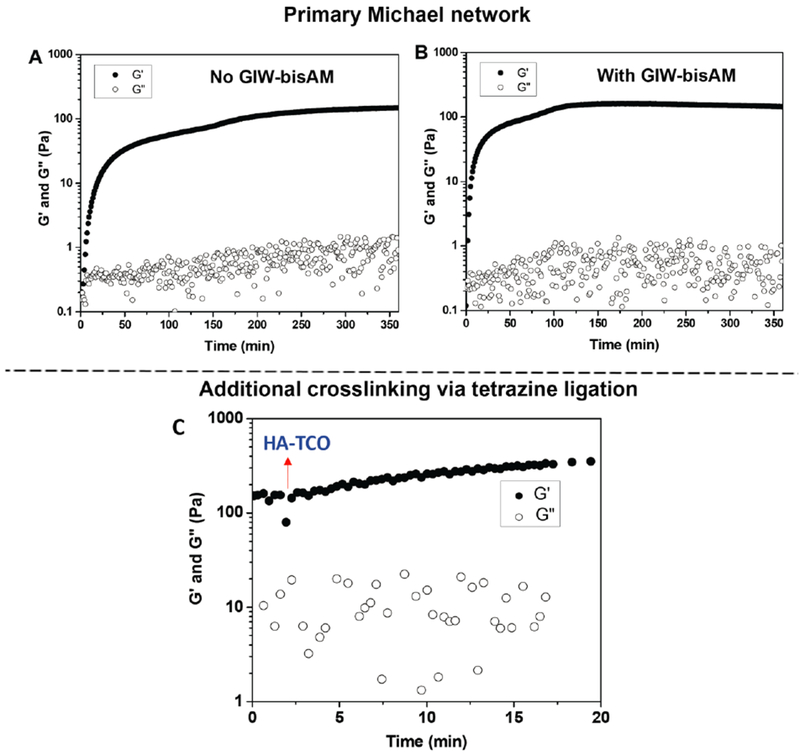
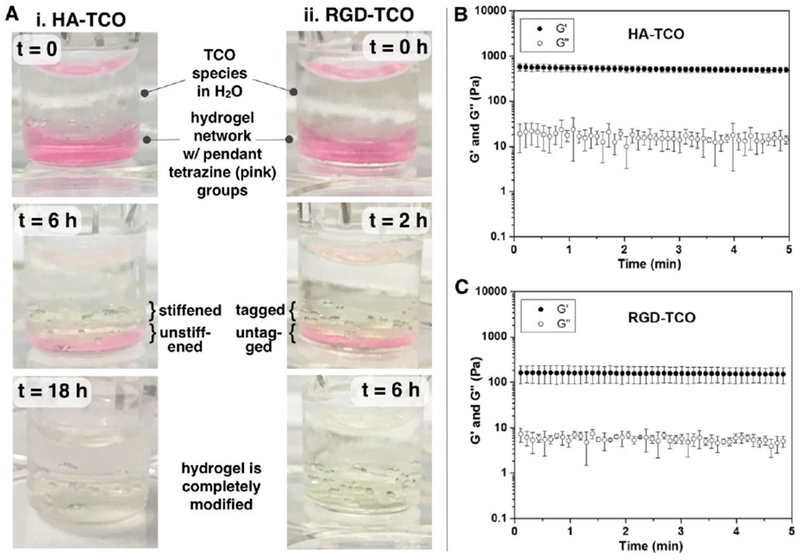
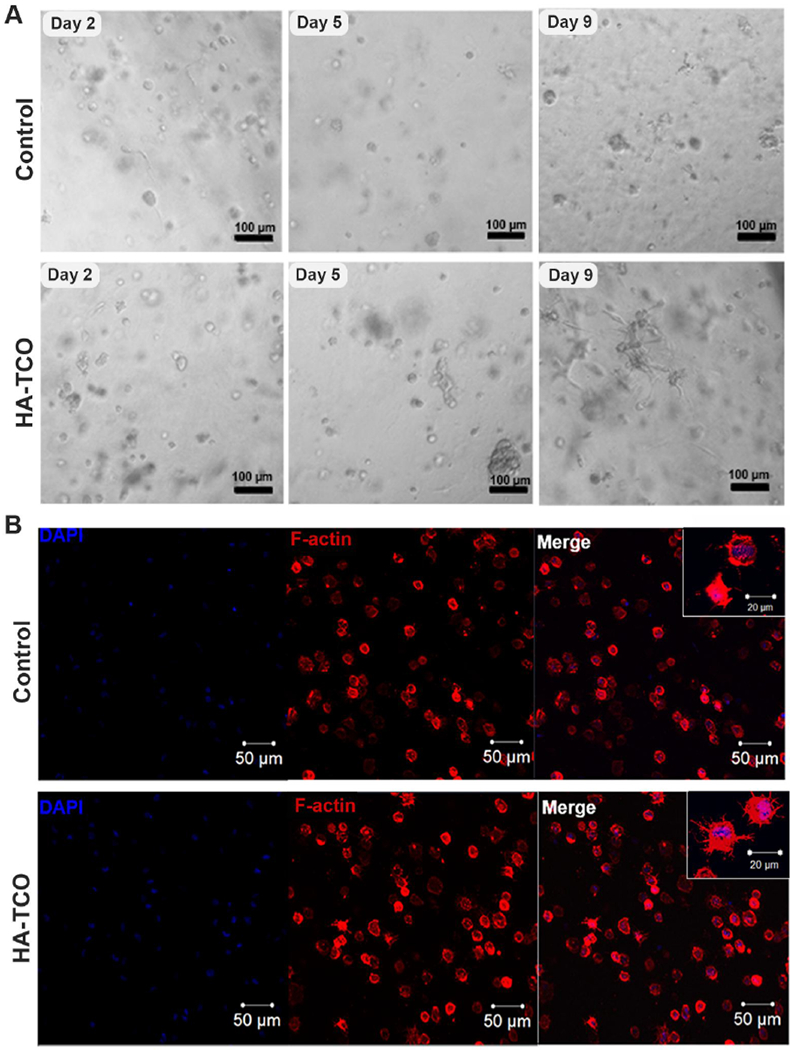
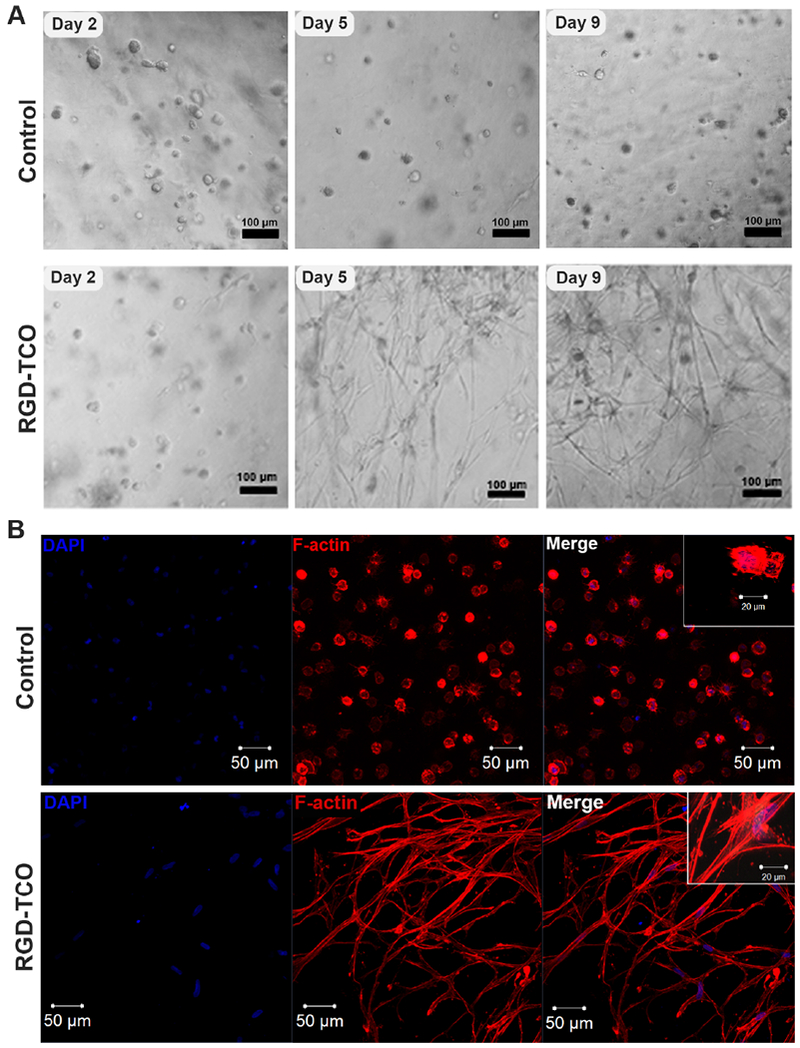
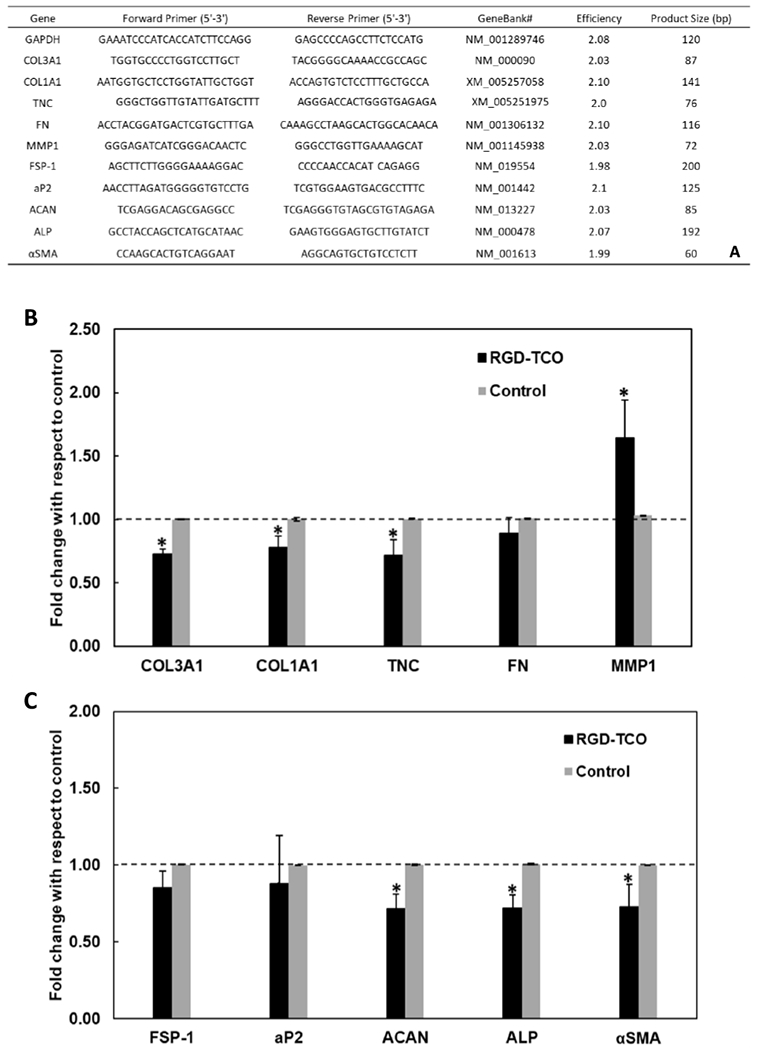
Description:Chemical modification of engineered microenvironments surrounding living cells represents a means for directing cellular behaviors through cell-matrix interactions. Presented here is a temporally controlled method for modulating the properties of biomimetic, synthetic extracellular matrices (ECM) during live cell culture employing the rapid, bioorthogonal tetrazine ligation with trans-cyclooctene (TCO) dienophiles. This approach is diffusion-controlled, cytocompatible, and does not rely on light, catalysts, or other external triggers. Human bone-marrow-derived mesenchymal stem cells (hMSCs) were initially entrapped in a hydrogel prepared using hyaluronic acid carrying sulfhydryl groups (HA-SH) and a hydrophilic polymer bearing both acrylate and tetrazine groups (POM-AT). Inclusion of a matrix metalloprotease (MMP)-degradable peptidic cross-linker enabled hMSC-mediated remodeling of the synthetic environment. The resultant network displayed dangling tetrazine groups for subsequent conjugation with TCO derivatives. Two days later, the stiffness of the matrix was increased by adding chemically modified HA carrying multiple copies of TCO (HA-TCO) to the hMSC growth media surrounding the cell-laden gel construct. In response, cells developed small processes radially around the cell body without a significant alteration of the overall shape. By contrast, modification of the 3D matrix with a TCO-tagged cell-adhesive motif caused the resident cells to undergo significant actin polymerization, changing from a rounded shape to spindle morphology with long cellular processes. After additional 7 days of culture in the growth media, quantitative analysis showed that, at the mRNA level, RGD tagging upregulated cellular expression of MMP1, but downregulated the expression of collagen I/III and tenascin C. RGD tagging, however, was not sufficient to induce the classic osteoblastic, chondrogenic, adipogenic, or fibroblastic/myofibroblastic differentiation. The modular approach allows facile manipulation of synthetic ECM to modulate cell behavior, thus potentially applicable to the engineering of functional tissues or tissue models.
-
Subjects:
-
Source:ACS Appl Mater Interfaces. 10(31):26016-26027
-
Pubmed ID:30015482
-
Pubmed Central ID:PMC6214352
-
Document Type:
-
Funding:S10 OD016267/ODCDC CDC HHS/Office of the Director/United States ; R01 DE022969/NIDCR NIH HHS/National Institute of Dental and Craniofacial Research/United States ; P30 GM110758/NIGMS NIH HHS/National Institute of General Medical Sciences/United States ; S10 RR026962/NCRR NIH HHS/National Center for Research Resources/United States ; R01 DC014461/NIDCD NIH HHS/National Institute on Deafness and Other Communication Disorders/United States ; P20 GM103446/NIGMS NIH HHS/National Institute of General Medical Sciences/United States ; R01 DC011377/NIDCD NIH HHS/National Institute on Deafness and Other Communication Disorders/United States ; P20 GM104316/NIGMS NIH HHS/National Institute of General Medical Sciences/United States
-
Volume:10
-
Issue:31
-
Download URL:
-
File Type:
 [PDF - 1.13 MB]
 -
Collection(s):
-
Main Document Checksum:urn:sha256:b8a75b7dff1ee599417b22d9cd012d30f78989a2f68d644a0f2e3c841ba9be25
Supporting Files


File Language:
English
 Was this page helpful?
 Found an issue?



CDC STACKS serves as an archival repository of CDC-published products including
scientific findings, journal articles, guidelines, recommendations, or other public health information authored or
co-authored by CDC or funded partners.
As a repository, CDC STACKS retains documents in their original published format to ensure public access to scientific information.
As a repository, CDC STACKS retains documents in their original published format to ensure public access to scientific information.
You May Also Like
COLLECTION
CDC Public Access