



Evaluation of an Adapted Project Connect Community Based Intervention among Professionals Serving Young Minority Men
Supporting Files

-
3 2019
-
Available in CDC Stacks on March 01, 2020, 12:00 AM
File Language:
English
Details
-
Journal Article:Sex Transm Dis
-
Personal Author:
-
Description:Background:
To address sexual and reproductive health (SRH) needs of young minority urban males, we developed and evaluated Project Connect Baltimore (Connect), which was adapted from a program with demonstrated effectiveness among young females. The objectives were to determine 1) the feasibility of Connect as adapted for young minority men, 2) whether the program increased SRH knowledge and resource sharing of youth-serving professionals (YSPs) working with young men, and 3) whether the program improved awareness and use of resources for young minority men in Baltimore City, an urban environment with high rates of STDs.
Methods:
Connect developed a clinic referral guide for male youth-friendly resources for SRH. YSPs working with partners and organizations serving young minority men were trained to use Connect materials and pre-, immediate-, and three-month post-training surveys were conducted to evaluate program effects. A before-after evaluation study was conducted among young men attending five urban Connect clinics where STD/HIV rates are high, recruiting young men in repeated cross-sectional surveys from April 2014 to September 2017.
Results:
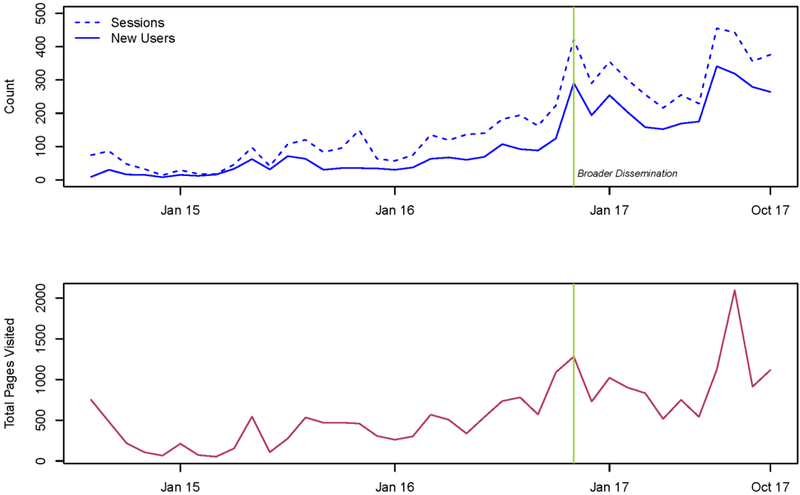
235 YSPs were trained to use Connect materials, including a website, a paper-based pocket guide, and information regarding SRH for young men. These professionals demonstrated increased knowledge about SRH for young men at immediate post-test (60.6% to 86.7%, p<0.05), and reported more sharing of websites for SRH (23% to 62%, p<0.05) from pre- to three-month post-training. 169 young minority men were surveyed and reported increased awareness of Connect over three and a half years (4% to 11%, p=0.015), although few young men reported using the website to visit clinics.
Conclusion:
Project Connect Baltimore increased knowledge of SRH needs among youth-serving professionals and sharing of SRH resources by these professionals with young men. This program also demonstrated increases in awareness of SRH resources among young minority urban men. -
Keywords:
- access to care
- HIV
- LGBT youth
- young men
- Adolescent
- Adult
- Black or African American
- Baltimore
- Cross-Sectional Studies
- Early Medical Intervention
- Feasibility Studies
- Female
- Follow-Up Studies
- HIV Infections
- Health Knowledge, Attitudes, Practice
- Health Personnel
- Hispanic or Latino
- Humans
- Male
- Mass Screening
- Middle Aged
- Minority Groups
- Minority Health
- Reproductive Health
- Sexual Behavior
- Sexual Health
- Surveys and Questionnaires
- Young Adult
-
Source:Sex Transm Dis. 46(3):165-171
-
DOI:
-
Pubmed ID:30652988
-
Pubmed Central ID:PMC6631304
-
Document Type:
-
Funding:
-
Genre:
-
Volume:46
-
Issue:3
-
Download URL:
-
File Type:
 [PDF - 264.10 KB]
 -
Collection(s):
-
Main Document Checksum:urn:sha-512:2626105989c7289e04357bd9ebba32dcbf766ca1e08e7a4bbcf7a95ea4a2349829c307d6fa220f120d4ff5a6828acaa4597df0afde51bdaeae9eac10b404ffe3
Supporting Files


File Language:
English
 Was this page helpful?
 Found an issue?


CDC STACKS serves as an archival repository of CDC-published products including
scientific findings, journal articles, guidelines, recommendations, or other public health information authored or
co-authored by CDC or funded partners.
As a repository, CDC STACKS retains documents in their original published format to ensure public access to scientific information.
As a repository, CDC STACKS retains documents in their original published format to ensure public access to scientific information.
You May Also Like
COLLECTION
CDC Public Access