



Impact of Parent-Child Communication Interventions on Sex Behaviors and Cognitive Outcomes for Black/African-American and Hispanic/Latino Youth: A Systematic Review, 1988–2012
Supporting Files

-
4 2014 ; 4-2014
-
Available in CDC Stacks on May 30, 2018, 12:00 AM
File Language:
English
Details
-
Alternative Title:J Adolesc Health
-
Personal Author:
-
Description:Purpose
We reviewed human immunodeficiency virus (HIV) and sexually transmitted infection (STI)- behavioral interventions implemented with disproportionately affected black/African-American and Hispanic/Latino youth and designed to improve parent-child communications about sex. We compared their effectiveness in improving sex-related behavior or cognitive outcomes.
Methods
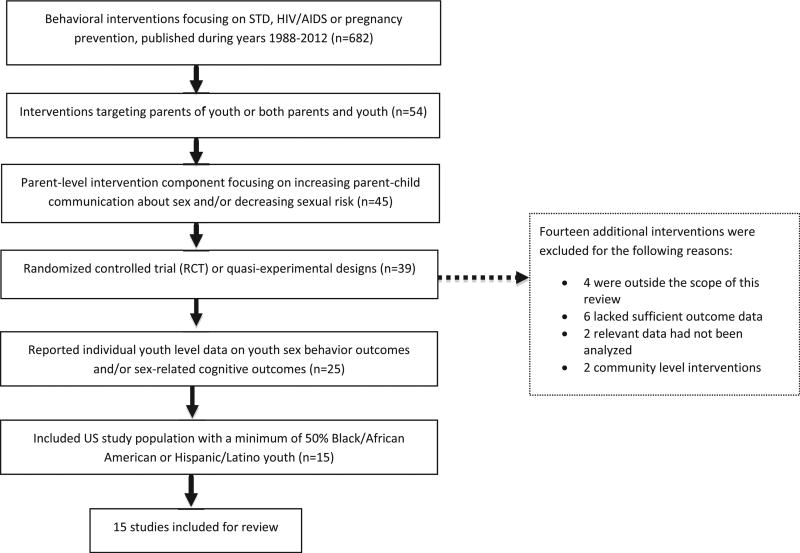
A search of electronic databases identified peer-reviewed studies published between 1988 and 2012. Eligible studies were U.S.-based parent-child communication interventions with active parent components, experimental and quasiexperimental designs, measurement of youth sexual health outcomes, and enrollment of ≥50% black/African-American or Hispanic/Latino youth. We conducted systematic, primary reviews of eligible papers to abstract data on study characteristics and youth outcomes.
Results
Fifteen studies evaluating 14 interventions were eligible. Although youth outcome measures and follow-up times varied, 13 of 15 studies (87%) showed at least one significantly improved youth sexual health outcome compared with controls (p < .05). Common components of effective interventions included joint parent and child session attendance, promotion of parent/family involvement, sexuality education for parents, developmental and/or cultural tailoring, and opportunities for parents to practice new communication skills with their youth.
Conclusions
Parent-child communication interventions that include parents of youth disproportionately affected by HIV/STIs can effectively reduce sexual risk for youth. These interventions may help reduce HIV/STI-related health disparities and improve sexual health outcomes. -
Keywords:
-
Source:J Adolesc Health. 54(4):369-384
-
Pubmed ID:24388108
-
Pubmed Central ID:PMC5975643
-
Document Type:
-
Funding:
-
Volume:54
-
Issue:4
-
Download URL:
-
File Type:
 [PDF - 738.72 KB]
 -
Collection(s):
-
Main Document Checksum:urn:sha256:edc925a21b682cff0fb0e67bfa8c40c589755ec30981ca846d3301f2d6233ead
Supporting Files


File Language:
English
 Was this page helpful?
 Found an issue?

CDC STACKS serves as an archival repository of CDC-published products including
scientific findings, journal articles, guidelines, recommendations, or other public health information authored or
co-authored by CDC or funded partners.
As a repository, CDC STACKS retains documents in their original published format to ensure public access to scientific information.
As a repository, CDC STACKS retains documents in their original published format to ensure public access to scientific information.
You May Also Like
COLLECTION
CDC Public Access