


HCV transmission in high-risk communities in Bulgaria
Supporting Files
Public Domain

-
March 05 2019
-
File Language:
English
Details
-
Alternative Title:PLoS One
-
Personal Author:
-
Description:Background
The rate of HIV infection in Bulgaria is low. However, the rate of HCV-HIV-coinfection and HCV infection is high, especially among high-risk communities. The molecular epidemiology of those infections has not been studied before.
Methods
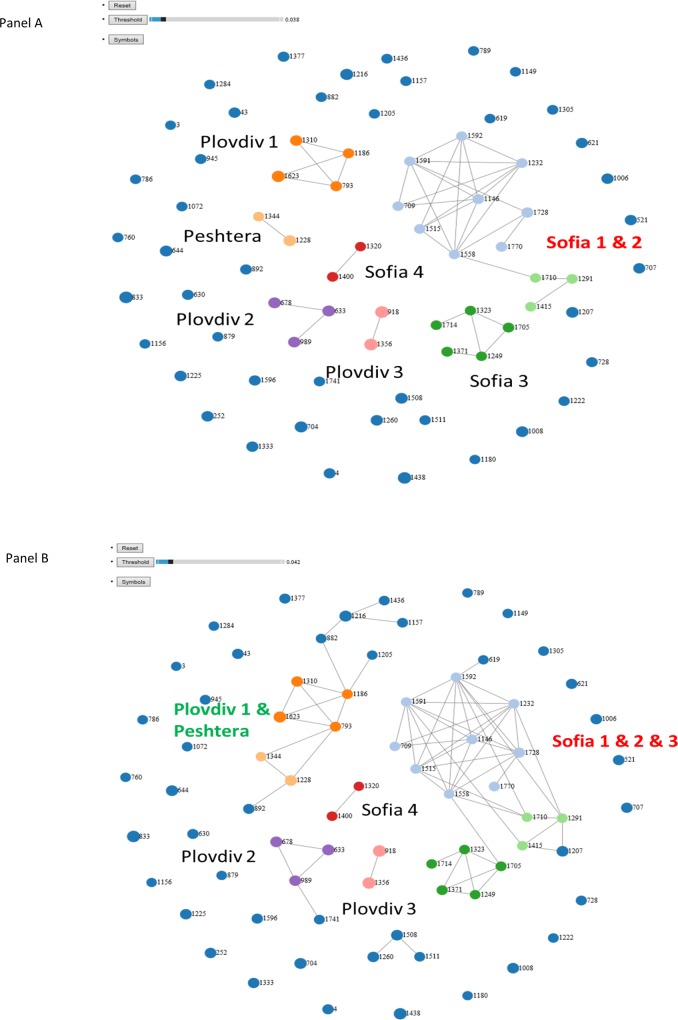
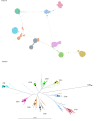
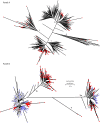
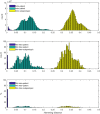
Consensus Sanger sequences of HVR1 and NS5B from 125 cases of HIV/HCV coinfections, collected during 2010–2014 in 15 different Bulgarian cities, were used for preliminary phylogenetic evaluation. Next-generation sequencing (NGS) data of the hypervariable region 1 (HVR1) analyzed via the Global Hepatitis Outbreak and Surveillance Technology (GHOST) were used to evaluate genetic heterogeneity and possible transmission linkages. Links between pairs that were below and above the established genetic distance threshold, indicative of transmission, were further examined by generating k-step networks.
Results
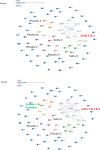
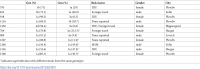
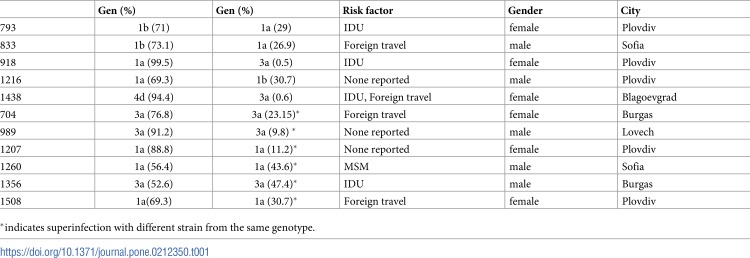
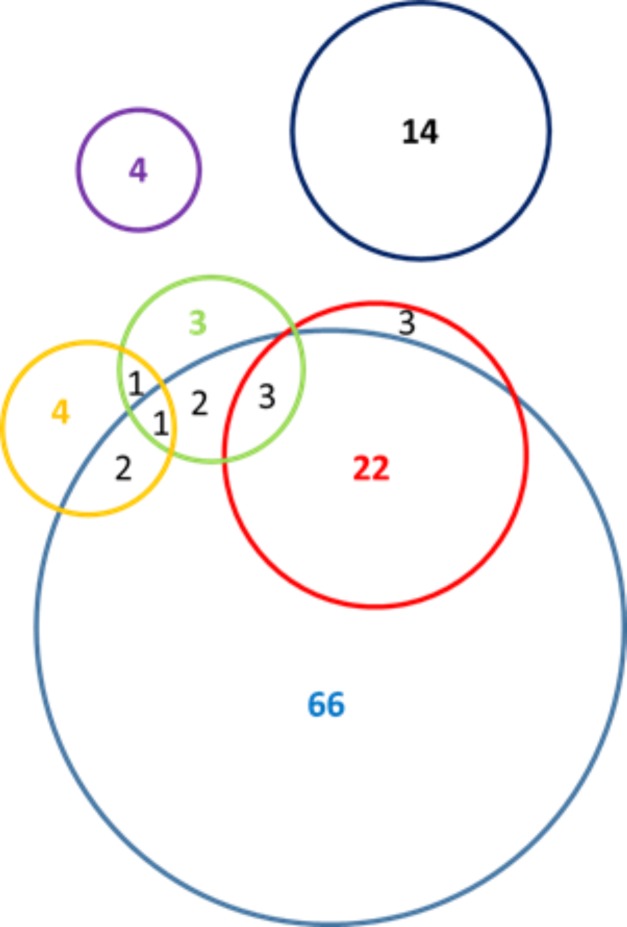
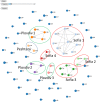
Preliminary genetic analyses showed predominance of HCV genotype 1a (54%), followed by 1b (20.8%), 2a (1.4%), 3a (22.3%) and 4a (1.4%), indicating ongoing transmission of many HCV strains of different genotypes. NGS of HVR1 from 72 cases showed significant genetic heterogeneity of intra-host HCV populations, with 5 cases being infected with 2 different genotypes or subtypes and 6 cases being infected with 2 strains of same subtype. GHOST revealed 8 transmission clusters involving 30 cases (41.7%), indicating a high rate of transmission.
Conclusions
Identification of several HCV genotypes and many HCV strains suggests a frequent introduction of HCV to the studied high-risk communities. GHOST detected a broad transmission network, which sustains circulation of several HCV strains since their early introduction in the 3 cities. This is the first report on the molecular epidemiology of HIV/HCV coinfections in Bulgaria.
-
Subjects:
-
Source:PLoS One. 14(3)
-
Pubmed ID:30835739
-
Pubmed Central ID:PMC6400337
-
Document Type:
-
Place as Subject:
-
Volume:14
-
Issue:3
-
Collection(s):
-
Main Document Checksum:urn:sha256:8255002974d7cae127db276d767f82d1050c008ee4d87f83832a5316fdbd3369
-
Download URL:
-
File Type:
 [PDF
- 2.03 MB
]
[PDF
- 2.03 MB
]
Supporting Files


File Language:
English
ON THIS PAGE






CDC STACKS serves as an archival repository of CDC-published products including
scientific findings,
journal articles, guidelines, recommendations, or other public health information authored or
co-authored by CDC or funded partners.
As a repository, CDC STACKS retains documents in their original published format to ensure public access to scientific information.
As a repository, CDC STACKS retains documents in their original published format to ensure public access to scientific information.
You May Also Like
COLLECTION
CDC Public Access