


Analysis of heritability and genetic architecture of Pancreatic Cancer: A PanC4 Study
Supporting Files

-
April 23 2019
-
File Language:
English
Details
-
Alternative Title:Cancer Epidemiol Biomarkers Prev
-
Personal Author:Chen, Fei ; Childs, Erica J. ; Mocci, Evelina ; Bracci, Paige ; Gallinger, Steven ; Li, Donghui ; Neale, Rachel E ; Olson, Sara H ; Scelo, Ghislaine ; Bamlet, William R. ; Blackford, Amanda L. ; Borges, Michael ; Brennan, Paul ; Chaffee, Kari G ; Duggal, Priya ; Hassan, Manal J. ; Holly, Elizabeth A. ; Hung, Rayjean J ; Goggins, Michael G. ; Kurtz, Robert C ; Oberg, Ann L ; Orlow, Irene ; Yu, Herbert ; Petersen, Gloria M ; Risch, Harvey A ; Klein, Alison P
-
Description:Background
Pancreatic cancer is the fourth-leading cause of cancer death in both men and women in the United States. Identified common susceptibility loci account for a small fraction of estimated heritability. We sought to estimate overall heritability of pancreatic cancer and partition the heritability by variant frequencies and functional annotations.
Methods
Analysis using the genome-based restricted maximum likelihood method (GREML) was conducted on Pancreatic Cancer Case-Control Consortium (PanC4) genome-wide association study data on 3,568 pancreatic cancer cases and 3,363 controls of European Ancestry.
Results
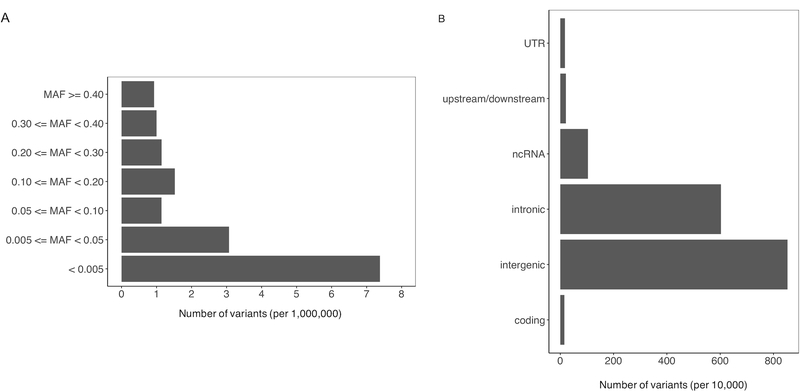
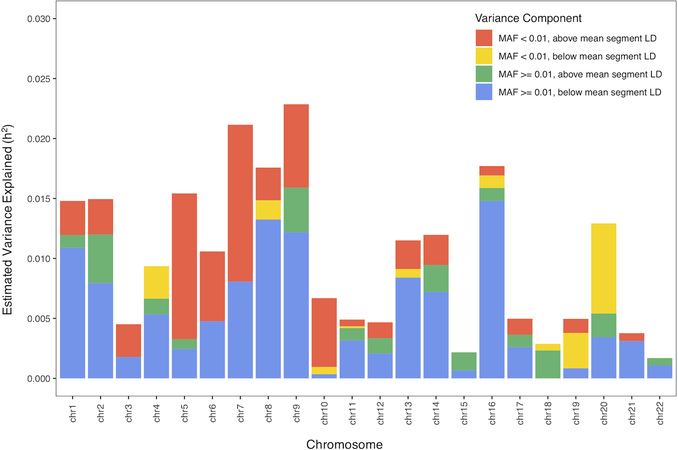
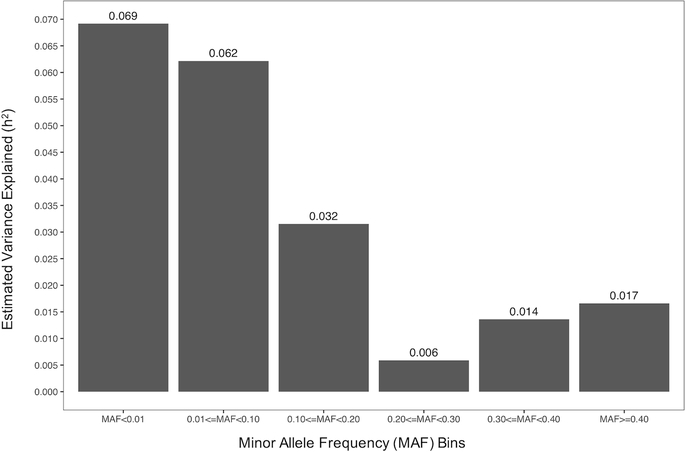
Applying LD- and MAF-stratified GREML (GREML-LDMS) to imputated GWAS data, we estimated the overall heritability of pancreatic cancer to be 21.2% (s.e. = 4.8%). Across the functional groups (intronic, intergenic, coding and regulatory variants), intronic variants account for most of the estimated heritability (12.4%). Previously identified GWAS loci explained 4.1% of the total phenotypic variation of pancreatic cancer. Mutations in hereditary pancreatic cancer susceptibility genes are present in 4–10% of pancreatic cancer patients, yet our GREML-LDMS results suggested these regions explain only 0.4% of total phenotypic variance for pancreatic cancer.
Conclusions
While higher than previous studies, our estimated 21.2% overall heritability may still be downwardly biased due to the inherent limitation that heritablity due to individually rare variants in a gene with a substantive ovarll impact on disease are not captured in these commonly used methods
Impact
Our estimate of pancreatic cancer heritability estimates indicate both rare and common variants contribute to missing heritability, while suggesting caution when using this approach to quantify the impact of rare variants.
-
Subjects:
-
Source:Cancer Epidemiol Biomarkers Prev. 28(7):1238-1245
-
Pubmed ID:31015203
-
Pubmed Central ID:PMC6606380
-
Document Type:
-
Funding:HHSN261201000140C/CA/NCI NIH HHS/United States ; P50 CA062924/CA/NCI NIH HHS/United States ; P30 CA006973/CA/NCI NIH HHS/United States ; HHSN268201100011I/HL/NHLBI NIH HHS/United States ; HHSN268201100011C/HL/NHLBI NIH HHS/United States ; R01 CA098870/CA/NCI NIH HHS/United States ; P30 CA008748/CA/NCI NIH HHS/United States ; P50 CA102701/CA/NCI NIH HHS/United States ; R01 CA109767/CA/NCI NIH HHS/United States ; R01 CA154823/CA/NCI NIH HHS/United States ; U58 DP003862/DP/NCCDPHP CDC HHS/United States ; Wellcome Trust/United Kingdom ; R01 CA097075/CA/NCI NIH HHS/United States ; R03 CA123546/CA/NCI NIH HHS/United States
-
Volume:28
-
Issue:7
-
Collection(s):
-
Main Document Checksum:urn:sha256:21bfe15a9513a71f2234c9dbec4fa98e475e232efb019a4514ca3e10baa12c78
-
Download URL:
-
File Type:
 [PDF
- 328.45 KB
]
[PDF
- 328.45 KB
]
Supporting Files


File Language:
English
ON THIS PAGE

CDC STACKS serves as an archival repository of CDC-published products including
scientific findings,
journal articles, guidelines, recommendations, or other public health information authored or
co-authored by CDC or funded partners.
As a repository, CDC STACKS retains documents in their original published format to ensure public access to scientific information.
As a repository, CDC STACKS retains documents in their original published format to ensure public access to scientific information.
You May Also Like
COLLECTION
CDC Public Access