



High Diversity and Ancient Common Ancestry of Lymphocytic Choriomeningitis Virus
Supporting Files
Public Domain

-
Jul 2010
File Language:
English
Details
-
Alternative Title:Emerg Infect Dis
-
Personal Author:
-
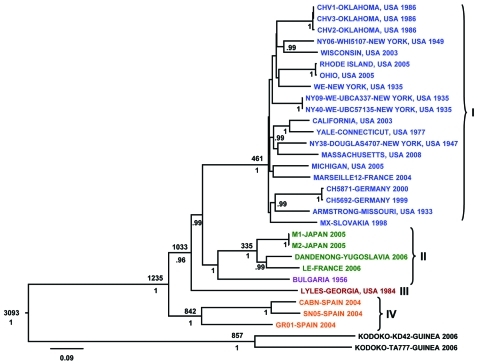
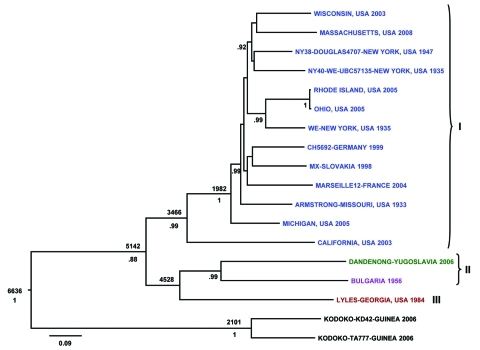
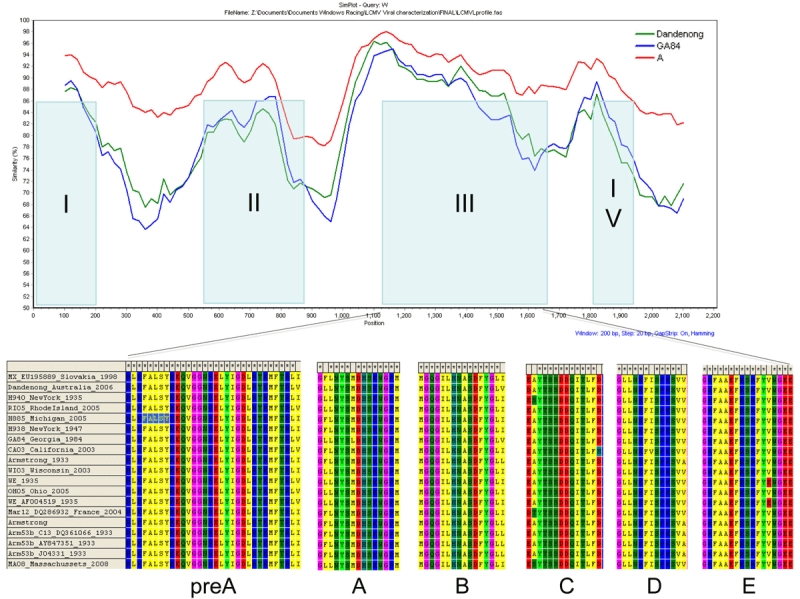
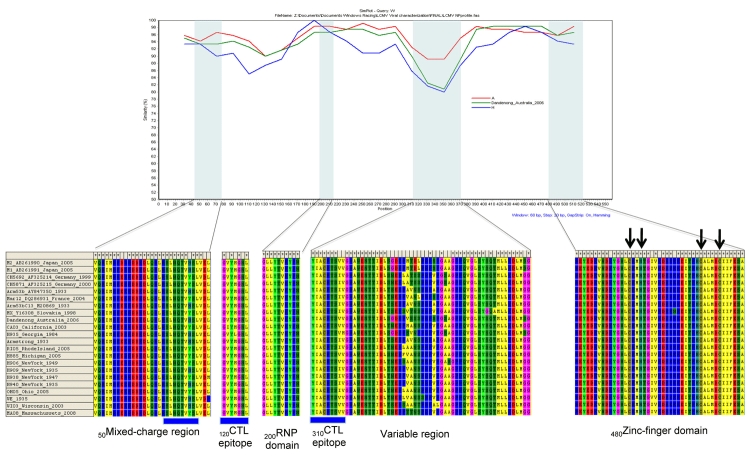
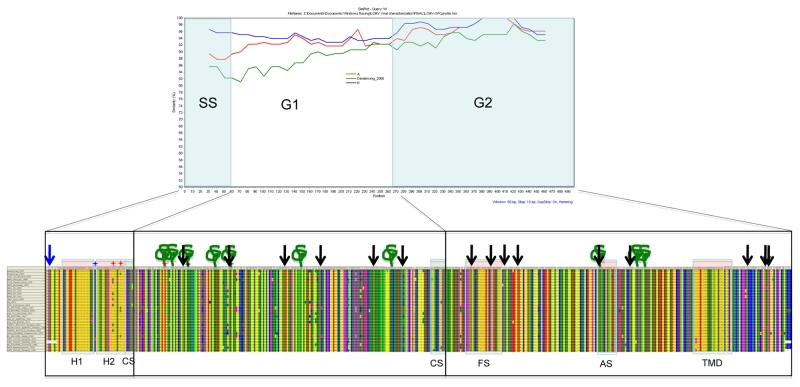
Description:Lymphocytic choriomeningitis virus (LCMV) is the prototype of the family Arenaviridae. LCMV can be associated with severe disease in humans, and its global distribution reflects the broad dispersion of the primary rodent reservoir, the house mouse (Mus musculus). Recent interest in the natural history of the virus has been stimulated by increasing recognition of LCMV infections during pregnancy, and in clusters of LCMV-associated fatal illness among tissue transplant recipients. Despite its public health importance, little is known regarding the genetic diversity or distribution of virus variants. Genomic analysis of 29 LCMV strains collected from a variety of geographic and temporal sources showed these viruses to be highly diverse. Several distinct lineages exist, but there is little correlation with time or place of isolation. Bayesian analysis estimates the most recent common ancestor to be 1,000-5,000 years old, and this long history is consistent with complex phylogeographic relationships of the extant virus isolates.
-
Subjects:
-
Source:Emerg Infect Dis. 16(7):1093-1100.
-
Document Type:
-
Volume:16
-
Issue:7
-
Download URL:
-
File Type:
 [PDF - 365.88 KB]
 -
Collection(s):
-
Main Document Checksum:urn:sha256:5855a79f64e2a0421a574ea11e2fae43776572910c5b661f0b3d156a9efd97ad
Supporting Files


File Language:
English
 Was this page helpful?
 Found an issue?




CDC STACKS serves as an archival repository of CDC-published products including
scientific findings, journal articles, guidelines, recommendations, or other public health information authored or
co-authored by CDC or funded partners.
As a repository, CDC STACKS retains documents in their original published format to ensure public access to scientific information.
As a repository, CDC STACKS retains documents in their original published format to ensure public access to scientific information.
You May Also Like
COLLECTION
Emerging Infectious Diseases