



Foodborne Transmission of Nipah Virus, Bangladesh
Supporting Files

-
Dec 2006
File Language:
English
Details
-
Alternative Title:Emerg Infect Dis
-
Personal Author:Luby, Stephen P. ; Rahman, Mahmudur ; Hossain, M. Jahangir ; Blum, Lauren S. ; Husain, M. Mushtaq ; Gurley, Emily ; Khan, Rasheda ; Ahmed, Be-Nazir ; Rahman, Shafiqur ; Nahar, Nazmun ; Kenah, Eben ; Comer, James A. ; Ksiazek, Thomas G.
-
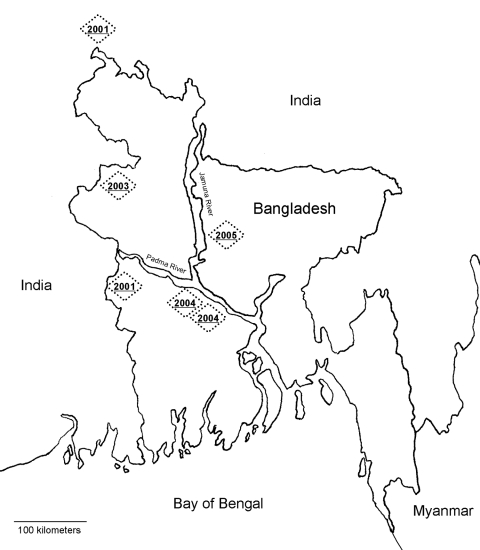
Description:We investigated an outbreak of encephalitis in Tangail District, Bangladesh. We defined case-patients as persons from the outbreak area in whom fever developed with new onset of seizures or altered mental status from December 15, 2004, through January 31, 2005. Twelve persons met the definition; 11 (92%) died. Serum specimens were available from 3; 2 had immunoglobulin M antibodies against Nipah virus by capture enzyme immunoassay. We enrolled 11 case-patients and 33 neighborhood controls in a case-control study. The only exposure significantly associated with illness was drinking raw date palm sap (64% among case-patients vs. 18% among controls, odds ratio OR 7.9, p = 0.01). Fruit bats (Pteropus giganteus) are a nuisance to date palm sap collectors because the bats drink from the clay pots used to collect the sap at night. This investigation suggests that Nipah virus was transmitted from P. giganteus to persons through drinking fresh date palm sap.
-
Subjects:
-
Source:Emerg Infect Dis. 12(12):1888-1894.
-
Document Type:
-
Funding:
-
Place as Subject:
-
Location:
-
Volume:12
-
Issue:12
-
Download URL:
-
File Type:
 [PDF - 191.13 KB]
 -
Collection(s):
-
Main Document Checksum:urn:sha256:26a8649282d2947c93ca2c72dd0163a42f3a199250c0f0ceeb03c1e445ed3221
Supporting Files


File Language:
English
 Was this page helpful?
 Found an issue?




CDC STACKS serves as an archival repository of CDC-published products including
scientific findings, journal articles, guidelines, recommendations, or other public health information authored or
co-authored by CDC or funded partners.
As a repository, CDC STACKS retains documents in their original published format to ensure public access to scientific information.
As a repository, CDC STACKS retains documents in their original published format to ensure public access to scientific information.
You May Also Like
COLLECTION
Emerging Infectious Diseases