


Recurrent Cholera Outbreaks, Democratic Republic of the Congo, 2008–2017
Supporting Files
Public Domain

-
May 2019
-
File Language:
English
Details
-
Alternative Title:Emerg Infect Dis
-
Personal Author:
-
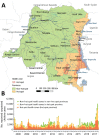
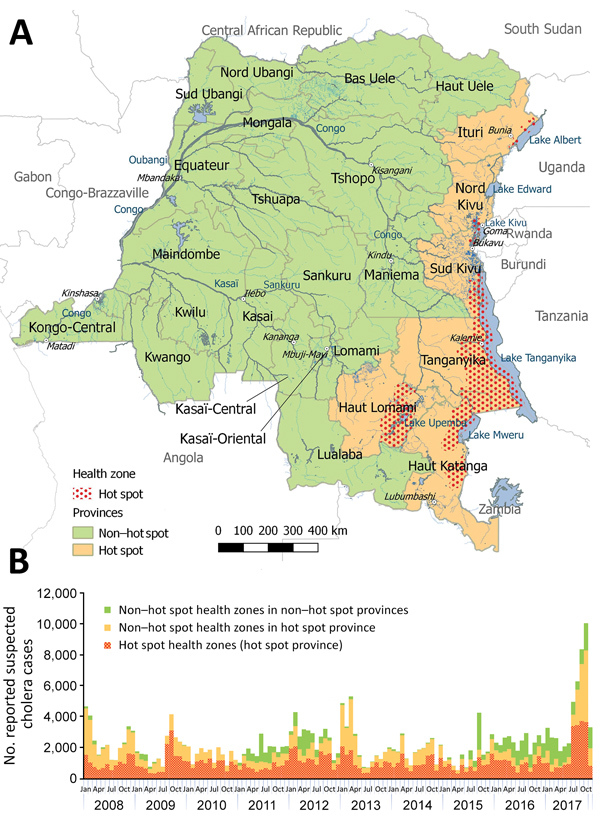
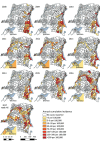
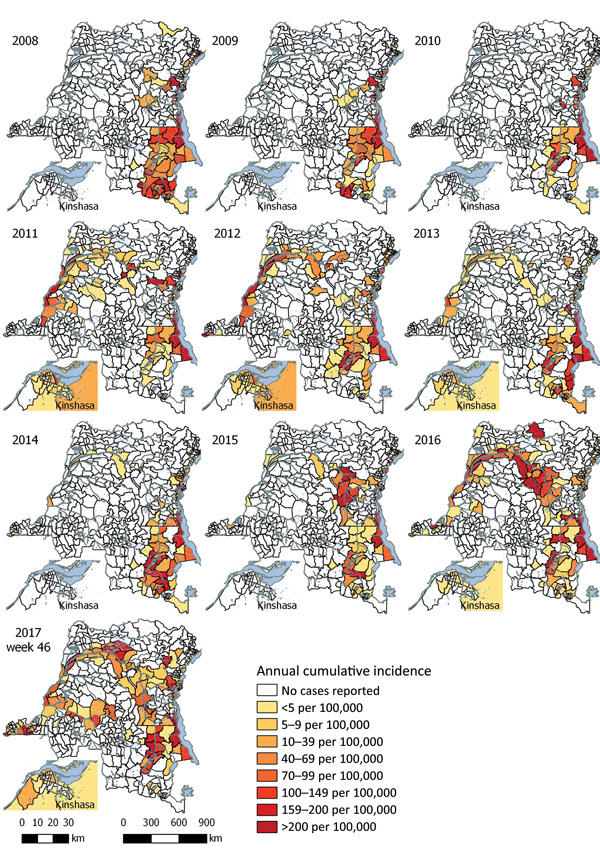
Description:In 2017, the exacerbation of an ongoing countrywide cholera outbreak in the Democratic Republic of the Congo resulted in >53,000 reported cases and 1,145 deaths. To guide control measures, we analyzed the characteristics of cholera epidemiology in DRC on the basis of surveillance and cholera treatment center data for 2008-2017. The 2017 nationwide outbreak resulted from 3 distinct mechanisms: considerable increases in the number of cases in cholera-endemic areas, so-called hot spots, around the Great Lakes in eastern DRC; recurrent outbreaks progressing downstream along the Congo River; and spread along Congo River branches to areas that had been cholera-free for more than a decade. Case-fatality rates were higher in nonendemic areas and in the early phases of the outbreaks, possibly reflecting low levels of immunity and less appropriate prevention and treatment. Targeted use of oral cholera vaccine, soon after initial cases are diagnosed, could contribute to lower case-fatality rates.
-
Subjects:
-
Source:Emerg Infect Dis. 25(5):856-864
-
Pubmed ID:31002075
-
Pubmed Central ID:PMC6478228
-
Document Type:
-
Place as Subject:
-
Location:
-
Volume:25
-
Issue:5
-
Collection(s):
-
Main Document Checksum:urn:sha256:95660f4276f10dc57da6412b431fc1c2507fb2953cc749cab1b38ea14fad85c2
-
Download URL:
-
File Type:
 [PDF
- 8.14 MB
]
[PDF
- 8.14 MB
]
Supporting Files


File Language:
English
ON THIS PAGE



CDC STACKS serves as an archival repository of CDC-published products including
scientific findings,
journal articles, guidelines, recommendations, or other public health information authored or
co-authored by CDC or funded partners.
As a repository, CDC STACKS retains documents in their original published format to ensure public access to scientific information.
As a repository, CDC STACKS retains documents in their original published format to ensure public access to scientific information.
You May Also Like
COLLECTION
Emerging Infectious Diseases