



Cluster Analysis of Vulnerable Groups in Acute TBI Rehabilitation
Supporting Files

-
January 06 2018
-
Available in CDC Stacks on 2019-11-01T00:00:00Z
File Language:
English
Details
-
Alternative Title:Arch Phys Med Rehabil
-
Personal Author:
-
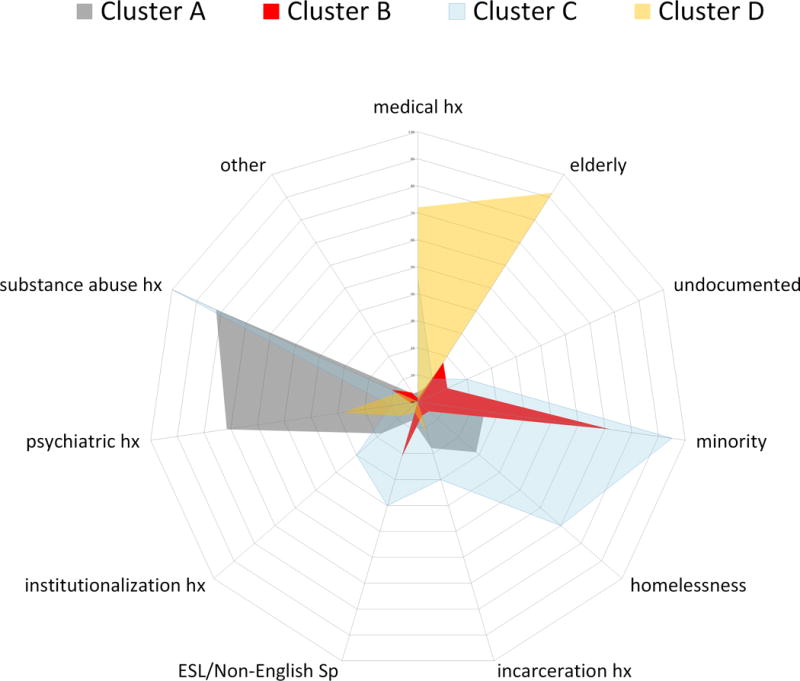
Description:Objective ; To analyze the complex relationship between various social indicators that contribute to socioeconomic status and healthcare barriers. ; Design ; Cluster analysis of historical patient data obtained from inpatient visits. ; Setting ; Inpatient rehabilitation unit in a large, urban university hospital. ; Participants ; Adult patients receiving acute inpatient care, predominantly for closed head injury. ; Interventions ; Not applicable ; Main outcome measures ; We examined the membership of TBI patients in various “vulnerable group” (VG) clusters (e.g., homeless, unemployed, racial/ethnic minority) and characterized the rehabilitation outcomes of the patients (e.g., duration of stay, changes in Functional Independence Measure FIM scores between admission to inpatient stay and discharge). ; Results ; Analysis revealed four major clusters (i.e., Clusters A-D) separated by VG memberships, with distinct durations of stay and FIM gains during their stay. Cluster B, the largest cluster and also consisting of mostly racial/ethnic minorities, had the shortest duration of hospital stay and one of the lowest FIM improvements among the four clusters despite higher FIM scores at admission. In cluster C, also consisting of mostly ethnic minorities with multiple SES vulnerabilities, patients were characterized by low cognitive FIM scores at admission and the longest duration of stay, and they showed good improvement in FIM scores. ; Conclusions ; Application of clustering techniques to inpatient data identified distinct clusters of patients who may experience differences in their rehabilitation outcome due to their membership in various “at-risk” groups. Results identified patients (i.e., cluster B, with minority patients and Cluster D, with elderly patients) who attain below-average gains in brain injury rehabilitation. Results also suggested that systemic (e.g., duration of stay) or clinical service improvements (e.g., staff’s language skills, ability to offer substance abuse therapy, provide appropriate referrals or liaise with intensive social work services or plan subacute rehabilitation phase) could be beneficial for acute settings. Stronger recruitment, training and retention initiatives for bilingual and multiethnic professionals may also be considered to optimize gains from acute inpatient rehabilitation following traumatic brain injury.
-
Subjects:
- Article
- Rehabilitation
- diversity
- Inpatient care
- Socio-economic status
- at-risk and vulnerable groups
- minorities
- Adult
- Aged
- Brain Injuries, Traumatic
- Cluster Analysis
- Disability Evaluation
- Ethnic Groups
- Female
- Health Services Accessibility
- Humans
- Inpatients
- Length of Stay
- Male
- Middle Aged
- Rehabilitation Centers
- Socioeconomic Factors
- Treatment Outcome
- Vulnerable Populations
-
Source:Arch Phys Med Rehabil. 99(11):2365-2369
-
Pubmed ID:29317223
-
Pubmed Central ID:PMC6581442
-
Document Type:
-
Funding:
-
Volume:99
-
Issue:11
-
Download URL:
-
File Type:
 [PDF - 390.44 KB]
 -
Collection(s):
-
Main Document Checksum:urn:sha256:9c2f7bd2516cd82e2cf0718cd64e745753694234767d83e695f96ea812daf73d
Supporting Files


File Language:
English
 Was this page helpful?
 Found an issue?


CDC STACKS serves as an archival repository of CDC-published products including
scientific findings, journal articles, guidelines, recommendations, or other public health information authored or
co-authored by CDC or funded partners.
As a repository, CDC STACKS retains documents in their original published format to ensure public access to scientific information.
As a repository, CDC STACKS retains documents in their original published format to ensure public access to scientific information.
You May Also Like
COLLECTION
CDC Public Access