



Longitudinal Trends in Severe Traumatic Brain Injury Inpatient Rehabilitation
Supporting Files

-
2023
-
Available in CDC Stacks on January 01, 2024, 12:00 AM
File Language:
English
Details
-
Alternative Title:J Head Trauma Rehabil
-
Personal Author:
-
Description:Objective:
The goal of this study is to describe national trends in inpatient rehabilitation facility (IRF) discharges for the most severely disabled cohort of patients with traumatic brain injury (TBI).
Methods:
Data from the Uniform Data System for Medical Rehabilitation for patients discharged from an IRF between January 1, 2002 and December 31, 2017 with a diagnosis of TBI and an admission Functional Independence Measure (FIM) of 18, the lowest possible score, was obtained and analyzed.
Results:
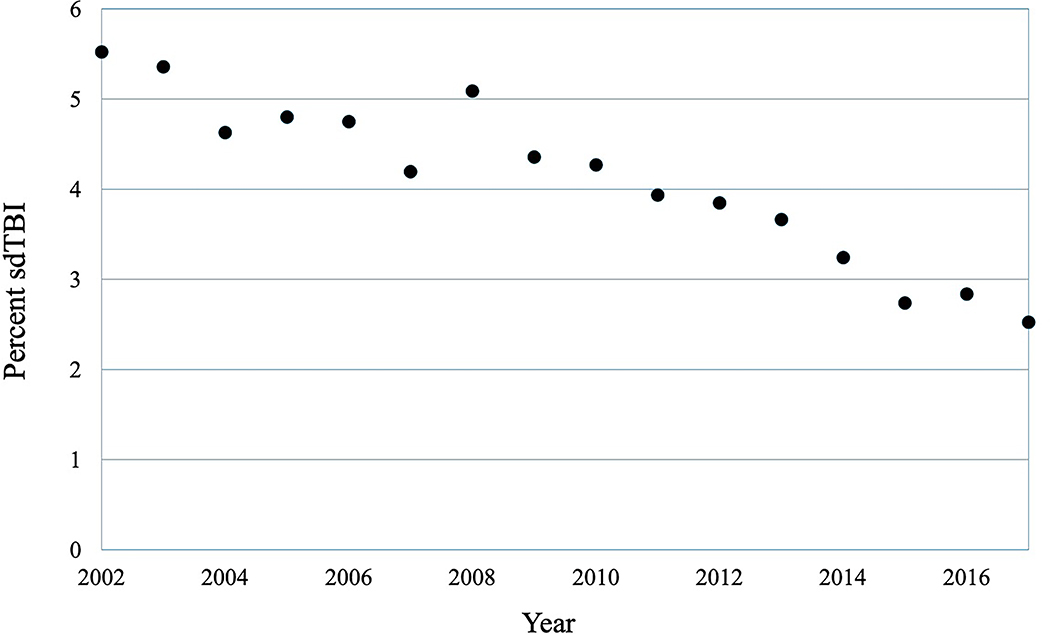
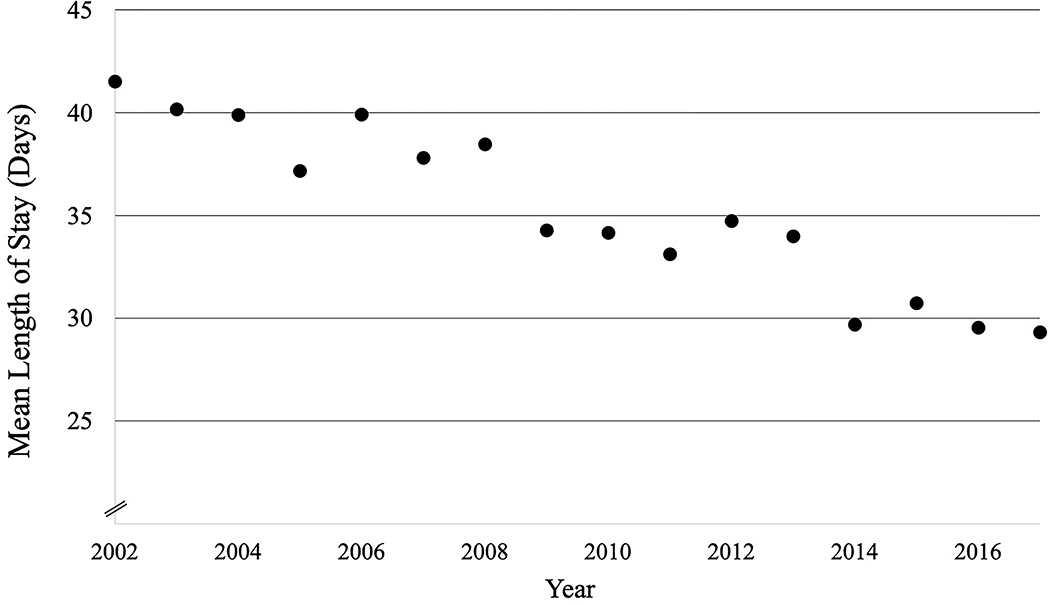
Of the 252,112 patients with TBI discharged during the study period, 10,098 met the study criteria. From 2002 to 2017 the number of patients with an IRF admission FIM of 18 following TBI discharged from IRFs annually decreased from 649 to 488, modeled by a negative regression coefficient = −2.97; p = 0.001 and the mean age (sd) increased from 43.0 (21.0) to 53.7 (21.3) years coefficient = 0.70; p < 0.001. During the study period, the number of patients with the most severe disability on admission to IRF who were discharged annually as a proportion of total patients with TBI decreased from 5.5% to 2.5% odds ratio = 0.95; p < 0.001 and their mean length of stay decreased from 41.5 (36.2) to 29.3 (24.9) days coefficient = −0.83; p <0.001.
Conclusion:
The number and proportion of patients with the most severe disability on IRF admission following TBI who are discharged from IRFs is decreasing over time. This may represent a combination of primary prevention, early mortality due to withdrawal of life-sustaining treatment, alternative discharge dispositions, or changes in admitting and reimbursement practices. Furthermore, there has been a decrease in the duration of IRF level care for these individuals, which could ultimately lead to poorer functional outcomes, particularly given the importance of specialized rehabilitative care in this population. -
Subjects:
-
Source:J Head Trauma Rehabil. 38(3):E186-E194
-
Pubmed ID:36730991
-
Pubmed Central ID:PMC10102246
-
Document Type:
-
Funding:90DPBU0001/ACL/ACL HHSUnited States/ ; 90DPCP0008/ACL/ACL HHSUnited States/ ; R01 AI134857/AI/NIAID NIH HHSUnited States/ ; 90DP0039/ACL/ACL HHSUnited States/ ; UG3 NS117844/NS/NINDS NIH HHSUnited States/ ; U48 DP000039/DP/NCCDPHP CDC HHSUnited States/ ; U01 NS086090/NS/NINDS NIH HHSUnited States/ ; UH3 NS095554/NS/NINDS NIH HHSUnited States/
-
Volume:38
-
Issue:3
-
Download URL:
-
File Type:
 [PDF - 323.07 KB]
 -
Collection(s):
-
Main Document Checksum:urn:sha256:552a590387769ab570b433f4fdb48b08f14a18423e674c2257ff173d0e5d7c92
Supporting Files


File Language:
English
 Was this page helpful?
 Found an issue?


CDC STACKS serves as an archival repository of CDC-published products including
scientific findings, journal articles, guidelines, recommendations, or other public health information authored or
co-authored by CDC or funded partners.
As a repository, CDC STACKS retains documents in their original published format to ensure public access to scientific information.
As a repository, CDC STACKS retains documents in their original published format to ensure public access to scientific information.
You May Also Like
COLLECTION
CDC Public Access