



Pre and Postnatal Polybrominated Diphenyl Ether Concentrations in Relation to Thyroid Parameters Measured During Early Childhood
Supporting Files

-
5 01 2019
-
Available in CDC Stacks on May 01, 2020, 12:00 AM
File Language:
English
Details
-
Journal Article:Thyroid
-
Personal Author:
-
Description:Background:
Penta-brominated diphenyl ethers (PentaBDEs) are endocrine disrupting chemicals that structurally resemble thyroid hormones and were widely used as flame retardants in household consumer products from 1975–2004. Polybrominated diphenyl ethers (PBDEs) cross the placenta and evidence suggests that for many children, body burdens may peak during toddler years. We aimed to understand the impact of exposure timing by examining both pre- and postnatal exposure to BDE-47, the predominant PentaBDE congener detected in humans, in relation to thyroid hormone parameters measured during early childhood.
Methods:
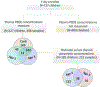
The Columbia Center for Children’s Environmental Health Mothers and Newborns Study is a prospective birth cohort of African American and Dominican maternal-child pairs. Pregnant women were recruited from two prenatal clinics in Northern Manhattan and the South Bronx between 1998 and 2006. Participants included 158 children with 1) plasma PBDE concentrations measured at birth and toddler years (age 2-3), and 2) serum thyroid parameters measured at 3 and/or 5 years. Outcomes included concentrations of serum thyroid stimulating hormone (TSH), free thyroxine (fT4) and total thyroxine (T4).
Results:
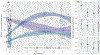
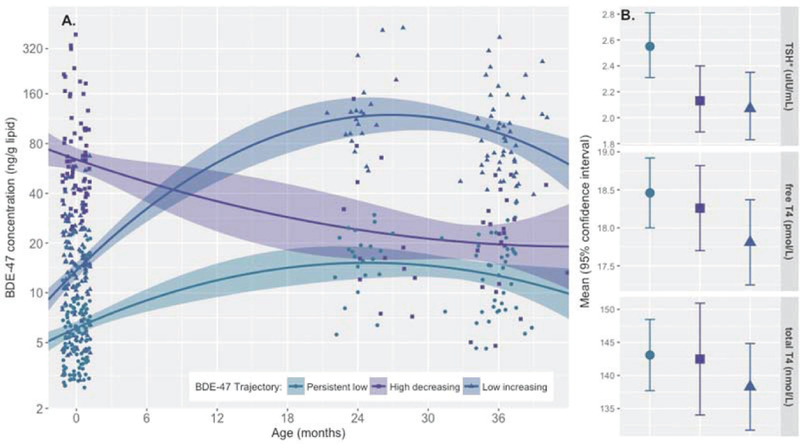
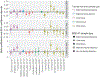
Children with high exposure to BDE-47 during the prenatal period (−17%, 95% CI − 29, −2) or toddler age (-19%, 95% CI: −31, −5) had significantly lower geometric mean TSH levels compared to children with low BDE-47 exposure throughout early life. Associations with T4 were also inverse, however, they did not reach statistical significance at the p=0.05 level. Sex-stratified models suggest associations with postnatal exposure may be stronger among boys compared to girls.
Conclusions:
The thyroid regulatory system may be sensitive to BDE-47 during prenatal and postnatal periods. -
Subjects:
-
Keywords:
-
Source:Thyroid. 29(5):631-641
-
DOI:
-
Pubmed ID:30907253
-
Pubmed Central ID:PMC6533780
-
Document Type:
-
Funding:R01 ES013543/ES/NIEHS NIH HHSUnited States/ ; T32 ES007322/ES/NIEHS NIH HHSUnited States/ ; T32 ES023772/ES/NIEHS NIH HHSUnited States/ ; R01 ES021806/ES/NIEHS NIH HHSUnited States/ ; P50 ES009600/ES/NIEHS NIH HHSUnited States/ ; R01 ES021482/ES/NIEHS NIH HHSUnited States/ ; P30 ES009089/ES/NIEHS NIH HHSUnited States/ ; T32 HD049311/HD/NICHD NIH HHSUnited States/ ; CC999999/ImCDC/Intramural CDC HHSUnited States/
-
Genre:
-
Volume:29
-
Issue:5
-
Download URL:
-
File Type:
 [PDF - 980.58 KB]
 -
Collection(s):
-
Main Document Checksum:urn:sha-512:2f5e2d29833b63843b298530efa1fc4f071551932851754def373d3635ca5b077ce1fac7cf81d4f201f6480f64d432c21e12b4c723e2a0423ab95b9f4f74b9be
Supporting Files


File Language:
English
 Was this page helpful?
 Found an issue?


CDC STACKS serves as an archival repository of CDC-published products including
scientific findings, journal articles, guidelines, recommendations, or other public health information authored or
co-authored by CDC or funded partners.
As a repository, CDC STACKS retains documents in their original published format to ensure public access to scientific information.
As a repository, CDC STACKS retains documents in their original published format to ensure public access to scientific information.
You May Also Like
COLLECTION
CDC Public Access