


Can Blood Flow be Used to Monitor Changes in Peripheral Vascular Function That Occur in Response to Segmental Vibration Exposure?
Supporting Files

-
Feb 2019
File Language:
English
Details
-
Alternative Title:J Occup Environ Med
-
Personal Author:
-
Description:Objectives:
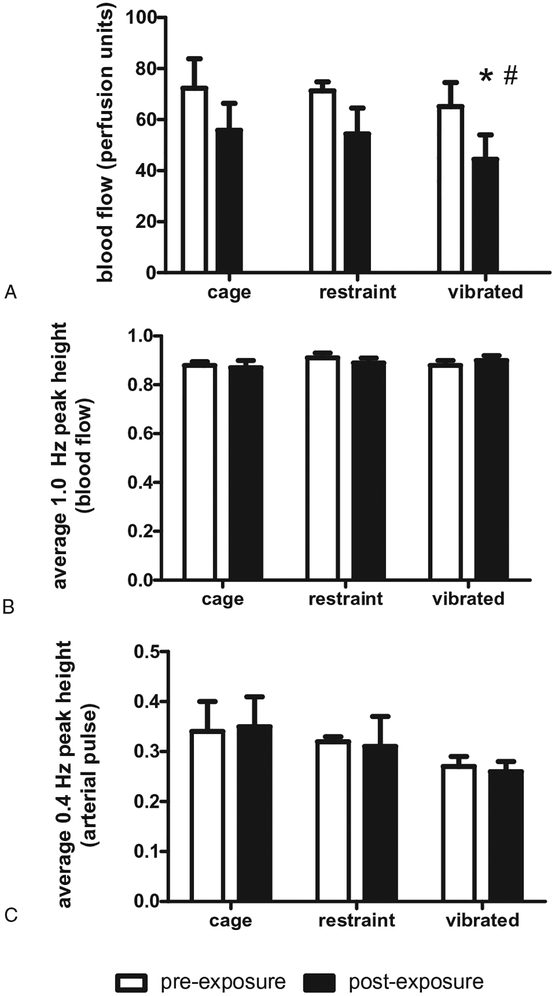
Laser Doppler blood flow measurements have been used for diagnosis or detection of peripheral vascular dysfunction. This study used a rat tail model of vibration-induced vascular injury to determine how laser Doppler measurements were affected by acute and repeated exposures to vibration, and to identify changes in the Doppler signal that were associated with the exposure.
Methods:
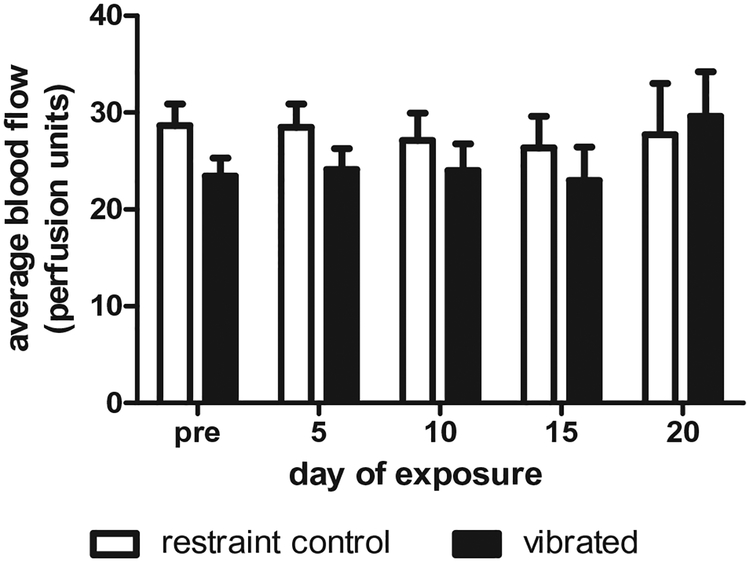
Blood flow was measured immediately after a single exposure to vibration, or before vibration exposure on days 1, 5, 10, 15, and 20 of a 20 days exposure.
Results:
After a single exposure to vibration, average tail blood flow was reduced. With 20 days of exposure, there was a reduction in the amplitude of the arterial pulse on days 10 to 20 in vibrated rats and days 15 to 20 in control rats.
Conclusions:
More detailed statistical analyses of laser Doppler data may be needed to identify early changes in peripheral circulation after exposure to vibration.
-
Subjects:
-
Source:J Occup Environ Med. 61(2):162-167
-
Pubmed ID:30507789
-
Pubmed Central ID:PMC6531854
-
Document Type:
-
Funding:
-
Volume:61
-
Issue:2
-
Collection(s):
-
Main Document Checksum:urn:sha256:4c96fee18580be794218ea4fcc8e5b12a9bbabd64b5fdc72f6454175338973a1
-
Download URL:
-
File Type:
 [PDF
- 669.66 KB
]
[PDF
- 669.66 KB
]
Supporting Files


File Language:
English
ON THIS PAGE



CDC STACKS serves as an archival repository of CDC-published products including
scientific findings,
journal articles, guidelines, recommendations, or other public health information authored or
co-authored by CDC or funded partners.
As a repository, CDC STACKS retains documents in their original published format to ensure public access to scientific information.
As a repository, CDC STACKS retains documents in their original published format to ensure public access to scientific information.
You May Also Like
COLLECTION
CDC Public Access