



Francisella tularensis in the United States
Supporting Files
Public Domain

-
Dec 2005
File Language:
English
Details
-
Alternative Title:Emerg Infect Dis
-
Personal Author:
-
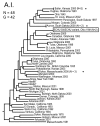
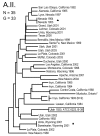
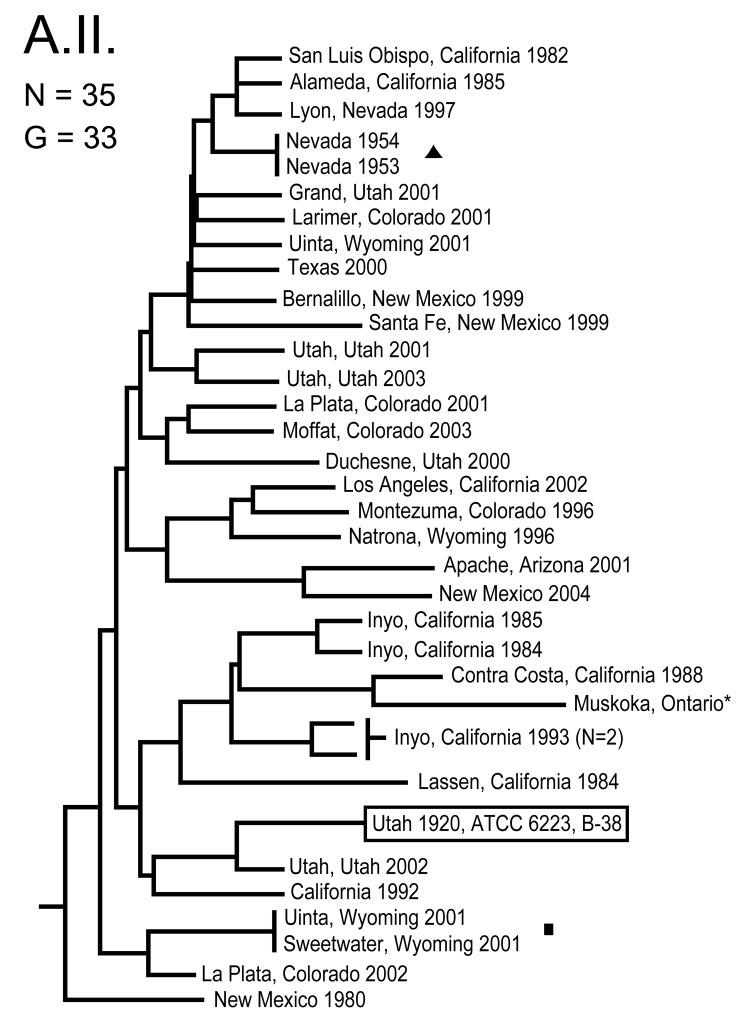
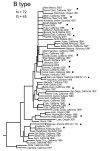
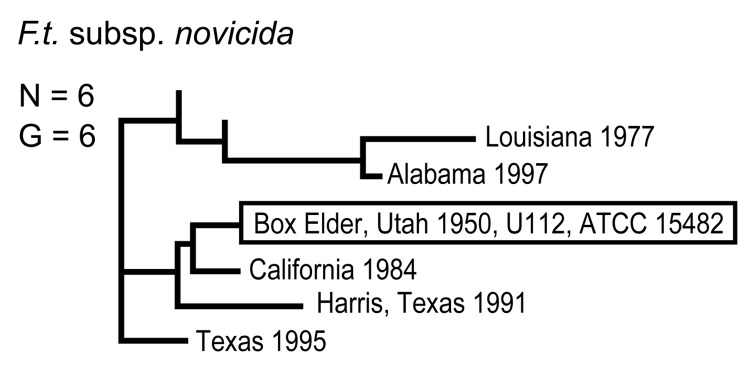
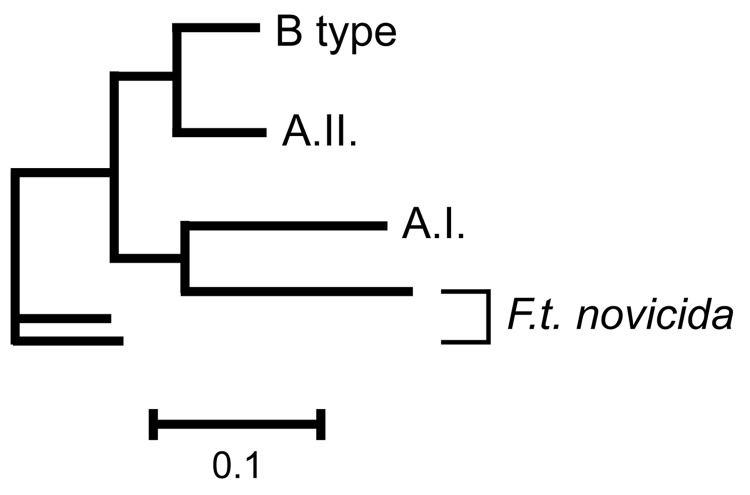
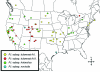
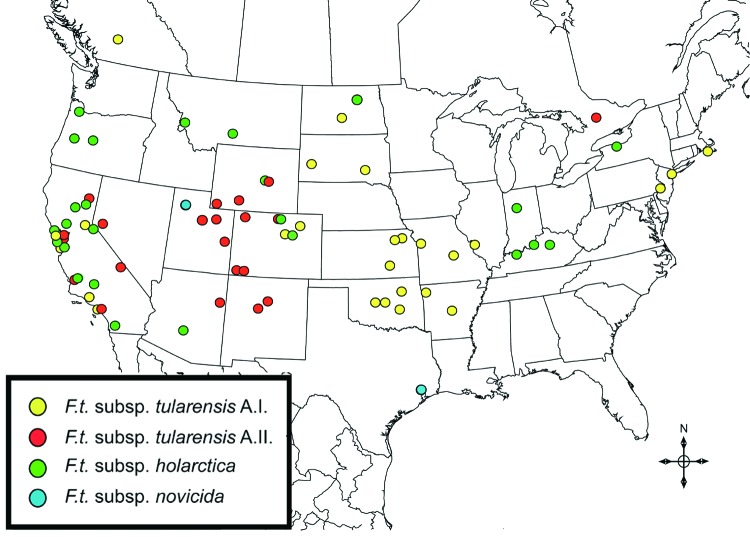
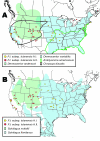
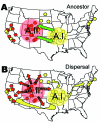
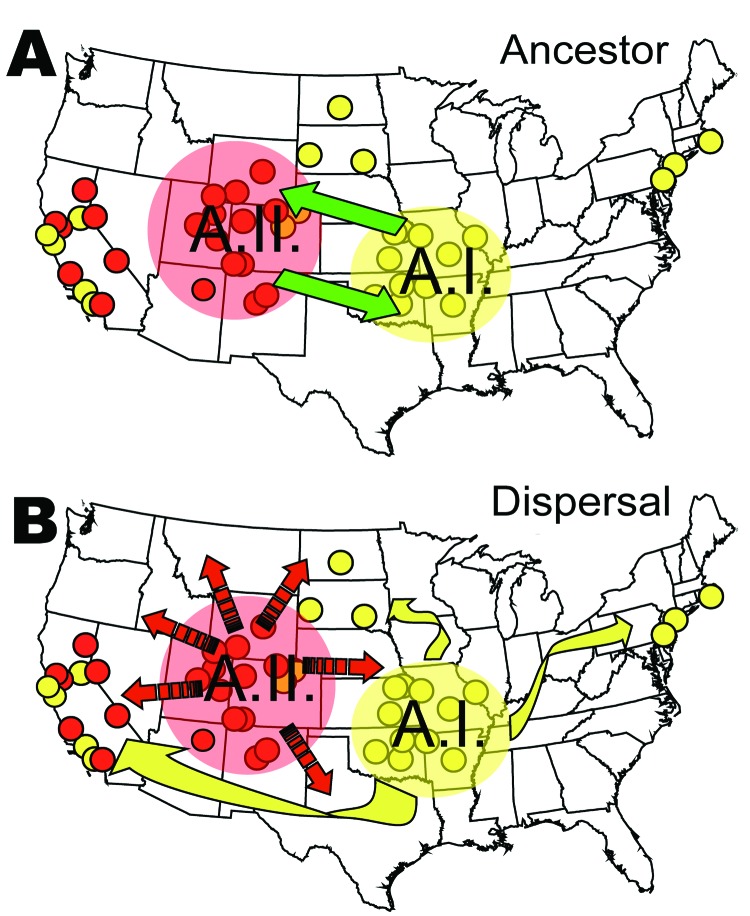
Description:The causative agent of tularemia, Francisella tularensis, is a formidable biologic agent that occurs naturally throughout North America. We examined genetic and spatial diversity patterns among 161 US F. tularensis isolates by using a 24-marker multiple-locus variable-number tandem repeat analysis (MLVA) system. MLVA identified 126 unique genotypes. Phylogenetic analyses showed patterns similar to recently reported global-scale analyses. We observed clustering by subspecies, low genetic diversity within F. tularensis subsp. holarctica, and division of F. tularensis subsp. tularensis into 2 distinct subpopulations: A.I. and A.II. The 2 F. tularensis subsp. tularensis subpopulations also represent geographically distinct groups; A.I. occurs primarily in the central United States, and A.II. occurs primarily in the western United States. These spatial distributions are correlated with geographic ranges of particular vectors, hosts of tularemia, and abiotic factors. These correlates provide testable hypotheses regarding ecologic factors associated with maintaining tularemia foci.
-
Subjects:
-
Source:Emerg Infect Dis. 11(12):1835-1841.
-
Document Type:
-
Place as Subject:
-
Volume:11
-
Issue:12
-
Download URL:
-
File Type:
 [PDF - 547.01 KB]
 -
Collection(s):
-
Main Document Checksum:urn:sha256:9030ba4500bb8a3848bf261706c9b07adf77e44b5e06560871e97519569b8ffa
Supporting Files


File Language:
English
 Was this page helpful?
 Found an issue?





CDC STACKS serves as an archival repository of CDC-published products including
scientific findings, journal articles, guidelines, recommendations, or other public health information authored or
co-authored by CDC or funded partners.
As a repository, CDC STACKS retains documents in their original published format to ensure public access to scientific information.
As a repository, CDC STACKS retains documents in their original published format to ensure public access to scientific information.
You May Also Like
COLLECTION
Emerging Infectious Diseases