


Evaluation of low-cost electro-chemical sensors for environmental monitoring of ozone, nitrogen dioxide, and carbon monoxide
Supporting Files

-
Feb 2018
-
File Language:
English
Details
-
Alternative Title:J Occup Environ Hyg
-
Personal Author:
-
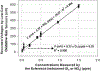
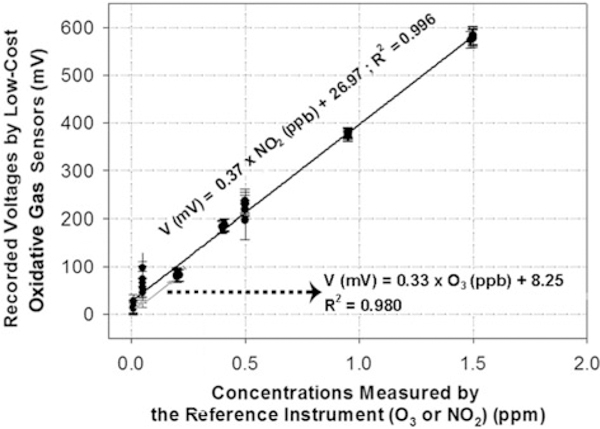
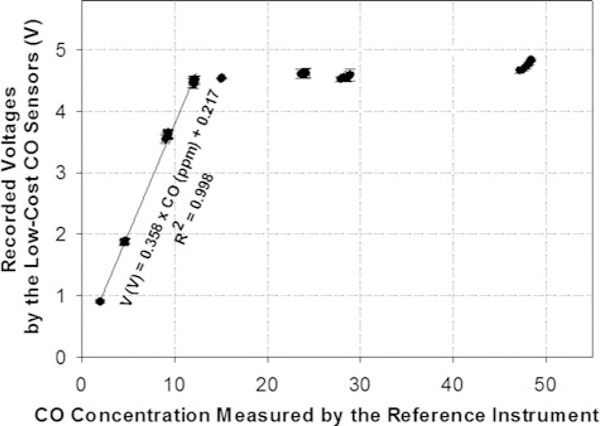
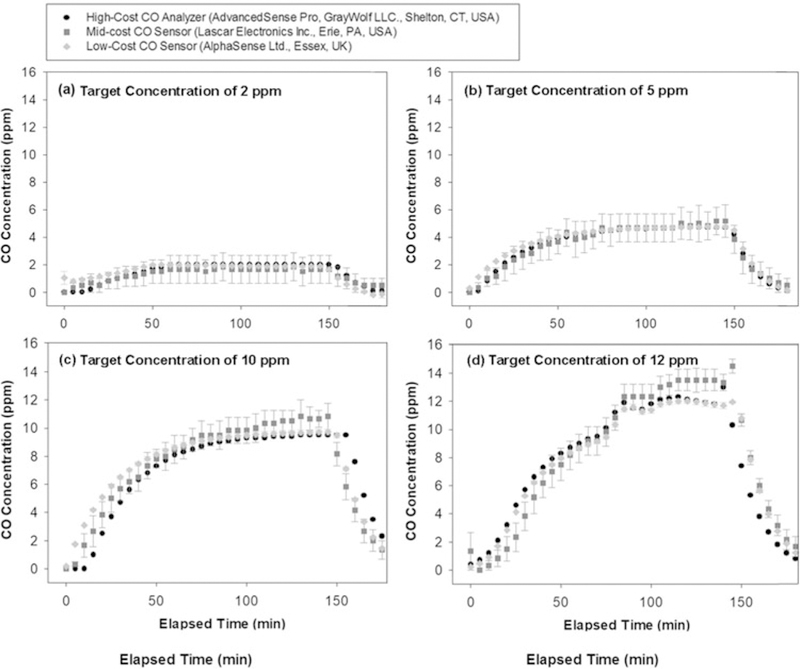
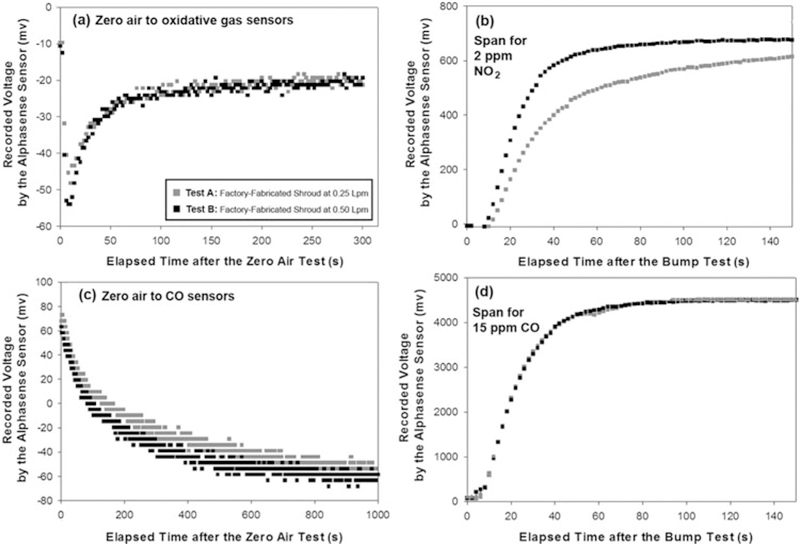
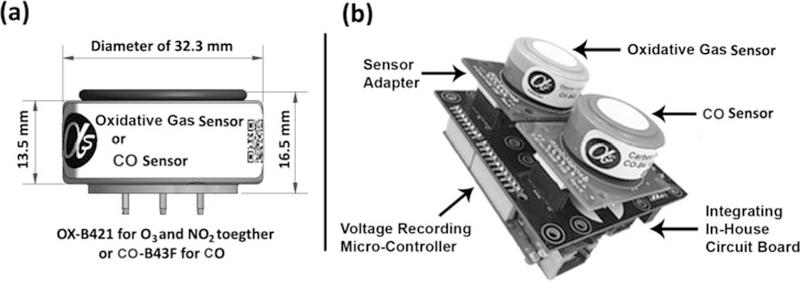
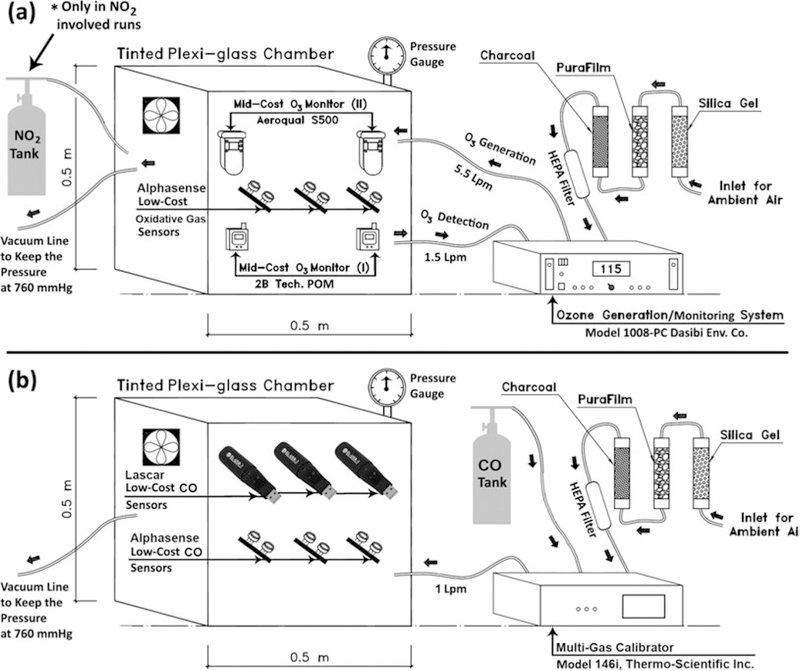
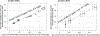
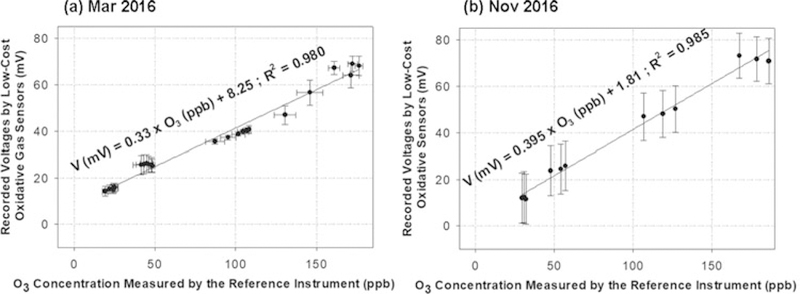
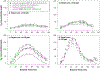
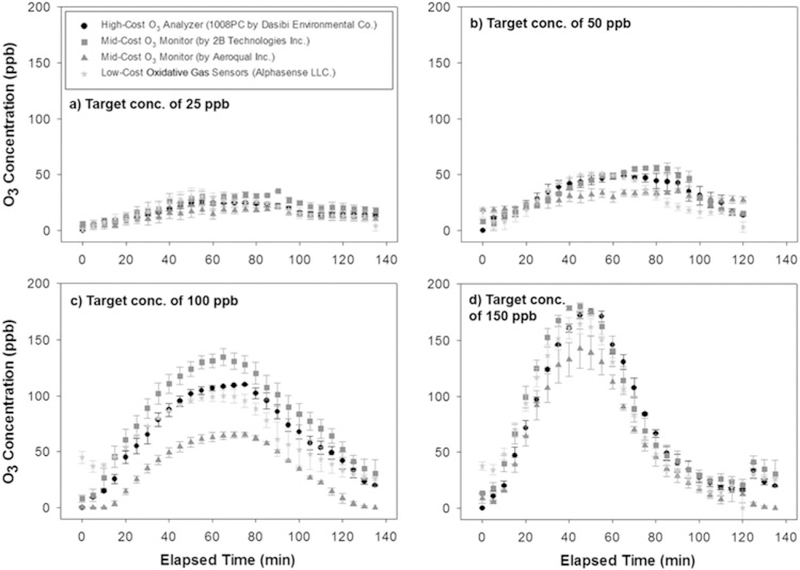
Description:Development of an air quality monitoring network with high spatio-temporal resolution requires installation of a large number of air pollutant monitors. However, state-of-the-art monitors are costly and may not be compatible with wireless data logging systems. In this study, low-cost electro-chemical sensors manufactured by Alphasense Ltd. for detection of CO and oxidative gases (predominantly O| and NO|) were evaluated. The voltages from three oxidative gas sensors and three CO sensors were recorded every 2.5 sec when exposed to controlled gas concentrations in a 0.125-m| acrylic glass chamber. Electro-chemical sensors for detection of oxidative gases demonstrated sensitivity to both NO| and O| with similar voltages recorded when exposed to equivalent environmental concentrations of NO| or O| gases, when evaluated separately. There was a strong linear relationship between the recorded voltages and target concentrations of oxidative gases (R| > 0.98) over a wide range of concentrations. Although a strong linear relationship was also observed for CO concentrations below 12 ppm, a saturation effect was observed wherein the voltage only changes minimally for higher CO concentrations (12-50 ppm). The nonlinear behavior of the CO sensors implied their unsuitability for environments where high CO concentrations are expected. Using a manufacturer-supplied shroud, sensors were tested at 2 different flow rates (0.25 and 0.5 Lpm) to mimic field calibration of the sensors with zero air and a span gas concentration (2 ppm NO2 or 15 ppm CO). As with all electrochemical sensors, the tested devices were subject to drift with a bias up to 20% after 9 months of continuous operation. Alphasense CO sensors were found to be a proper choice for occupational and environmental CO monitoring with maximum concentration of 12 ppm, especially due to the field-ready calibration capability. Alphasense oxidative gas sensors are usable only if it is valuable to know the sum of the NO| and O| concentrations.
-
Subjects:
-
Source:J Occup Environ Hyg. 15(2):87-98
-
Pubmed ID:29083958
-
Pubmed Central ID:PMC6541011
-
Document Type:
-
Funding:
-
Volume:15
-
Issue:2
-
Collection(s):
-
Main Document Checksum:urn:sha256:7bebb33d49ecea7bbda9aad23185d1cecfcc202fff64cd033e8810e0f2e80d1e
-
Download URL:
-
File Type:
 [PDF
- 936.03 KB
]
[PDF
- 936.03 KB
]
Supporting Files


File Language:
English
ON THIS PAGE

CDC STACKS serves as an archival repository of CDC-published products including
scientific findings,
journal articles, guidelines, recommendations, or other public health information authored or
co-authored by CDC or funded partners.
As a repository, CDC STACKS retains documents in their original published format to ensure public access to scientific information.
As a repository, CDC STACKS retains documents in their original published format to ensure public access to scientific information.
You May Also Like
COLLECTION
CDC Public Access