


Identifying birth defects in automated data sources in the Vaccine Safety Datalink
Supporting Files

-
January 04 2017
File Language:
English
Details
-
Alternative Title:Pharmacoepidemiol Drug Saf
-
Personal Author:Kharbanda, Elyse Olshen ; Vazquez-Benitez, Gabriela ; Romitti, Paul A. ; Naleway, Allison L. ; Cheetham, T. Craig ; Lipkind, Heather S. ; Sivanandam, Shanthi ; Klein, Nicola P. ; Lee, Grace M. ; Jackson, Michael L. ; Hambidge, Simon J. ; Olsen, Avalow ; McCarthy, Natalie ; DeStefano, Frank ; Nordin, James D.
-
Description:Purpose
The Vaccine Safety Datalink (VSD), a collaboration between the Centers for Disease Control and Prevention and several large healthcare organizations, aims to monitor safety of vaccines administered in the USA. We present definitions and prevalence estimates for major structural birth defects to be used in studies of maternal vaccine safety.
Methods
In this observational study, we created and refined algorithms for identifying major structural birth defects from electronic healthcare data, conducted formal chart reviews for severe cardiac defects, and conducted limited chart validation for other defects. We estimated prevalence for selected defects by VSD site and birth year and compared these estimates to those in a US and European surveillance system.
Results
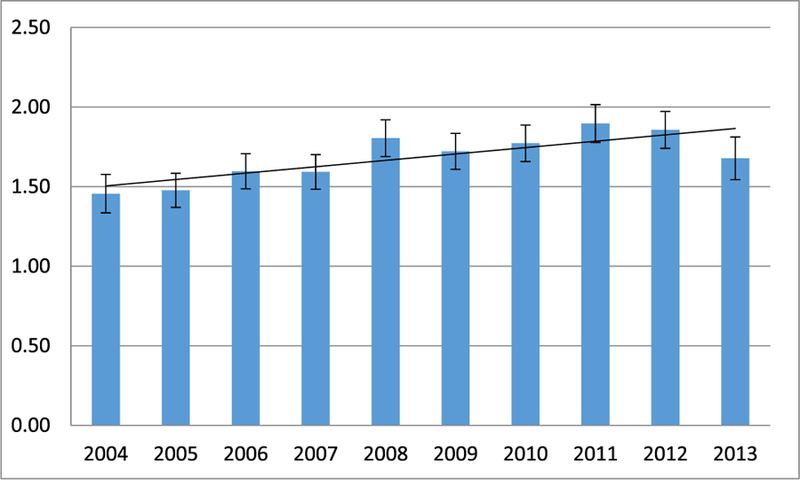
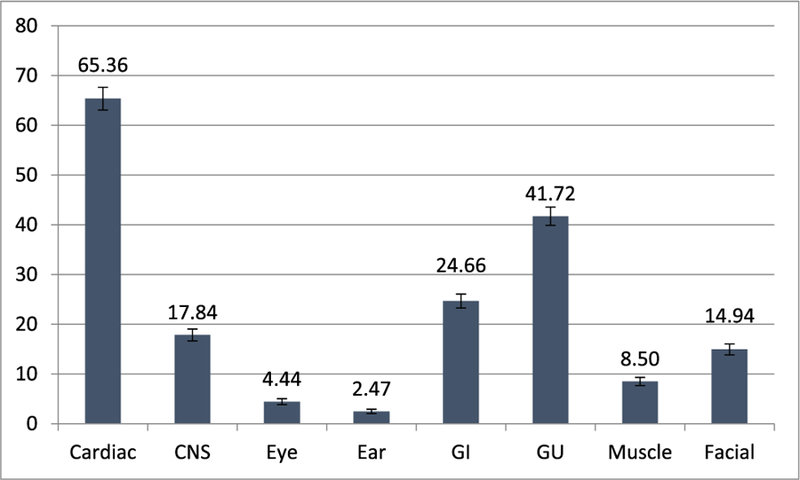
We developed algorithms to enumerate >50 major structural birth defects from standardized administrative and healthcare data based on utilization patterns and expert opinion, applying criteria for number, timing, and setting of diagnoses. Our birth cohort included 497 894 infants across seven sites. The period prevalence for all selected major birth defects in the VSD from 2004 to 2013 was 1.7 per 100 live births. Cardiac defects were most common (65.4 per 10 000 live births), with one-fourth classified as severe, requiring emergent intervention. For most major structural birth defects, prevalence estimates were stable over time and across sites and similar to those reported in other population-based surveillance systems.
Conclusions
Our algorithms can efficiently identify many major structural birth defects in large healthcare datasets and can be used in studies evaluating the safety of vaccines administered to pregnant women.
-
Subjects:
-
Source:Pharmacoepidemiol Drug Saf. 26(4):412-420
-
Pubmed ID:28054412
-
Pubmed Central ID:PMC6506837
-
Document Type:
-
Funding:
-
Place as Subject:
-
Volume:26
-
Issue:4
-
Collection(s):
-
Main Document Checksum:urn:sha256:b5ddec95996f12c2d2dee00b07191fb884f2f4af150e6eab302dd868a602a7fe
-
Download URL:
-
File Type:
 [PDF
- 423.71 KB
]
[PDF
- 423.71 KB
]
Supporting Files


File Language:
English
ON THIS PAGE

CDC STACKS serves as an archival repository of CDC-published products including
scientific findings,
journal articles, guidelines, recommendations, or other public health information authored or
co-authored by CDC or funded partners.
As a repository, CDC STACKS retains documents in their original published format to ensure public access to scientific information.
As a repository, CDC STACKS retains documents in their original published format to ensure public access to scientific information.
You May Also Like
COLLECTION
CDC Public Access