


Silicosis prevalence and incidence among Medicare beneficiaries
Supporting Files

-
January 18 2019
File Language:
English
Details
-
Alternative Title:Am J Ind Med
-
Personal Author:
-
Description:Introduction:
Existing epidemiologic information on silicosis relies on mortality data.
Methods:
We analyzed health insurance claims and enrollment information from 49 923 987 fee-for-service (FFS) Medicare beneficiaries aged ≥65 from 1999 to 2014. Three different definitions were developed to identify silicosis cases and results are presented as ranges of values for the three definitions.
Results:
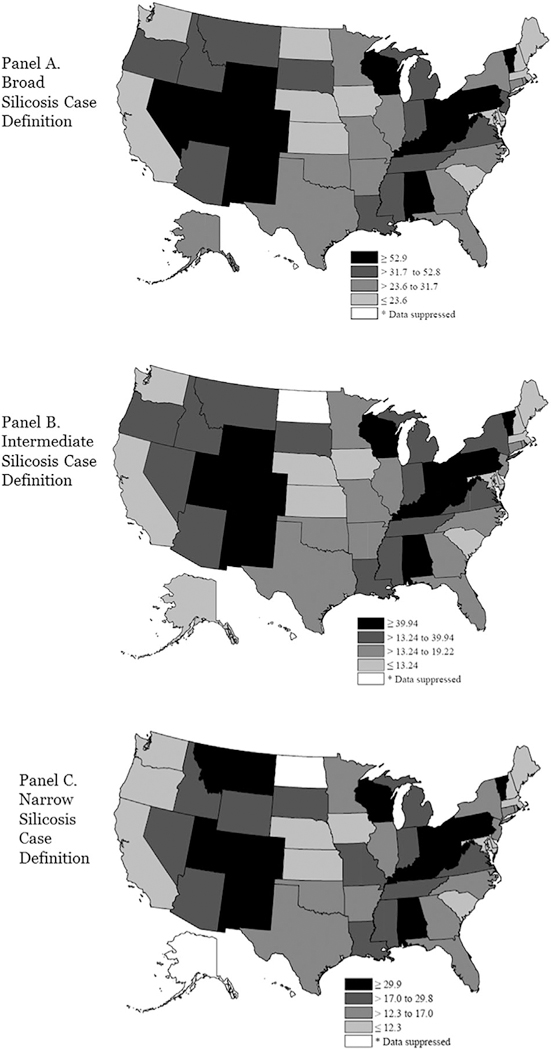
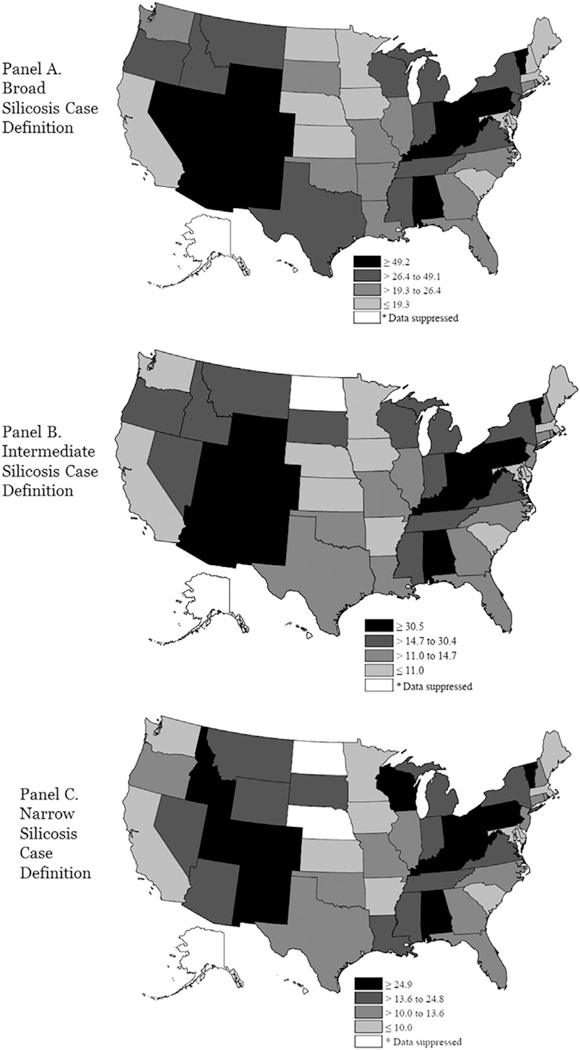
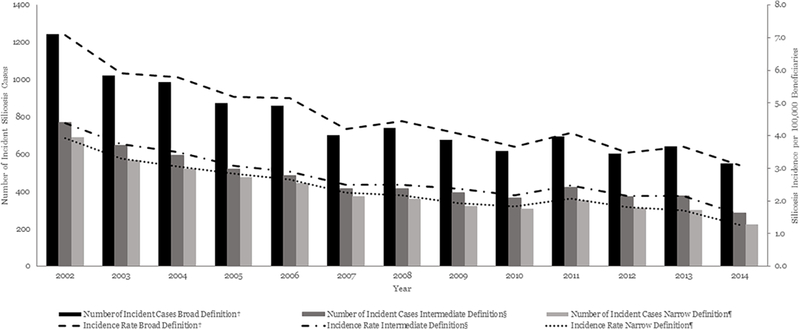
Among FFS beneficiaries, 10 026–19 696 fit the silicosis case definitions (16-year prevalence: 20.1–39.5 per 100 000) with the highest prevalence among North American Natives (87.2–213.6 per 100 000) and those in New Mexico (83.9–203.4 per 100 000). The annual average prevalence had a significant (P <0.05) 2–5% annual decline from 2005 to 2014. The average annual number of incident cases had a significant 3–16% annual decline from 2007 to 2014.
Conclusions:
Silicosis is a prevalent disease among Medicare beneficiaries aged ≥65, with variation across the country. Morbidity data from health insurance claims can provide a more complete picture of silicosis burden.
-
Subjects:
-
Source:Am J Ind Med. 62(3):183-191
-
Pubmed ID:30658007
-
Pubmed Central ID:PMC6492239
-
Document Type:
-
Funding:
-
Volume:62
-
Issue:3
-
Collection(s):
-
Main Document Checksum:urn:sha256:e944ad84725d93af6446b0da86742ee7c8fce1f811e87f7b08de3239a771f6f6
-
Download URL:
-
File Type:
 [PDF
- 365.00 KB
]
[PDF
- 365.00 KB
]
Supporting Files


File Language:
English
ON THIS PAGE




CDC STACKS serves as an archival repository of CDC-published products including
scientific findings,
journal articles, guidelines, recommendations, or other public health information authored or
co-authored by CDC or funded partners.
As a repository, CDC STACKS retains documents in their original published format to ensure public access to scientific information.
As a repository, CDC STACKS retains documents in their original published format to ensure public access to scientific information.
You May Also Like
COLLECTION
CDC Public Access