



Characterizing Rigging Crew Proximity to Hazards on Cable Logging Operations Using GNSS-RF: Effect of GNSS Positioning Error on Worker Safety Status
Supporting Files

-
10 2017
-
Available in CDC Stacks on 2019-04-09T00:00:00Z

File Language:
English
Details
-
Journal Article:Forests
-
Personal Author:
-
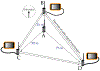
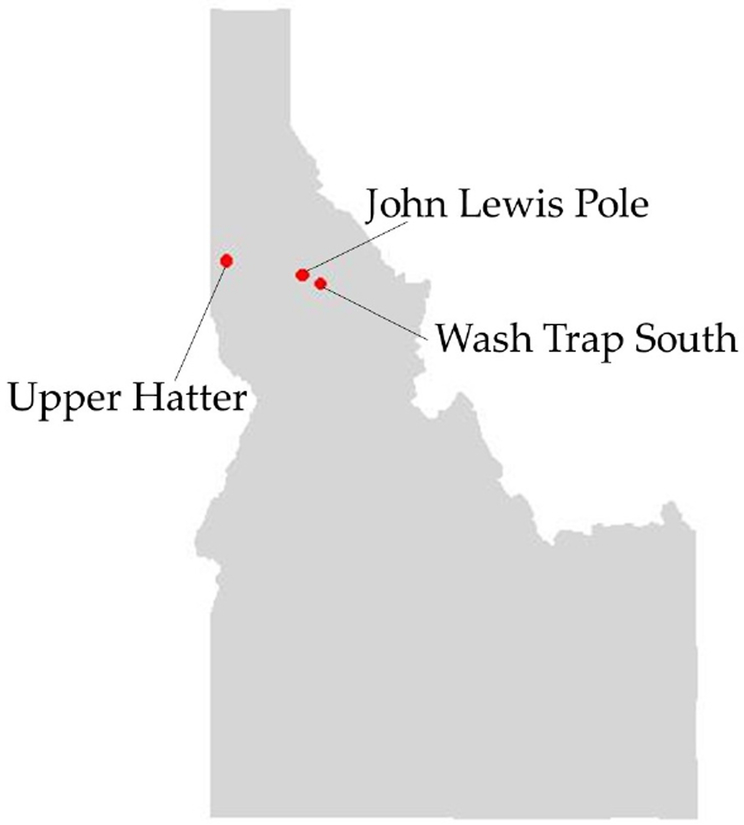
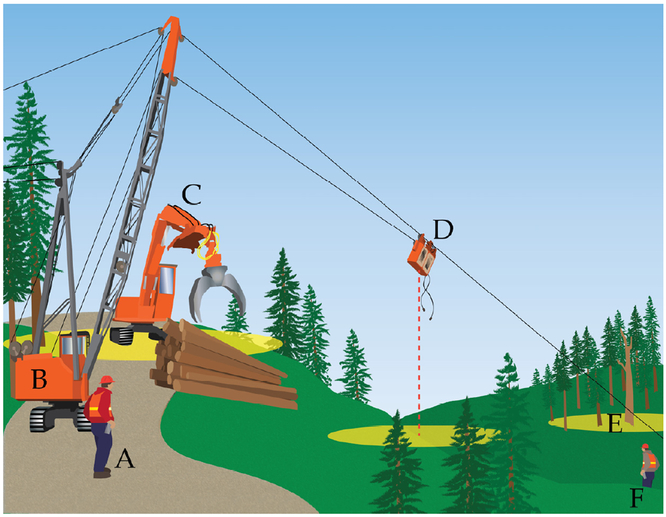
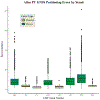
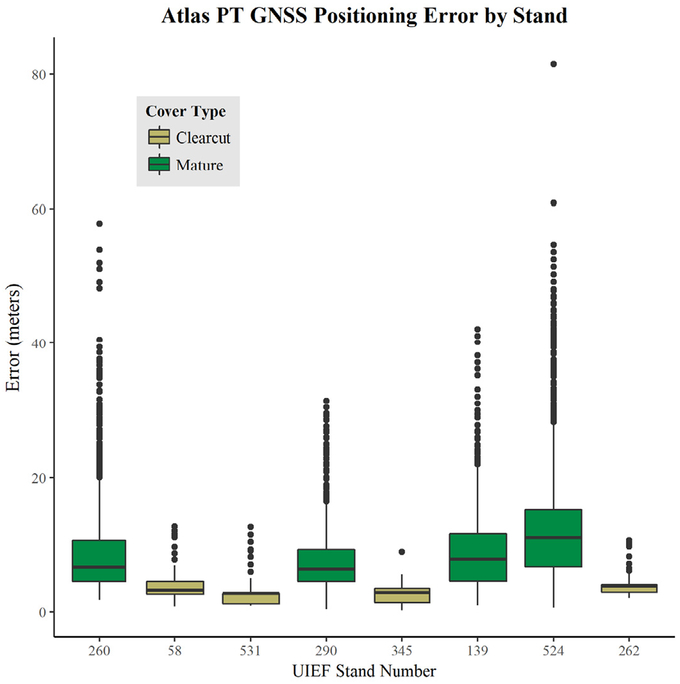
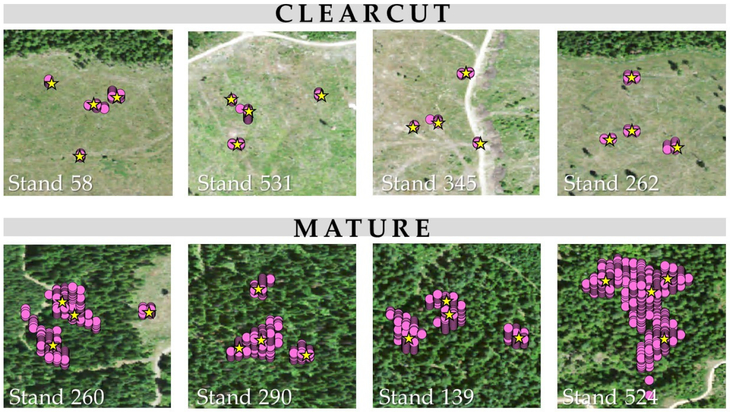
Description:Logging continues to rank among the most lethal occupations in the United States. Though the hazards associated with fatalities are well-documented and safe distances from hazards is a common theme in safety education, positional relationships between workers and hazards have not been quantified previously. Using GNSS-RF (Global Navigation Satellite System-Radio Frequency) transponders that allow real-time monitoring of personnel, we collected positioning data for rigging crew workers and three common cable logging hazards: a log loader, skyline carriage, and snag. We summarized distances between all ground workers and each hazard on three active operations and estimated the proportion of time crew occupied higher-risk areas, as represented by geofences. We then assessed the extent to which positioning error associated with different stand conditions affected perceived worker safety status by applying error sampled in a separate, controlled field experiment to the operational data. Root mean squared error was estimated at 11.08 m in mature stands and 3.37 m in clearcuts. Simulated error expected for mature stands altered safety status in six of nine treatment combinations, whereas error expected for clearcuts affected only one. Our results show that canopy-associated GNSS error affects real-time geofence safety applications when using single-constellation American Global Positioning System transponders.
-
Keywords:
-
Source:Forests. 8(10)
-
DOI:
-
Pubmed ID:30976381
-
Pubmed Central ID:PMC6456079
-
Document Type:
-
Funding:
-
Genre:
-
Volume:8
-
Issue:10
-
Download URL:
-
File Type:
 [PDF - 1.29 MB]
 -
Collection(s):
-
Main Document Checksum:urn:sha-512:d4178712c454dc2eb6b011a303eae036dfbc6a0e06f6ded2ef2898666fc8ca5533d75c8cbaf543fa071ebc2420ce4ed39e42956652479a5c5ffbce163ce60083
Supporting Files


File Language:
English
 Was this page helpful?
 Found an issue?





CDC STACKS serves as an archival repository of CDC-published products including
scientific findings, journal articles, guidelines, recommendations, or other public health information authored or
co-authored by CDC or funded partners.
As a repository, CDC STACKS retains documents in their original published format to ensure public access to scientific information.
As a repository, CDC STACKS retains documents in their original published format to ensure public access to scientific information.
You May Also Like
COLLECTION
CDC Public Access