



Prevalence of daily flossing among adults by selected risk factors for periodontal disease- United States, 2009-2014
Supporting Files

-
2018/08/01
-
Available in CDC Stacks on March 26, 2019, 12:00 AM
File Language:
English
Details
-
Alternative Title:J Periodontol
-
Personal Author:
-
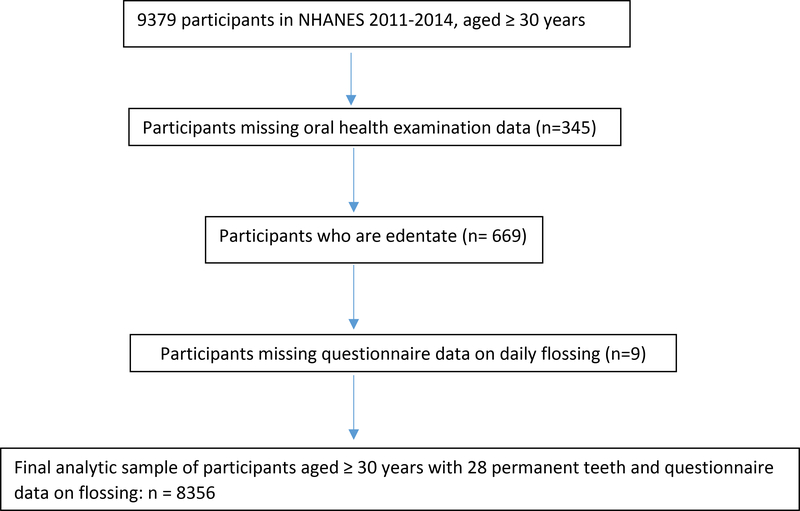
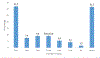
Description:Daily flossing prevalence was determined among adults ≥30 years old in the United States, by demographic and risk factors for periodontal disease, including current tobacco use and diabetes.|Data from the 2011-2014 National Health and Nutrition Examination Survey were analyzed for 8,356 adults. Flossing prevalence was estimated. Logistic regression analysis examined the association between daily flossing and demographic and risk factors for periodontal diseases.|Daily flossing among adults was 31.6% (standard error SE = 0.8). There were significant differences among the categories of flossing according to age, sex, race/Hispanic origin, poverty status, education, current tobacco use, and diabetes status. In adjusted analyses, current tobacco users (odds ratio OR: 0.82; 95% confidence index CI 0.68, 0.99) had lower odds of daily flossing than non-tobacco users; there was no significant difference between adults with and without diabetes (OR 0.75; 95% CI 0.52, 1.08).|Approximately one-third of adults in the United States reported that they floss daily. Daily flossing was higher among women, those with higher income, and non-Hispanic Asian and Hispanic adults, but it was lower among current tobacco users.
-
Subjects:
-
Source:J Periodontol. 89(8):933-939
-
Pubmed ID:29644699
-
Pubmed Central ID:PMC6434526
-
Document Type:
-
Funding:
-
Genre:
-
Place as Subject:
-
Volume:89
-
Issue:8
-
Download URL:
-
File Type:
 [PDF - 272.46 KB]
 -
Collection(s):
-
Main Document Checksum:urn:sha-512:c76bdaf20979c043435714781452b6eebd19cb35612b2600efc9c59293e6bca6db598c2dc81fee335a819a3cb263b74417013cab11bdfc4fa9583c190055184f
Supporting Files


File Language:
English
 Was this page helpful?
 Found an issue?


CDC STACKS serves as an archival repository of CDC-published products including
scientific findings, journal articles, guidelines, recommendations, or other public health information authored or
co-authored by CDC or funded partners.
As a repository, CDC STACKS retains documents in their original published format to ensure public access to scientific information.
As a repository, CDC STACKS retains documents in their original published format to ensure public access to scientific information.
You May Also Like
COLLECTION
CDC Public Access