


Trends of Human Plague, Madagascar, 1998–2016
Supporting Files
Public Domain

-
Feb 2019
-
File Language:
English
Details
-
Alternative Title:Emerg Infect Dis
-
Personal Author:
-
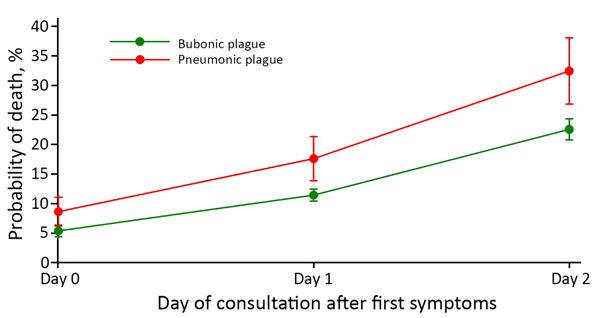
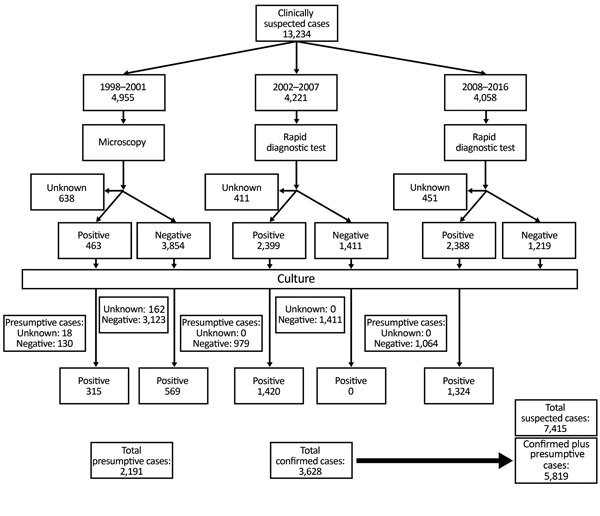
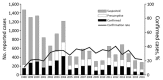
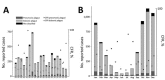
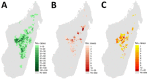
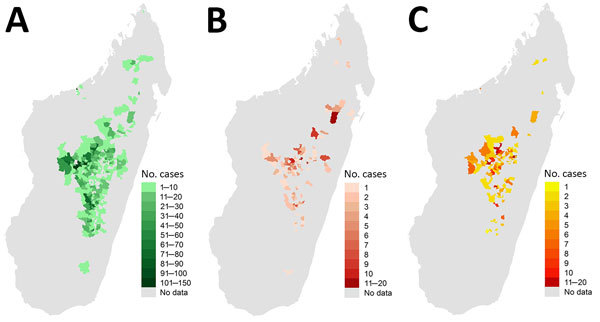
Description:Madagascar is more seriously affected by plague, a zoonosis caused by Yersinia pestis, than any other country. The Plague National Control Program was established in 1993 and includes human surveillance. During 1998-2016, a total of 13,234 suspected cases were recorded, mainly from the central highlands; 27% were confirmed cases, and 17% were presumptive cases. Patients with bubonic plague (median age 13 years) represented 93% of confirmed and presumptive cases, and patients with pneumonic plague (median age 29 years) represented 7%. Deaths were associated with delay of consultation, pneumonic form, contact with other cases, occurrence after 2009, and not reporting dead rats. A seasonal pattern was observed with recrudescence during September-March. Annual cases peaked in 2004 and decreased to the lowest incidence in 2016. This overall reduction occurred primarily for suspected cases and might be caused by improved adherence to case criteria during widespread implementation of the F1 rapid diagnostic test in 2002.
-
Subjects:
-
Source:Emerg Infect Dis. 25(2):220-228
-
Pubmed ID:30666930
-
Pubmed Central ID:PMC6346457
-
Document Type:
-
Place as Subject:
-
Location:
-
Volume:25
-
Issue:2
-
Collection(s):
-
Main Document Checksum:urn:sha256:d4d7aefa520d2d26087178ca95767365f7c506ad917cd3be383c031b767e0e15
-
Download URL:
-
File Type:
 [PDF
- 1.19 MB
]
[PDF
- 1.19 MB
]
Supporting Files


File Language:
English
ON THIS PAGE



CDC STACKS serves as an archival repository of CDC-published products including
scientific findings,
journal articles, guidelines, recommendations, or other public health information authored or
co-authored by CDC or funded partners.
As a repository, CDC STACKS retains documents in their original published format to ensure public access to scientific information.
As a repository, CDC STACKS retains documents in their original published format to ensure public access to scientific information.
You May Also Like
COLLECTION
Emerging Infectious Diseases