



Impact of community respiratory viral infections in urban children with asthma
Supporting Files

-
2 2019 ; 2-2019
-
Available in CDC Stacks on 2020-02-01T00:00:00Z
File Language:
English
Details
-
Alternative Title:Ann Allergy Asthma Immunol
-
Personal Author:Lewis, Toby C. ; Metitiri, Ediri E. ; Mentz, Graciela B. ; Ren, Xiaodan ; Goldsmith, Adam M. ; Eder, Breanna N. ; Wicklund, Kyra E. ; Walsh, Megan P. ; Comstock, Adam T. ; Ricci, Jeannette M. ; Brennan, Sean R. ; Washington, Ginger L. ; Owens, Kendall B. ; Mukherjee, Bhramar ; Robins, Thomas G. ; Batterman, Stuart A. ; Hershenson, Marc B.
-
Corporate Authors:
-
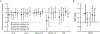
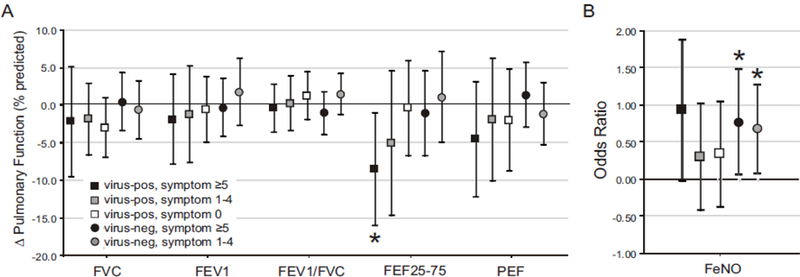
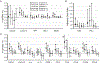
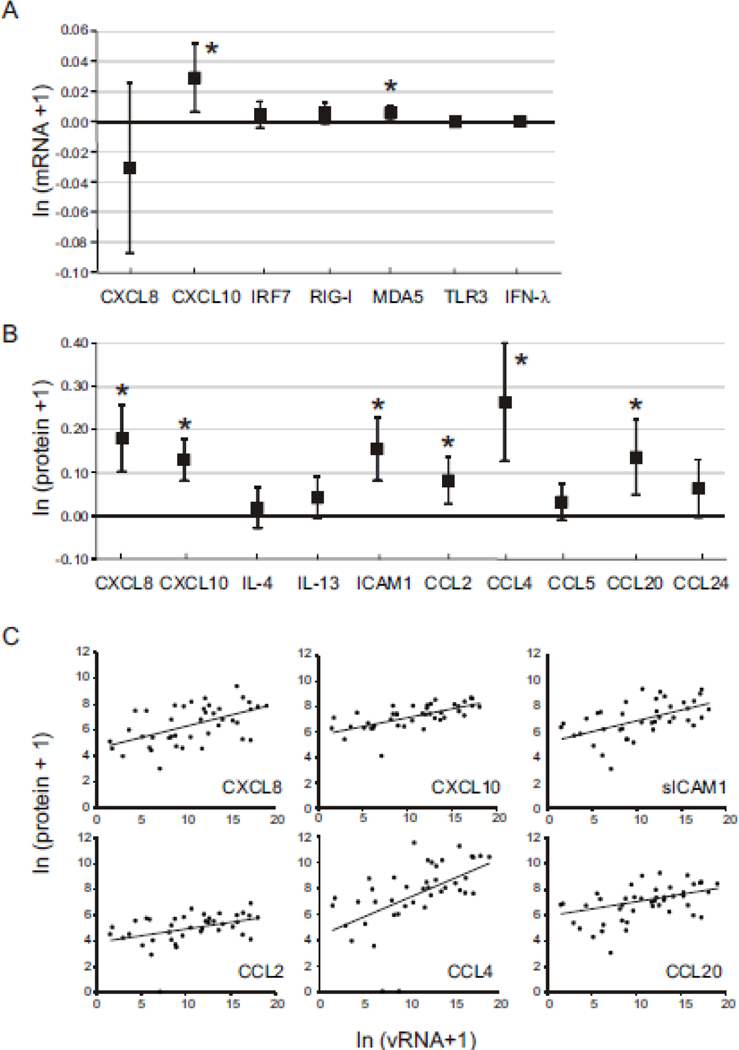
Description:Background: ; Upper respiratory tract viral infections cause asthma exacerbations in children. However, the impact of natural colds on asthmatic children in the community, particularly in the high-risk urban environment, is less well-defined. ; Objective: ; We hypothesized that children with high-symptom upper respiratory viral infections have reduced airway function and greater respiratory tract inflammation than children with virus-positive low-symptom illnesses or virus-negative upper respiratory tract symptoms. ; Methods: ; We studied 53 asthmatic children from Detroit, Michigan during scheduled surveillance periods and self-reported respiratory illnesses for one year. Symptom score, spirometry, fraction of exhaled nitric oxide (FeNO) and nasal aspirate biomarkers, viral nucleic acid and rhinovirus (RV) copy number were assessed. ; Results: ; Of 658 aspirates collected, 22.9% of surveillance samples and 33.7% of respiratory illnesses were virus-positive. Compared to the virus-negative asymptomatic condition, children with severe colds (symptom score ≥5) showed reduced forced expiratory flow at 25–75% of the pulmonary volume (FEF25–75), higher nasal mRNA expression of C-X-C motif chemokine ligand (CXCL)-10 and melanoma differentiation-associated protein 5, and higher protein abundance of CXCL8, CXCL10 and C-C motif chemokine ligands (CCL)-2, CCL4, CCL20 and CCL24. Children with mild (symptom score 1–4) and asymptomatic infections showed normal airway function and fewer biomarker elevations. Virus-negative cold-like illnesses demonstrated increased FeNO, minimal biomarker elevation and normal airflow. RV copy number was associated with nasal chemokine levels but not symptom score. ; Conclusion: ; Urban asthmatic children with high-symptom respiratory viral infections have reduced FEF25–75 and more elevations of nasal biomarkers than children with mild or asymptomatic infections, or virus-negative illnesses.
-
Subjects:
-
Keywords:
-
Source:Ann Allergy Asthma Immunol. 122(2):175-183.e2
-
Pubmed ID:30385348
-
Pubmed Central ID:PMC6360098
-
Document Type:
-
Funding:
-
Volume:122
-
Issue:2
-
Download URL:
-
File Type:
 [PDF - 890.78 KB]
 -
Collection(s):
-
Main Document Checksum:urn:sha256:f462a58682a6b696b92bb8ccc13076c9e8eacca48af975b4ab76902a5aea33e7
Supporting Files


File Language:
English
 Was this page helpful?
 Found an issue?





CDC STACKS serves as an archival repository of CDC-published products including
scientific findings, journal articles, guidelines, recommendations, or other public health information authored or
co-authored by CDC or funded partners.
As a repository, CDC STACKS retains documents in their original published format to ensure public access to scientific information.
As a repository, CDC STACKS retains documents in their original published format to ensure public access to scientific information.
You May Also Like
COLLECTION
CDC Public Access