



Mature outcomes and prognostic indices in diffuse large B-cell lymphoma in Malawi: a prospective cohort
Supporting Files

-
2 2019
-
Available in CDC Stacks on 2020-02-01T00:00:00Z
File Language:
English
Details
-
Journal Article:Br J Haematol
-
Personal Author:Painschab, Matthew S.
 ;
Kasonkanji, Edwards
;
Zuze, Takondwa
;
Kaimila, Bongani
;
Tomoka, Tamiwe
;
Nyasosela, Richard
;
Nyirenda, Ruth
;
Dhungel, Bal M.
;
Mulenga, Maurice
;
Chikasema, Maria
;
Tewete, Blessings
;
Mtangwanika, Asekanadziwa
;
Chiyoyola, Sarah
;
Mhango, Wilberforce
;
Chimzimu, Fred
;
Kampani, Coxcilly
;
Krysiak, Robert
;
Shea, Thomas C.
;
Montgomery, Nathan D.
;
Fedoriw, Yuri
;
Gopal, Satish
;
Kasonkanji, Edwards
;
Zuze, Takondwa
;
Kaimila, Bongani
;
Tomoka, Tamiwe
;
Nyasosela, Richard
;
Nyirenda, Ruth
;
Dhungel, Bal M.
;
Mulenga, Maurice
;
Chikasema, Maria
;
Tewete, Blessings
;
Mtangwanika, Asekanadziwa
;
Chiyoyola, Sarah
;
Mhango, Wilberforce
;
Chimzimu, Fred
;
Kampani, Coxcilly
;
Krysiak, Robert
;
Shea, Thomas C.
;
Montgomery, Nathan D.
;
Fedoriw, Yuri
;
Gopal, Satish
-
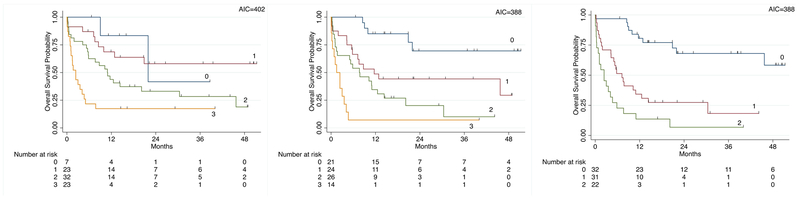
Description:Outcomes for diffuse large B-cell lymphoma (DLBCL) in sub-Saharan Africa (SSA) are poorly described. We report mature data from one of the first prospective SSA cohorts. Patients aged ≥18 years with DLBCL were enrolled in Malawi 2013-2017. Participants were treated with CHOP (cyclophosphamide, doxorubicin, vincristine, prednisone) chemotherapy and concurrent antiretroviral therapy (ART) if positive for human immunodeficiency virus (HIV+). Eighty-six participants (mean age 47 years, standard deviation 13) were enrolled: 54 (63%) were male and 51 (59%) were HIV+, of whom 34 (67%) were on ART at DLBCL diagnosis. Median CD4 count was 0·113 cells × 10| /l (interquartile range IQR 0·062-0·227) and 25 (49%) had HIV viral load <400 copies/μl. Participants received median six cycles CHOP (IQR 4-6). No patients were lost to follow-up and the 2-year overall survival was 38% (95% confidence interval 28-49). In multivariable analyses, Eastern Cooperative Oncology Group performance status (PS) ≥2 and lactate dehydrogenase (LDH) >2× upper limit of normal (ULN) were associated with mortality. HIV status was not associated with mortality. A simplified prognostic model of LDH >2× ULN and PS ≥2 performed at least as well as the age-adjusted International Prognostic Index. DLBCL can be successfully treated in SSA and outcomes did not differ by HIV status. A simplified prognostic model prognosticates well and may be easier to use in resource-limited settings but requires validation.
-
Subjects:
-
Keywords:
-
Source:Br J Haematol. 184(3):364-372
-
DOI:
-
Pubmed ID:30450671
-
Pubmed Central ID:PMC6340743
-
Document Type:
-
Funding:K01 TW009488/TW/FIC NIH HHSUnited States/ ; U54 CA190152/CA/NCI NIH HHSUnited States/ ; P20 CA210285/CA/NCI NIH HHSUnited States/ ; P30 CA016086/CA/NCI NIH HHSUnited States/ ; L30 CA233709/CA/NCI NIH HHSUnited States/ ; UM1 CA121947/CA/NCI NIH HHSUnited States/ ; R21 CA180815/CA/NCI NIH HHSUnited States/ ; U01 CA121947/CA/NCI NIH HHSUnited States/ ; D43 TW009340/TW/FIC NIH HHSUnited States/
-
Genre:
-
Volume:184
-
Issue:3
-
Download URL:
-
File Type:
 [PDF - 680.80 KB]
 -
Collection(s):
-
Main Document Checksum:urn:sha-512:f14702e554cf6c3d76169f42e55e0130905812e6c61cf80a3cfecdec0c629f2275b0277fc6125dfb94b09c7946d42a86ef0598e4b23835cc669da0b17352fe64
Supporting Files


File Language:
English
 Was this page helpful?
 Found an issue?



CDC STACKS serves as an archival repository of CDC-published products including
scientific findings, journal articles, guidelines, recommendations, or other public health information authored or
co-authored by CDC or funded partners.
As a repository, CDC STACKS retains documents in their original published format to ensure public access to scientific information.
As a repository, CDC STACKS retains documents in their original published format to ensure public access to scientific information.
You May Also Like
COLLECTION
CDC Public Access