


Purification of Cyclospora cayetanensis oocysts obtained from human stool specimens for whole genome sequencing
Supporting Files
Public Domain

-
Oct 12 2018
-
File Language:
English
Details
-
Alternative Title:Gut Pathog
-
Personal Author:
-
Description:Background
Cyclospora cayetanensis is a food-borne intestinal human parasite that causes outbreaks of diarrhea. There is a need for efficient laboratory methods for strain-level characterization to assist in outbreak investigations. By using next generation sequencing, genomic sequences can be obtained and compared to identify potential genotyping markers. However, there is no method available to propagate this parasite in the laboratory. Therefore, genomic DNA must be extracted from oocysts purified from human stool. The objective of this study was to apply optimized methods to purify C. cayetanensis oocysts and extract DNA in order to obtain high-quality whole genome sequences with minimum contamination of DNA from other organisms.
Results
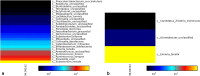
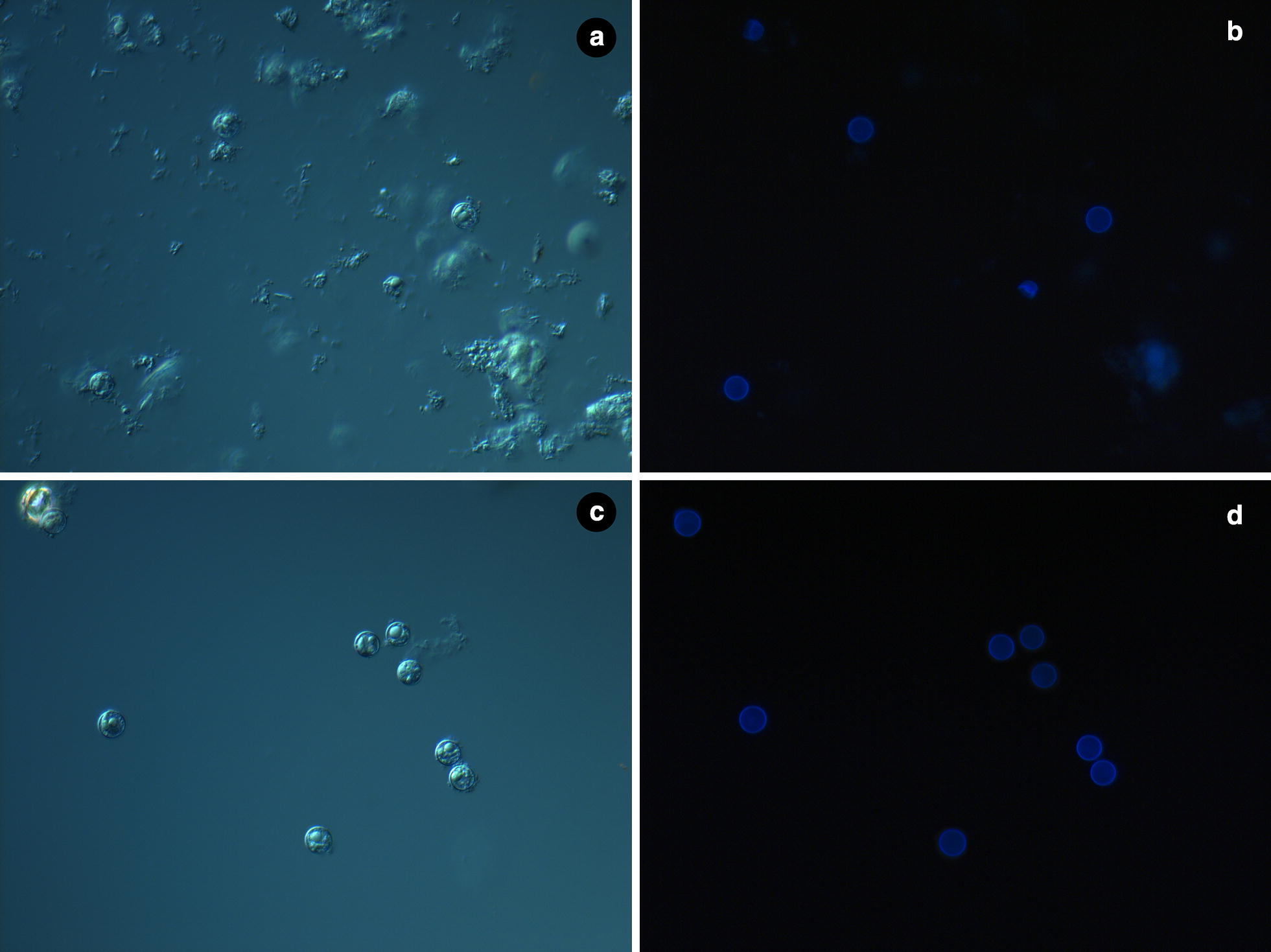
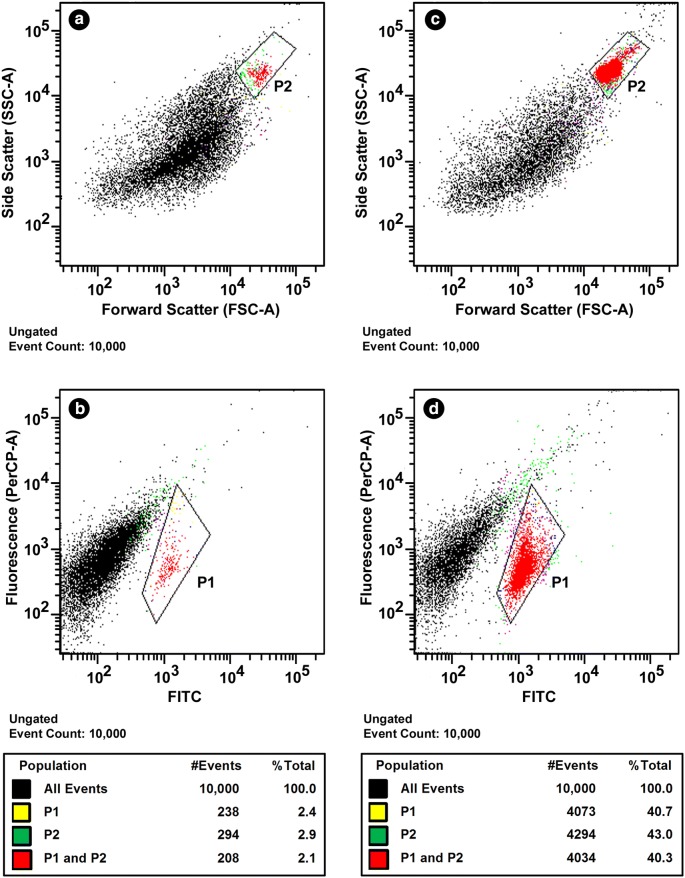
Oocysts from 21 human stool specimens were separated from other stool components using discontinuous density gradient centrifugation and purified further by flow cytometry. Genomic DNA was used to construct Ovation Ultralow libraries for Illumina sequencing. MiSeq sequencing reads were taxonomically profiled for contamination, de novo assembled, and mapped to a draft genome available in GenBank to assess the quality of the resulting genomic sequences. Following all purification steps, the majority (81–99%) of sequencing reads were from C. cayetanensis. They could be assembled into draft genomes of around 45 MB in length with GC-content of 52%.
Conclusions
Density gradients performed in the presence of a detergent followed by flow cytometry sorting of oocysts yielded sufficient genomic DNA largely free from contamination and suitable for whole genome sequencing of C. cayetanensis. The methods described here will facilitate the accumulation of genomic sequences from various samples, which is a prerequisite for the development of typing tools to aid in outbreak investigations.
-
Subjects:
-
Source:Gut Pathog. 10.
-
Pubmed ID:30337964
-
Pubmed Central ID:PMC6182803
-
Document Type:
-
Volume:10
-
Collection(s):
-
Main Document Checksum:urn:sha256:beed82e0dc89e6184a84c12b5da2cc8f7311183343a47e1a6f316d0aad171821
-
Download URL:
-
File Type:
 [PDF
- 2.74 MB
]
[PDF
- 2.74 MB
]
Supporting Files


File Language:
English
ON THIS PAGE





CDC STACKS serves as an archival repository of CDC-published products including
scientific findings,
journal articles, guidelines, recommendations, or other public health information authored or
co-authored by CDC or funded partners.
As a repository, CDC STACKS retains documents in their original published format to ensure public access to scientific information.
As a repository, CDC STACKS retains documents in their original published format to ensure public access to scientific information.
You May Also Like
COLLECTION
CDC Public Access