



Intrathecal 2-hydroxypropyl-β-cyclodextrin decreases neurological disease progression in Niemann-Pick Disease, type C1: an ad-hoc analysis of a non-randomized, open-label, phase 1/2 trial
Supporting Files

-
Aug 10 2017
-
Available in CDC Stacks on 2018-10-14T00:00:00Z
File Language:
English
Details
-
Alternative Title:Lancet
-
Personal Author:Ory, Daniel S. ; Ottinger, Elizabeth A. ; Farhat, Nicole Yanjanin ; King, Kelly A. ; Jiang, Xuntian ; Weissfeld, Lisa ; Berry-Kravis, Elizabeth ; Davidson, Cristin D. ; Bianconi, Simona ; Keener, Lee Ann ; Rao, Ravichandran ; Soldatos, Ariane ; Sidhu, Rohini ; Walters, Kimberly A. ; Xu, Xin ; Thurm, Audrey ; Solomon, Beth ; Pavan, William J. ; Machielse Drs, Bernardus N. ; Kao, Mark ; Silber, Steven A. ; McKew, John C. ; Brewer, Carmen C. ; Vite, Charles H. ; Walkley, Steven U. ; Austin, Christopher P. ; Porter, Forbes D.
-
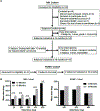
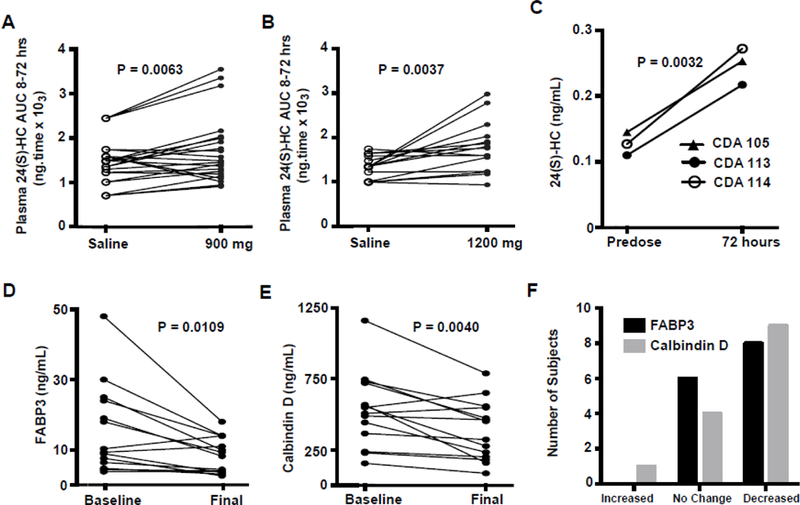
Description:Background ; Niemann-Pick disease, type C1 (NPC1) is a lysosomal storage disorder characterized by progressive neurodegeneration. In preclinical testing 2-hydroxypropyl-β-cyclodextrins (HPβCD) significantly delayed cerebellar Purkinje cell loss, slowed progression of neurological signs, and increased lifespan in murine and feline models of NPC1. ; Methods ; Safety and clinical efficacy of intrathecal HPβCD were evaluated in an open-label, dose- escalation phase 1/2a study. Intrathecal doses ranging from 50–1200 mg were evaluated in 14 neurologically affected NPC1 participants treated monthly for 12 to 18 months. Three additional participants were treated every two weeks for 18 months. Serum and CSF 24(S)- hydroxycholesterol, which served as a biomarker of target engagement, and CSF protein biomarkers were evaluated. NPC Neurological Severity Scores (NSS) were used to compare disease progression in HPβCD-treated participants relative to a historical comparison cohort of 21 NPC1 participants of similar age range. ; Findings ; No drug-related serious adverse events were observed. Mid- to high-frequency hearing loss, an expected adverse event, was documented. When managed with hearing aids, this did not have an appreciable impact on daily communication. Biomarker studies were consistent with improved neuronal cholesterol homeostasis and decreased neuronal pathology. The NSS score for the 14 participants treated monthly increased at a rate of 122 ± 0 34 points/year compared to 2 92 ± 0 27 points/year (p=0 0002) for the comparison group. Decreased progression was observed for NSS domains of ambulation (p=0 0622), cognition (p=0 0040) and speech (p=0 0423). ; Interpretation ; This phase 1/2a study of intrathecal HPβCD for the treatment of NPC1 demonstrated an acceptable safety profile and slowing of disease progression.
-
Subjects:
- Article
- 2-Hydroxypropyl-beta-cyclodextrin
- Adolescent
- Biomarkers
- Calbindins
- Child
- Child, Preschool
- Disease Progression
- Dose-Response Relationship, Drug
- Fatty Acid Binding Protein 3
- Female
- Hearing Loss, High-Frequency
- Humans
- Hydroxycholesterols
- Injections, Spinal
- Male
- Niemann-Pick Disease, Type C
- Rare Diseases
- Young Adult
-
Source:Lancet. 390(10104):1758-1768.
-
Pubmed ID:28803710
-
Pubmed Central ID:PMC6176479
-
Document Type:
-
Funding:ZIA HD000139-20/NULL/Intramural NIH HHS/United States ; R01 NS073661/NS/NINDS NIH HHS/United States ; ZIA HD008824-11/NULL/Intramural NIH HHS/United States ; HHSN261200800001C/RC/CCR NIH HHS/United States ; E11 CH000001/CH/OID CDC HHS/United States ; R01 NS081985/NS/NINDS NIH HHS/United States ; HHSN261200800001E/CA/NCI NIH HHS/United States
-
Volume:390
-
Issue:10104
-
Download URL:
-
File Type:
 [PDF - 949.59 KB]
 -
Collection(s):
-
Main Document Checksum:urn:sha256:d715885101d88181c4351e7894956e4ddebcf8ca9ecfc50df380de6e14230330
Supporting Files


File Language:
English
 Was this page helpful?
 Found an issue?




CDC STACKS serves as an archival repository of CDC-published products including
scientific findings, journal articles, guidelines, recommendations, or other public health information authored or
co-authored by CDC or funded partners.
As a repository, CDC STACKS retains documents in their original published format to ensure public access to scientific information.
As a repository, CDC STACKS retains documents in their original published format to ensure public access to scientific information.
You May Also Like
COLLECTION
CDC Public Access