


Differences in antigenic sites and other functional regions between genotype A and G mumps virus surface proteins
Supporting Files
Public Domain

-
Sep 06 2018
-
File Language:
English
Details
-
Alternative Title:Sci Rep
-
Personal Author:
-
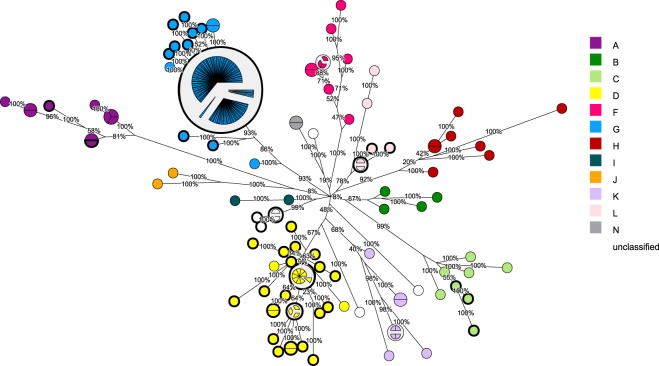
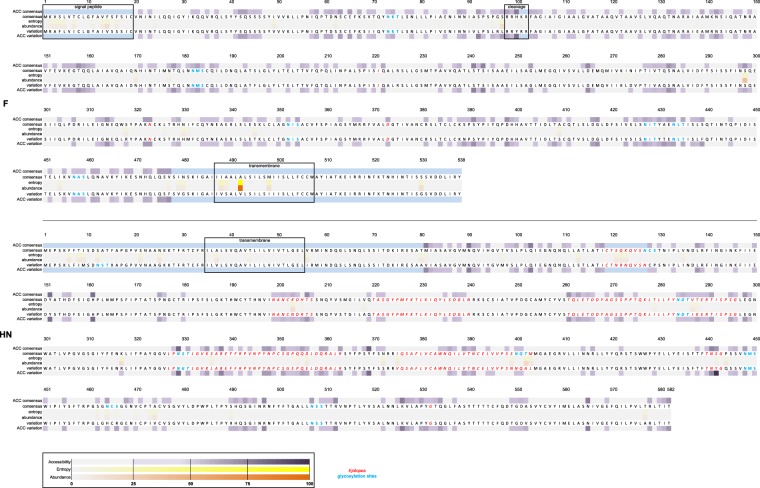
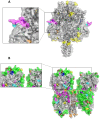
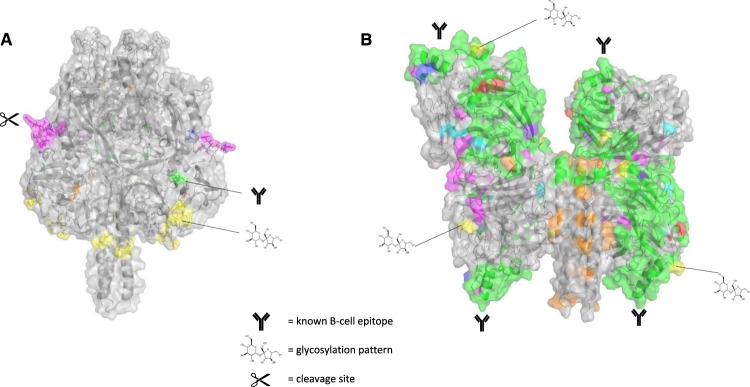
Description:The surface proteins of the mumps virus, the fusion protein (F) and haemagglutinin-neuraminidase (HN), are key factors in mumps pathogenesis and are important targets for the immune response during mumps virus infection. We compared the predicted amino acid sequences of the F and HN genes from Dutch mumps virus samples from the pre-vaccine era (1957-1982) with mumps virus genotype G strains (from 2004 onwards). Genotype G is the most frequently detected mumps genotype in recent outbreaks in vaccinated communities, especially in Western Europe, the USA and Japan. Amino acid differences between the Jeryl Lynn vaccine strains (genotype A) and genotype G strains were predominantly located in known B-cell epitopes and in N-linked glycosylation sites on the HN protein. There were eight variable amino acid positions specific to genotype A or genotype G sequences in five known B-cell epitopes of the HN protein. These differences may account for the reported antigenic differences between Jeryl Lynn and genotype G strains. We also found amino acid differences in and near sites on the HN protein that have been reported to play a role in mumps virus pathogenesis. These differences may contribute to the occurrence of genotype G outbreaks in vaccinated communities.
-
Subjects:
-
Source:Sci Rep. 8.
-
Pubmed ID:30190529
-
Pubmed Central ID:PMC6127219
-
Document Type:
-
Volume:8
-
Collection(s):
-
Main Document Checksum:urn:sha256:d018ff077bc45a1654909c2b285c841828c12d7a79f572a7fa07ebe979eddea5
-
Download URL:
-
File Type:
 [PDF
- 2.01 MB
]
[PDF
- 2.01 MB
]
Supporting Files


File Language:
English
ON THIS PAGE



CDC STACKS serves as an archival repository of CDC-published products including
scientific findings,
journal articles, guidelines, recommendations, or other public health information authored or
co-authored by CDC or funded partners.
As a repository, CDC STACKS retains documents in their original published format to ensure public access to scientific information.
As a repository, CDC STACKS retains documents in their original published format to ensure public access to scientific information.
You May Also Like
COLLECTION
CDC Public Access