


Progress toward UNAIDS 90-90-90 targets: A respondent-driven survey among female sex workers in Kampala, Uganda
Supporting Files

-
Sep 19 2018
-
File Language:
English
Details
-
Alternative Title:PLoS One
-
Personal Author:
-
Description:Background
We investigated progress towards UNAIDS 90-90-90 targets among female sex workers in Kampala, Uganda, who bear a disproportionate burden of HIV.
Methods
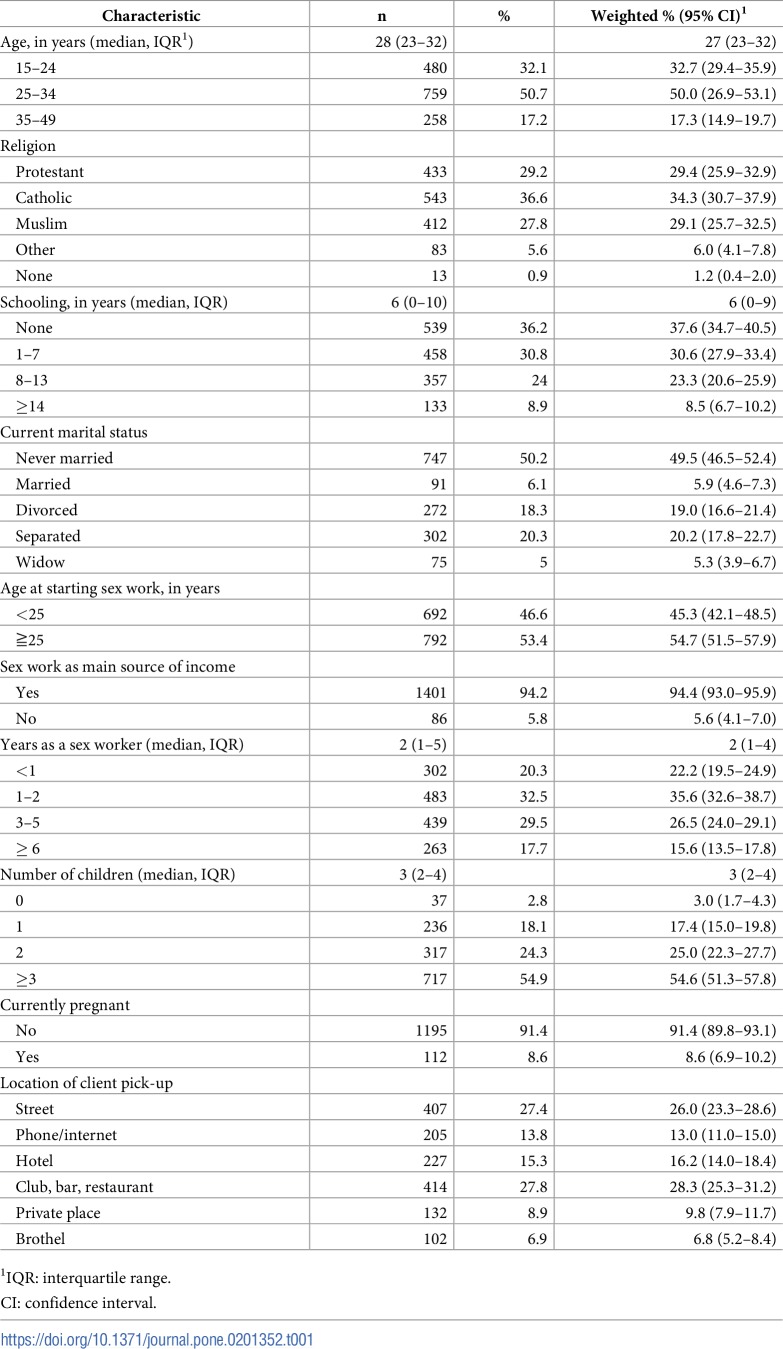
Between April and December 2012, 1,487 female sex workers, defined as women, 15–49 years, residing in greater Kampala, and selling sex for money in the last 6 months, were recruited using respondent-driven sampling. Venous blood was collected for HIV and viral load testing [viral load suppression (VLS) defined as <1,000 copies/mL]. We collected data using audio computer-assisted self-interviews and calculated weighted population-level estimates.
Results
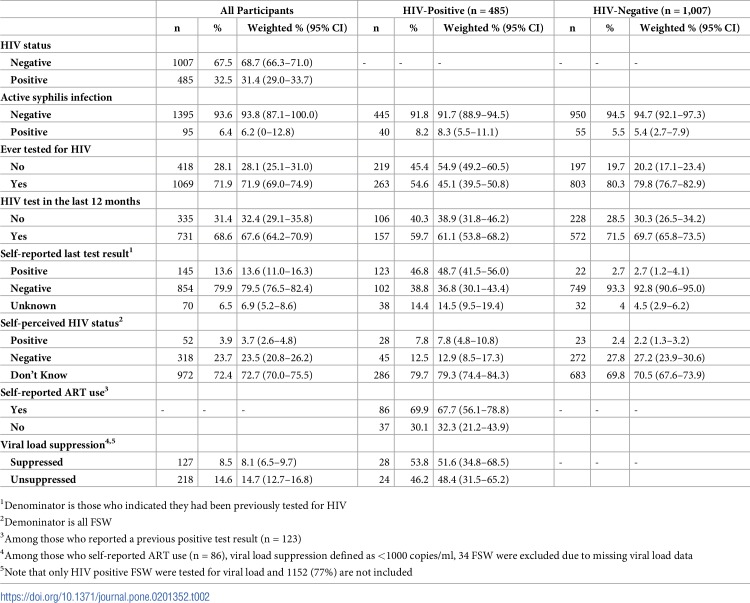
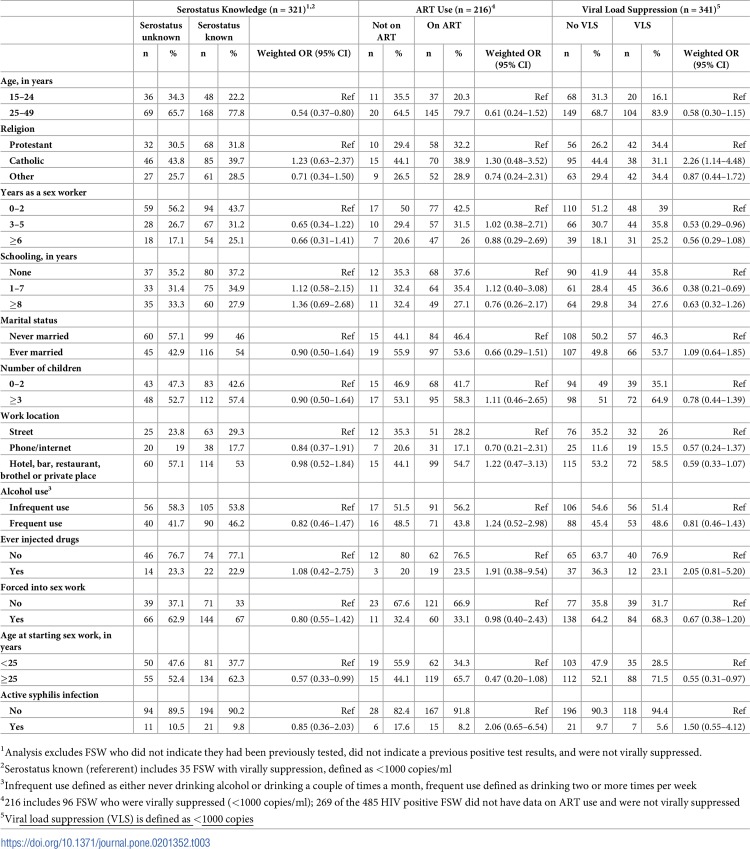
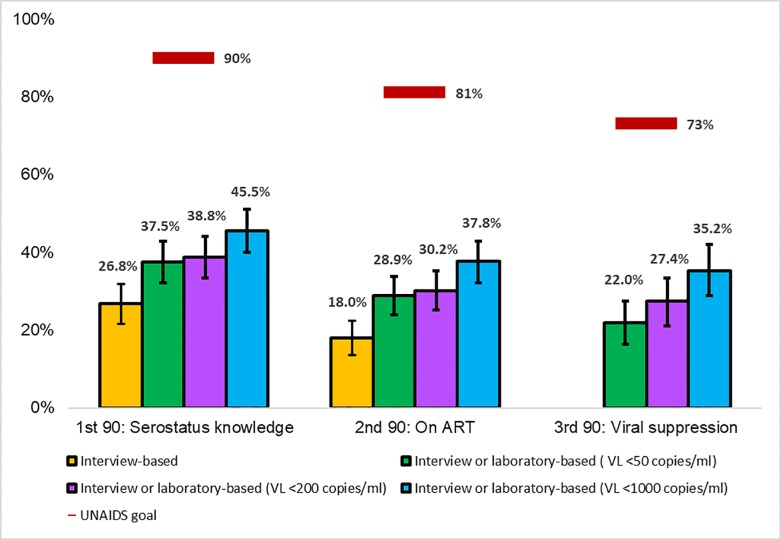
The median age was 27 years (interquartile range: 23 to 32). HIV seroprevalence was 31.4% (95% confidence interval [CI]: 29.0, 33.7%). Among all female sex workers who tested HIV-positive in the survey (population-level targets), 45.5% (95% CI: 40.1, 51.0) had knowledge of their serostatus (population-level target: 90%), 37.8% (95% CI: 32.2, 42.8) self-reported to be on ART (population-level target: 81%), and 35.2% (95% CI: 20.7, 30.4) were virally suppressed (population-level target: 73%).
Conclusions
HIV prevalence among Kampala female sex workers is high, whereas serostatus knowledge and VLS are far below UNAIDS targets. Kampala female sex workers are in need of intensified and targeted HIV prevention and control efforts.
-
Subjects:
-
Source:PLoS One. 13(9).
-
Pubmed ID:30231030
-
Pubmed Central ID:PMC6145590
-
Document Type:
-
Funding:
-
Place as Subject:
-
Volume:13
-
Issue:9
-
Collection(s):
-
Main Document Checksum:urn:sha-512:30139595741e6eb4688e4c82c2d678727f9aceb7768312536959df0116beaf8cf14e53a5d9b1125b8fade1e0561440de489bfe8e0d91393f75030b9a968b4e9e
-
Download URL:
-
File Type:
 [PDF
- 1.67 MB
]
[PDF
- 1.67 MB
]
Supporting Files


File Language:
English
ON THIS PAGE





CDC STACKS serves as an archival repository of CDC-published products including
scientific findings,
journal articles, guidelines, recommendations, or other public health information authored or
co-authored by CDC or funded partners.
As a repository, CDC STACKS retains documents in their original published format to ensure public access to scientific information.
As a repository, CDC STACKS retains documents in their original published format to ensure public access to scientific information.
You May Also Like
COLLECTION
CDC Public Access