



Human coronaviruses and other respiratory infections in young adults on a university campus: Prevalence, symptoms, and shedding
Supporting Files
Public Domain

-
Apr 16 2018
File Language:
English
Details
-
Alternative Title:Influenza Other Respir Viruses
-
Personal Author:
-
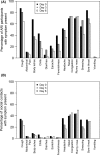
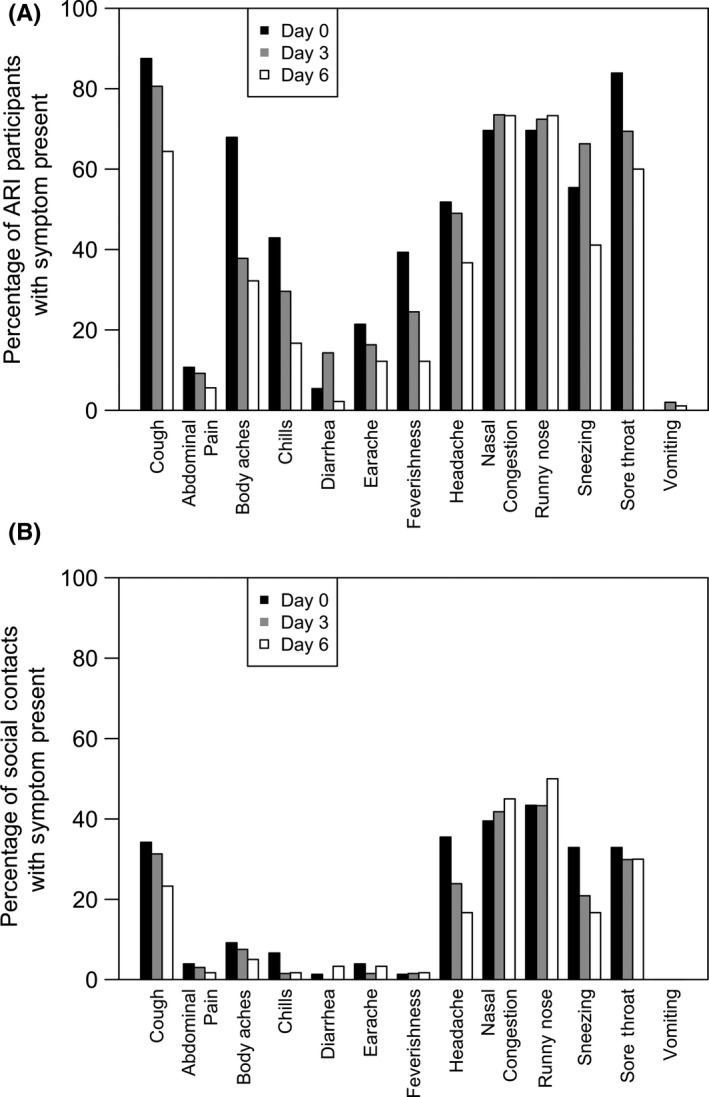
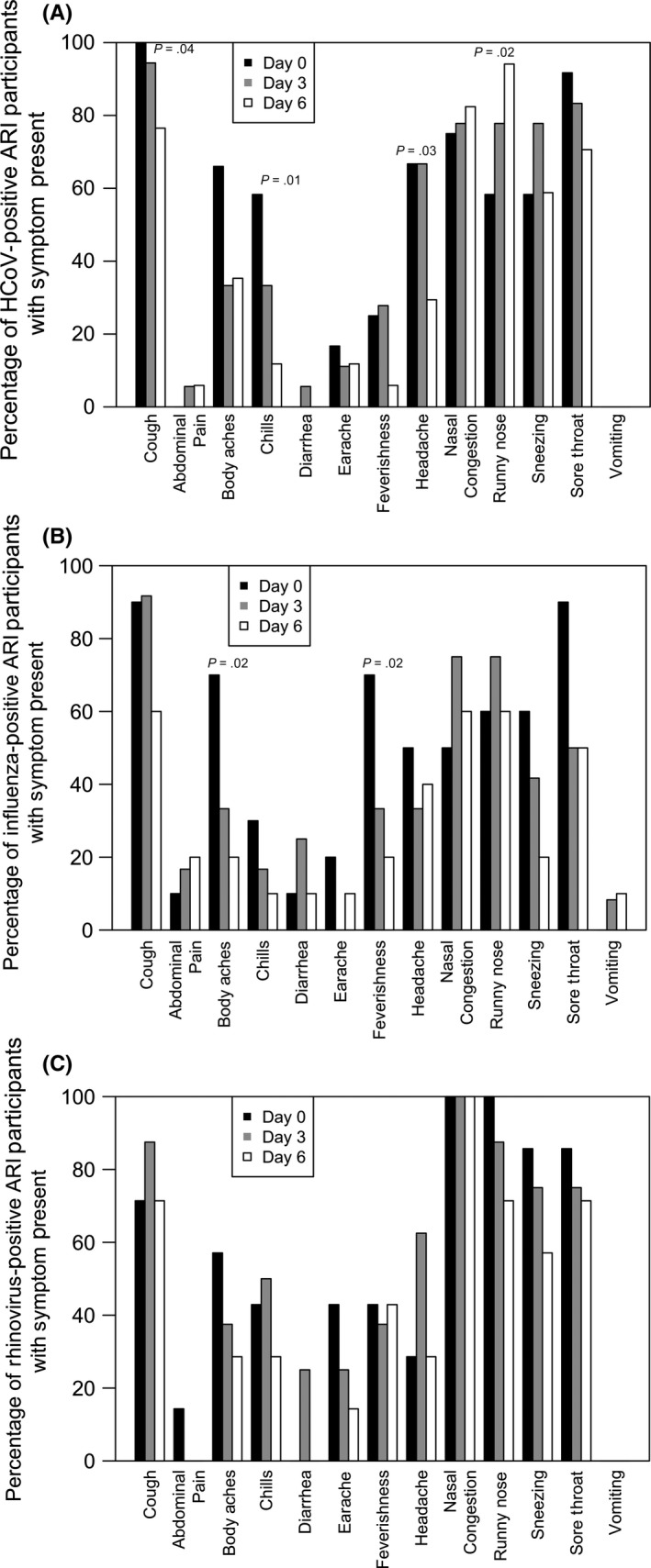
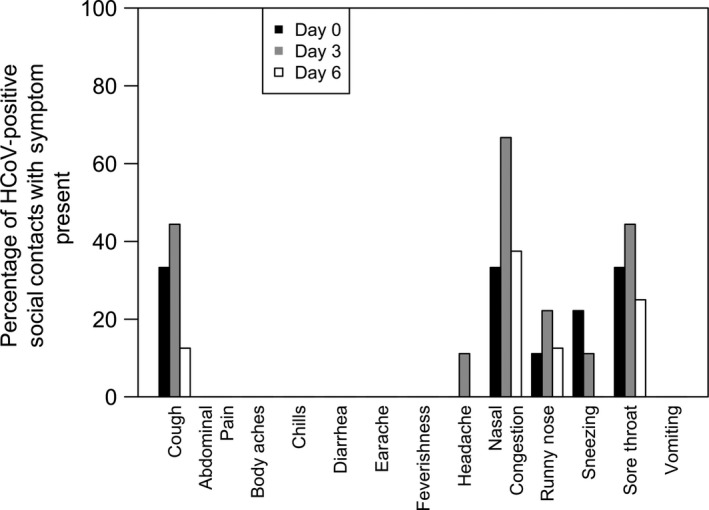
Description:Background ; The prevalence, symptom course, and shedding in persons infected with the 4 most common human coronaviruses (HCoV)‐229E, HKU1, NL63, and OC43 are poorly described. ; Objectives ; We estimate their prevalence and associated symptoms among college students identified via a social network study design. ; Patients/Methods ; We collected 1‐3 samples (n = 250 specimens) from 176 participants between October 2012 and January 17, 2013: participants with acute respiratory infection (ARI; cough and body aches or chills or fever/feverishness) and their social contacts. Virus was detected using RT‐PCR. ; Results ; 30.4% (76/250) of specimens tested positive for any virus tested, and 4.8% (12/250) were positive for 2 or more viruses. Human coronaviruses (HCoVs 22.0%; 55/250), rhinovirus (7.6%; 19/250), and influenza A (6.4%; 16/250) were most prevalent. Symptoms changed significantly over time among ARI participants with HCoV: the prevalence of cough and chills decreased over 6 days (P = .04, and P = .01, respectively), while runny nose increased over the same period (P = .02). HCoV‐NL63 was the most frequent virus detected 6 days following symptom onset (8.9%), followed by rhinovirus (6.7%). ; Conclusions ; During a 3‐month period covering a single season, HCoVs were common, even among social contacts without respiratory symptoms; specific symptoms may change over the course of HCoV‐associated illness and were similar to symptoms from influenza and rhinovirus.
-
Subjects:
-
Source:Influenza Other Respir Viruses. 12(5):582-590.
-
Pubmed ID:29660826
-
Pubmed Central ID:PMC6086849
-
Document Type:
-
Volume:12
-
Issue:5
-
Download URL:
-
File Type:
 [PDF - 573.50 KB]
 -
Collection(s):
-
Main Document Checksum:urn:sha256:7030c1c55b17265822c440b57b9483da1c4c923f2c671959eae0911e3f73d482
Supporting Files


File Language:
English
 Was this page helpful?
 Found an issue?


CDC STACKS serves as an archival repository of CDC-published products including
scientific findings, journal articles, guidelines, recommendations, or other public health information authored or
co-authored by CDC or funded partners.
As a repository, CDC STACKS retains documents in their original published format to ensure public access to scientific information.
As a repository, CDC STACKS retains documents in their original published format to ensure public access to scientific information.
You May Also Like
COLLECTION
CDC Public Access