


Transmission of viral pathogens in a social network of university students: the eX-FLU study
Supporting Files

-
August 14 2020
-
File Language:
English
Details
-
Alternative Title:Epidemiol Infect
-
Personal Author:
-
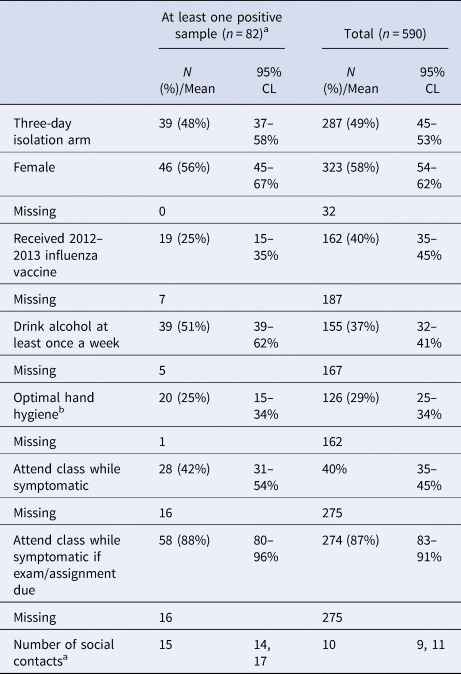
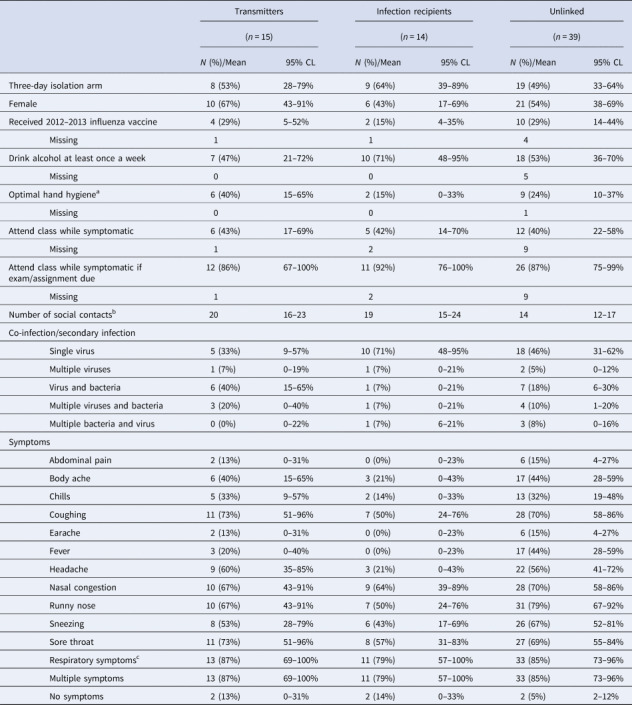
Description:Previous research on respiratory infection transmission among university students has primarily focused on influenza. In this study, we explore potential transmission events for multiple respiratory pathogens in a social contact network of university students. University students residing in on-campus housing (n = 590) were followed for the development of influenza-like illness for 10-weeks during the 2012-13 influenza season. A contact network was built using weekly self-reported contacts, class schedules, and housing information. We considered a transmission event to have occurred if students were positive for the same pathogen and had a network connection within a 14-day period. Transmitters were individuals who had onset date prior to their infected social contact. Throat and nasal samples were analysed for multiple viruses by RT-PCR. Five viruses were involved in 18 transmission events (influenza A, parainfluenza virus 3, rhinovirus, coronavirus NL63, respiratory syncytial virus). Transmitters had higher numbers of co-infections (67%). Identified transmission events had contacts reported in small classes (33%), dormitory common areas (22%) and dormitory rooms (17%). These results suggest that targeting person-to-person interactions, through measures such as isolation and quarantine, could reduce transmission of respiratory infections on campus.
-
Subjects:
-
Source:Epidemiol Infect. 2020; 148
-
Pubmed ID:32792023
-
Pubmed Central ID:PMC7689784
-
Document Type:
-
Funding:
-
Place as Subject:
-
Volume:148
-
Collection(s):
-
Main Document Checksum:urn:sha256:a3093f852eb9cc5f77d3304fda7ae5233ae9400744223cdac9c80663d0d166c3
-
Download URL:
-
File Type:
 [PDF
- 206.55 KB
]
[PDF
- 206.55 KB
]
Supporting Files


File Language:
English
ON THIS PAGE






CDC STACKS serves as an archival repository of CDC-published products including
scientific findings,
journal articles, guidelines, recommendations, or other public health information authored or
co-authored by CDC or funded partners.
As a repository, CDC STACKS retains documents in their original published format to ensure public access to scientific information.
As a repository, CDC STACKS retains documents in their original published format to ensure public access to scientific information.
You May Also Like
COLLECTION
CDC Public Access