


Obesity, Diabetes, and the Risk of Invasive Group B Streptococcal Disease in Nonpregnant Adults in the United States
Supporting Files
Public Domain

-
June 08 2018
-
File Language:
English
Details
-
Alternative Title:The Burden of Group B Streptococcus Worldwide for Pregnant Women, Stillbirths, and Children
-
Personal Author:
-
Description:Background
Rates of invasive group B Streptococcus (GBS) disease, obesity, and diabetes have increased in US adults. We hypothesized that obesity would be independently associated with an increased risk of invasive GBS disease.
Methods
We identified adults with invasive GBS disease within Active Bacterial Core surveillance during 2010–2012 and used population estimates from the Behavioral Risk Factor Surveillance System to calculate invasive GBS incidence rates. We estimated relative risks (RRs) of invasive GBS using Poisson analysis with offset denominators, with obesity categorized as class I/II (body mass index [BMI] = 30–39.9 kg/m2) and class III (BMI ≥ 40.0 kg/m2).
Results
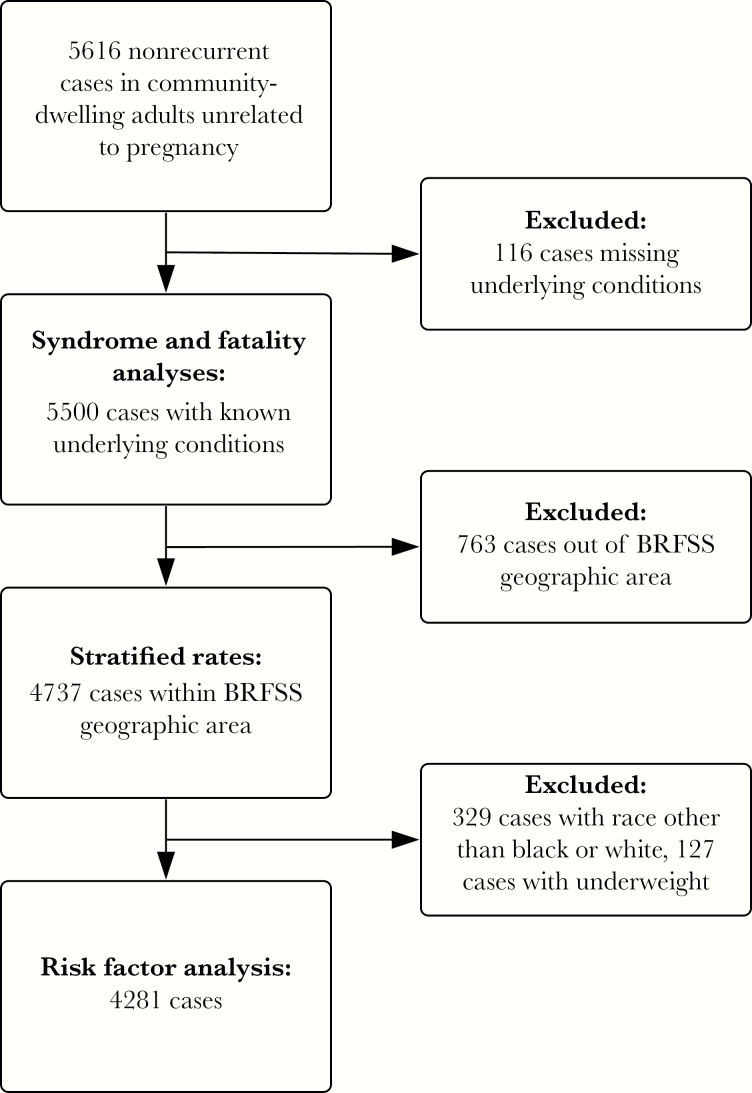
In multivariable analysis of 4281 cases, the adjusted RRs of invasive GBS disease were increased for obesity (class I/II: RR, 1.52; 95% confidence interval [CI], 1.14–2.02; and class III: RR, 4.87; 95% CI, 3.50–6.77; reference overweight) and diabetes (RR, 6.04; 95% CI, 4.77–7.65). The adjusted RR associated with class III obesity was 3-fold among persons with diabetes (95% CI, 1.38–6.61) and nearly 9-fold among persons without diabetes (95% CI, 6.41–12.46), compared with overweight. The adjusted RRs associated with diabetes varied by age and BMI, with the highest RR in young populations without obesity. Population attributable risks of invasive GBS disease were 27.2% for obesity and 40.1% for diabetes.
Conclusions
Obesity and diabetes were associated with substantially increased risk of infection from invasive GBS. Given the population attributable risks of obesity and diabetes, interventions that reduce the prevalence of these conditions would likely reduce the burden of invasive GBS infection.
-
Subjects:
-
Source:Open Forum Infect Dis. 2018; 5(6)
-
Pubmed ID:29977953
-
Pubmed Central ID:PMC6016410
-
Document Type:
-
Volume:5
-
Issue:6
-
Collection(s):
-
Main Document Checksum:urn:sha-512:880d53304e18f560dd2c32f86015befd9c426d68d6f57cfec78d897401d70513f01a2b60d8caa797dc0f837d49b30f9568423cacb4b7b369baba76f28aa65ea5
-
Download URL:
-
File Type:
 [PDF
- 170.26 KB
]
[PDF
- 170.26 KB
]
Supporting Files


File Language:
English
ON THIS PAGE


CDC STACKS serves as an archival repository of CDC-published products including
scientific findings,
journal articles, guidelines, recommendations, or other public health information authored or
co-authored by CDC or funded partners.
As a repository, CDC STACKS retains documents in their original published format to ensure public access to scientific information.
As a repository, CDC STACKS retains documents in their original published format to ensure public access to scientific information.
You May Also Like
COLLECTION
CDC Public Access