



The burden of hepatitis C virus infection in Punjab, India: A population-based serosurvey
Supporting Files
Public Domain


-
Jul 26 2018
File Language:
English
Details
-
Alternative Title:PLoS One
-
Personal Author:
-
Description:Introduction
Hepatitis C virus (HCV) infection prevalence is believed to be elevated in Punjab, India; however, state-wide prevalence data are not available. An understanding of HCV prevalence, risk factors and genotype distribution can be used to plan control measures in Punjab.
Methods
A cross-sectional, state-wide, population-based serosurvey using a multi-stage stratified cluster sampling design was conducted October 2013 to April 2014. Children aged ≥5 years and adults were eligible to participate. Demographic and risk behavior data were collected, and serologic specimens were obtained and tested for anti-HCV antibody, HCV Ribonucleic acid (RNA) on anti-HCV positive samples, and HCV genotype. Prevalence estimates and adjusted odds ratios for risk factors were calculated from weighted data and stratified by urban/rural residence.
Results
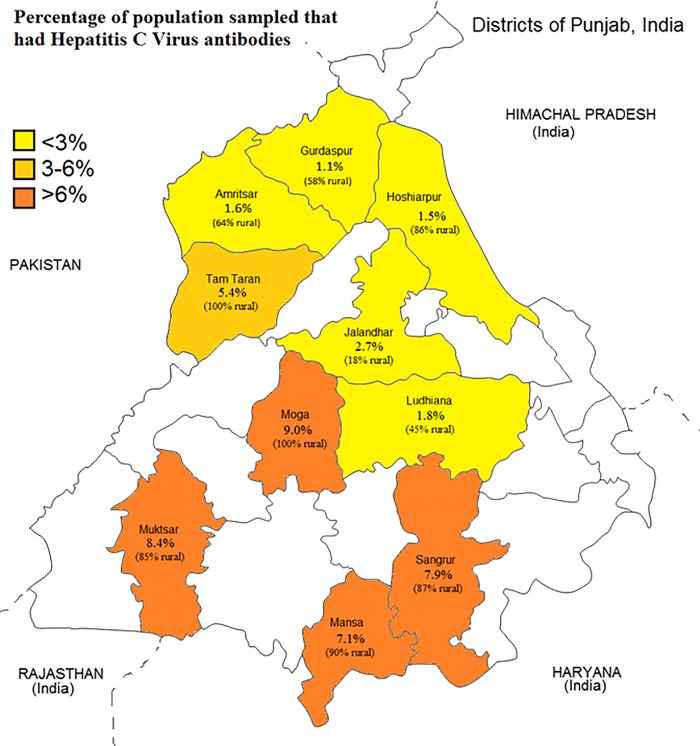
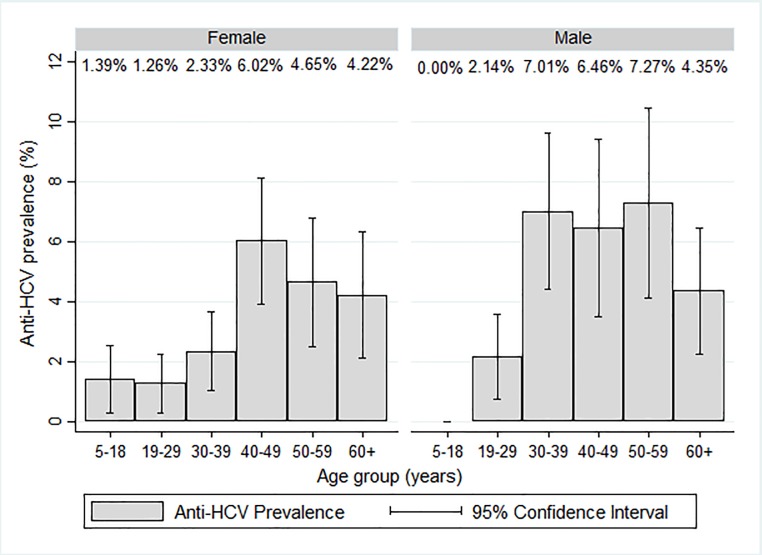
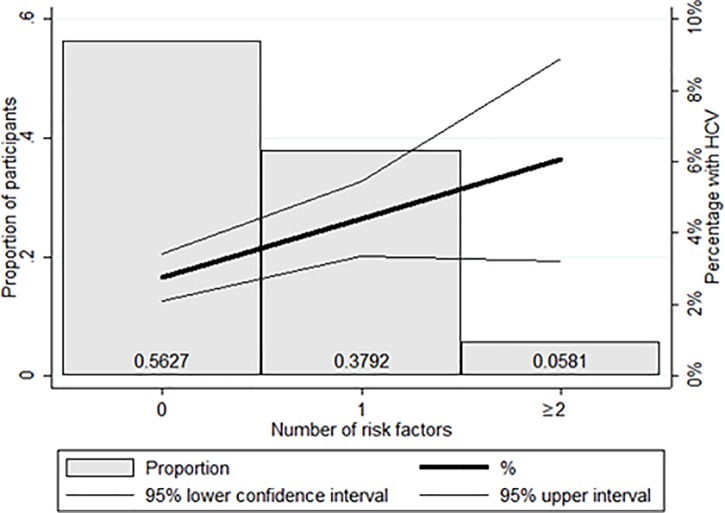
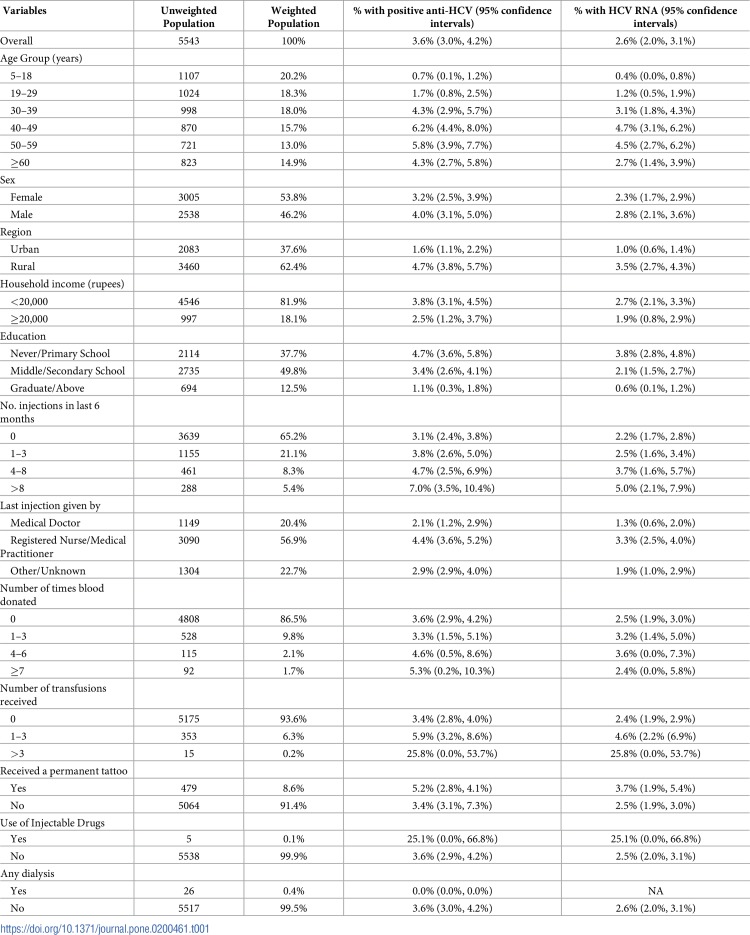
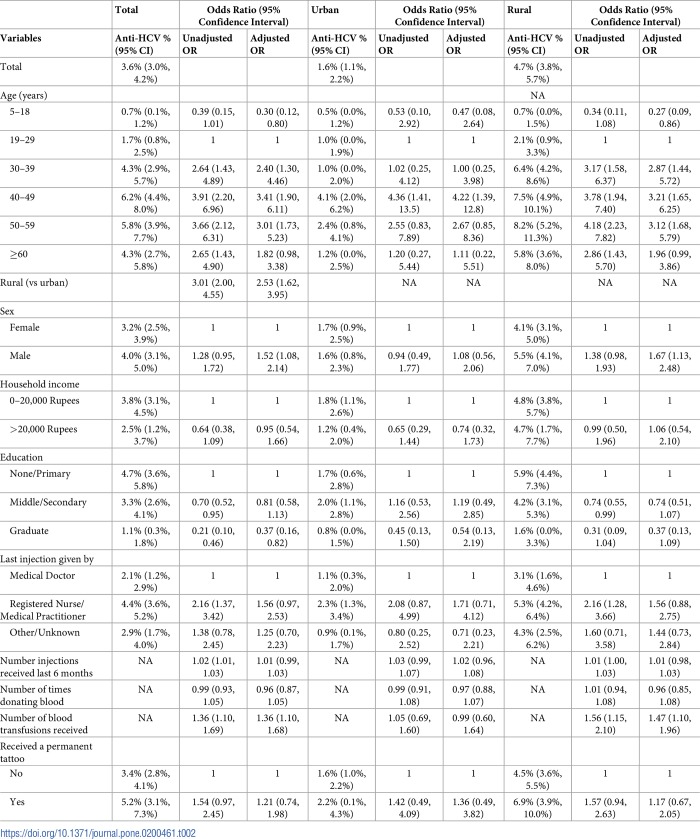
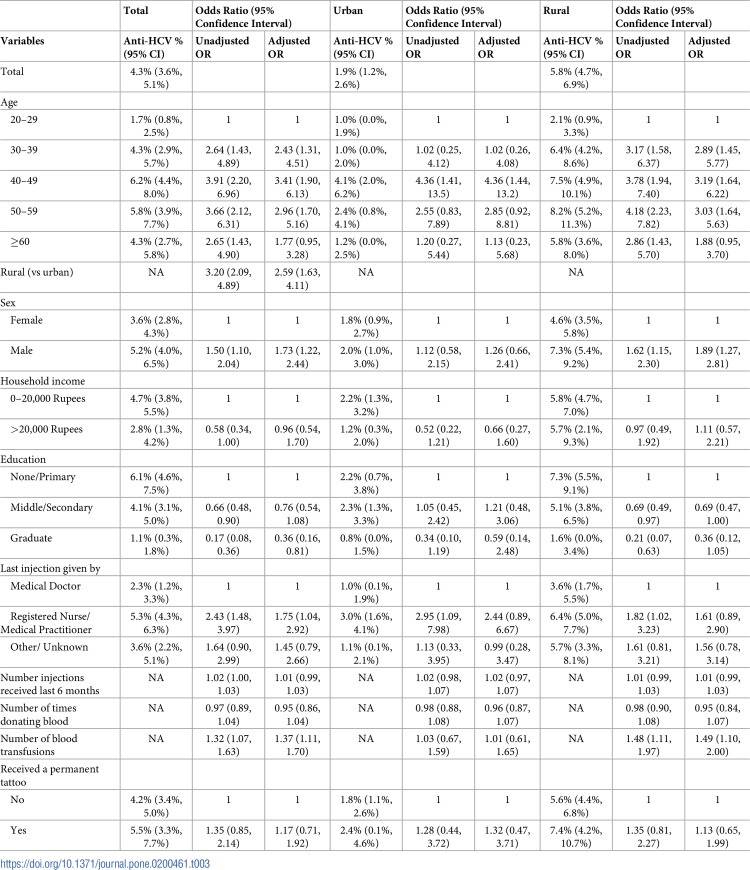
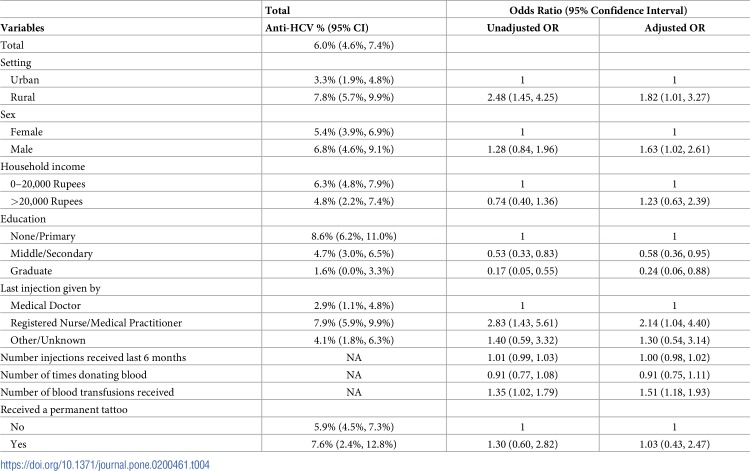
5,543 individuals participated in the study with an overall weighted anti-HCV prevalence of 3.6% (95% Confidence Interval CI: 3.0%–4.2%) and chronic infection (HCV Ribonucleic acid test positive) of 2.6% (95% CI: 2.0%–3.1%). Anti-HCV was associated with being male (adjusted odds ratio 1.52; 95% CI: 1.08–2.14), living in a rural area (adjusted odds ratio 2.53; 95% CI: 1.62–3.95) and was most strongly associated with those aged 40–49 (adjusted odds ratio 40–49 vs. 19–29-year-olds 3.41; 95% CI: 1.90–6.11). Anti-HCV prevalence increased with each blood transfusion received (adjusted odds ratio 1.36; 95% CI: 1.10–1.68) and decreased with increasing education, (adjusted odds ratio 0.37 for graduate-level vs. primary school/no education; 95% CI: 0.16–0.82). Genotype 3 (58%) was most common among infected individuals.
Discussion
The study findings, including the overall prevalence of chronic HCV infection, associated risk factors and demographic characteristics, and genotype distribution can guide prevention and control efforts, including treatment provision. In addition to high-risk populations, efforts targeting rural areas and adults aged ≥40 would be the most effective for identifying infected individuals. -
Subjects:
-
Source:PLoS One. 13(7).
-
Pubmed ID:30048454
-
Pubmed Central ID:PMC6061991
-
Document Type:
-
Place as Subject:
-
Volume:13
-
Issue:7
-
Download URL:
-
File Type:
 [PDF - 4.32 MB]
 -
Collection(s):
-
Main Document Checksum:urn:sha256:1aa3e3e5f00836a186a629f128ce0a99c3604ae941f074a8dad280ebef4625f8
Supporting Files


File Language:
English
 Was this page helpful?
 Found an issue?





CDC STACKS serves as an archival repository of CDC-published products including
scientific findings, journal articles, guidelines, recommendations, or other public health information authored or
co-authored by CDC or funded partners.
As a repository, CDC STACKS retains documents in their original published format to ensure public access to scientific information.
As a repository, CDC STACKS retains documents in their original published format to ensure public access to scientific information.
You May Also Like
COLLECTION
CDC Public Access