


Clinical, environmental, and behavioral characteristics associated with Cryptosporidium infection among children with moderate-to-severe diarrhea in rural western Kenya, 2008–2012: The Global Enteric Multicenter Study (GEMS)
Supporting Files
Public Domain

-
Jul 12 2018
-
File Language:
English
Details
-
Alternative Title:PLoS Negl Trop Dis
-
Personal Author:Delahoy, Miranda J. ; Omore, Richard ; Ayers, Tracy L. ; Schilling, Katharine A. ; Blackstock, Anna J. ; Ochieng, J. Benjamin ; Moke, Feny ; Jaron, Peter ; Awuor, Alex ; Okonji, Caleb ; Juma, Jane ; Farag, Tamer H. ; Nasrin, Dilruba ; Panchalingam, Sandra ; Nataro, James P. ; Kotloff, Karen L. ; Levine, Myron M. ; Oundo, Joseph ; Roellig, Dawn M. ; Xiao, Lihua ; Parsons, Michele B. ; Laserson, Kayla ; Mintz, Eric D. ; Breiman, Robert F. ; O'Reilly, Ciara E.
-
Description:Background
Cryptosporidium is a leading cause of moderate-to-severe diarrhea (MSD) in young children in Africa. We examined factors associated with Cryptosporidium infection in MSD cases enrolled at the rural western Kenya Global Enteric Multicenter Study (GEMS) site from 2008-2012.
Methodology/Principal findings
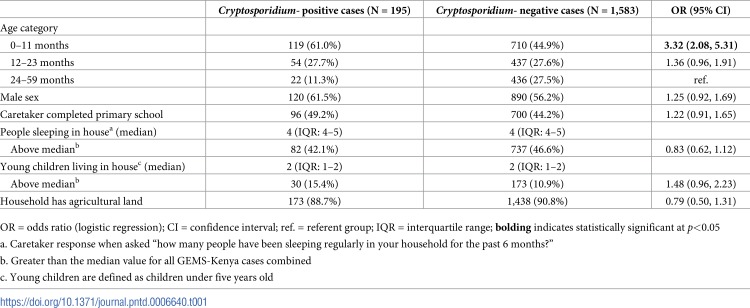
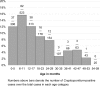
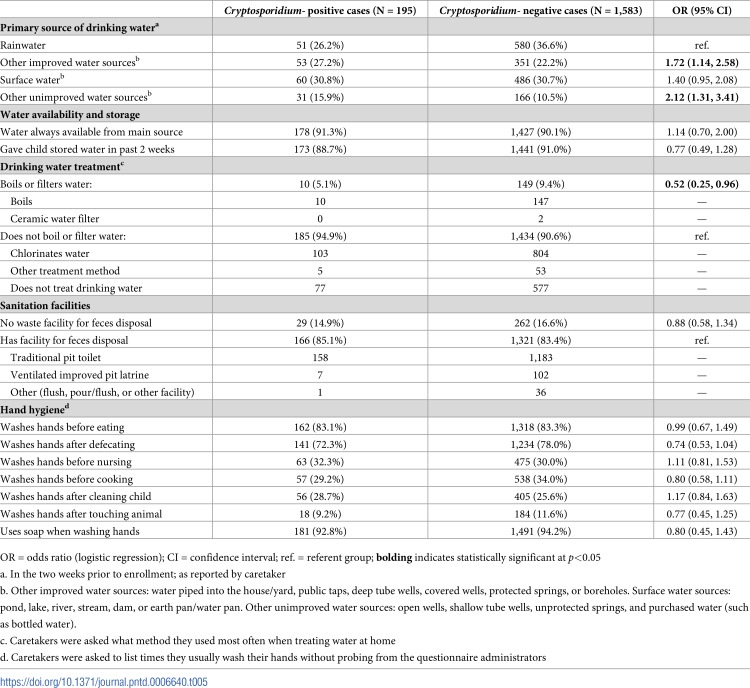
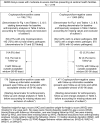
At health facility enrollment, stool samples were tested for enteric pathogens and data on clinical, environmental, and behavioral characteristics collected. Each child’s health status was recorded at 60-day follow-up. Data were analyzed using logistic regression. Of the 1,778 children with MSD enrolled as cases in the GEMS-Kenya case-control study, 11% had Cryptosporidium detected in stool by enzyme immunoassay; in a genotyped subset, 81% were C. hominis. Among MSD cases, being an infant, having mucus in stool, and having prolonged/persistent duration diarrhea were associated with being Cryptosporidium-positive. Both boiling drinking water and using rainwater as the main drinking water source were protective factors for being Cryptosporidium-positive. At follow-up, Cryptosporidium-positive cases had increased odds of being stunted (adjusted odds ratio [aOR] = 1.65, 95% CI: 1.06–2.57), underweight (aOR = 2.08, 95% CI: 1.34–3.22), or wasted (aOR = 2.04, 95% CI: 1.21–3.43), and had significantly larger negative changes in height- and weight-for-age z-scores from enrollment.
Conclusions/Significance
Cryptosporidium contributes significantly to diarrheal illness in young children in western Kenya. Advances in point of care detection, prevention/control approaches, effective water treatment technologies, and clinical management options for children with cryptosporidiosis are needed.
-
Subjects:
-
Source:PLoS Negl Trop Dis. 12(7).
-
Pubmed ID:30001340
-
Pubmed Central ID:PMC6057667
-
Document Type:
-
Place as Subject:
-
Volume:12
-
Issue:7
-
Collection(s):
-
Main Document Checksum:urn:sha256:479231f97586b0910256229bca94c67834d3b60192cf6635011714a5f688ddf7
-
Download URL:
-
File Type:
 [PDF
- 2.81 MB
]
[PDF
- 2.81 MB
]
Supporting Files


File Language:
English
ON THIS PAGE








CDC STACKS serves as an archival repository of CDC-published products including
scientific findings,
journal articles, guidelines, recommendations, or other public health information authored or
co-authored by CDC or funded partners.
As a repository, CDC STACKS retains documents in their original published format to ensure public access to scientific information.
As a repository, CDC STACKS retains documents in their original published format to ensure public access to scientific information.
You May Also Like
COLLECTION
CDC Public Access