



An update from hospital-based surveillance for rotavirus gastroenteritis among young children in Bangladesh, July 2012 to June 2017
Supporting Files

-
12 14 2018 ; 12-14-
-
Available in CDC Stacks on June 06, 2022, 12:00 AM
File Language:
English
Details
-
Alternative Title:Vaccine
-
Personal Author:
-
Description:Introduction:
In preparation for the introduction of a rotavirus vaccine into the routine immunization program of Bangladesh in 2018, we report data and highlight evolving genotypes from five years of active hospital-based rotavirus surveillance which began in July 2012.
Methods:
We enrolled and collected fresh stool from every fourth child < 5 years admitted with acute gastroenteritis (AGE) at 8 participating surveillance hospitals. Rotavirus infections were detected by enzyme immune assay. Twenty-five percent of rotavirus isolates were genotyped using reverse transcription polymerase chain reaction.
Results:
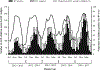
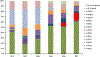
We found that 64% (4832/7562) of children < 5 years of age admitted with AGE had evidence of rotavirus infection. The majority (57%) of patients with rotavirus infection were <12 months of age. The most common strains were G1P8 (43%), G12P8 (15%) and G9P8 (9%); 11% of children had mixed infection.G3P8, which has not been reported in Bangladesh since 2001, was documented for the first time in our surveillance system.
Conclusions:
The high burden of rotavirus-associated hospitalizations highlights the potential value of rotavirus vaccination in Bangladesh. Continued surveillance is important for monitoring the impact of vaccination as well as monitoring evolving genotypes. -
Keywords:
- Bangladesh
- Rotavirus
- Hospital based surveillance
- Rotavirus vaccination
- Bangladesh
- Child, Preschool
- Diarrhea
- Feces
- Female
- Gastroenteritis
- Genotype
- Hospitalization
- Humans
- Immunization Programs
- Infant
- Infant, Newborn
- Male
- Population Surveillance
- Reverse Transcriptase Polymerase Chain Reaction
- Rotavirus
- Rotavirus Infections
-
Source:Vaccine. 36(51):7811-7815
-
Pubmed ID:29793894
-
Pubmed Central ID:PMC9169511
-
Document Type:
-
Funding:
-
Volume:36
-
Issue:51
-
Download URL:
-
File Type:
 [PDF - 435.94 KB]
 -
Collection(s):
-
Main Document Checksum:urn:sha256:b28ceb822abdc006a1cfb976950660b729dce86d07e8bd2a310c3f83f34e9e0c
Supporting Files


File Language:
English
 Was this page helpful?
 Found an issue?


CDC STACKS serves as an archival repository of CDC-published products including
scientific findings, journal articles, guidelines, recommendations, or other public health information authored or
co-authored by CDC or funded partners.
As a repository, CDC STACKS retains documents in their original published format to ensure public access to scientific information.
As a repository, CDC STACKS retains documents in their original published format to ensure public access to scientific information.
You May Also Like
COLLECTION
CDC Public Access