


Epidemiology of Diphyllobothrium nihonkaiense Diphyllobothriasis, Japan, 2001–2016
Supporting Files
Public Domain

-
August 2018
File Language:
English
Details
-
Alternative Title:Emerg Infect Dis
-
Personal Author:
-
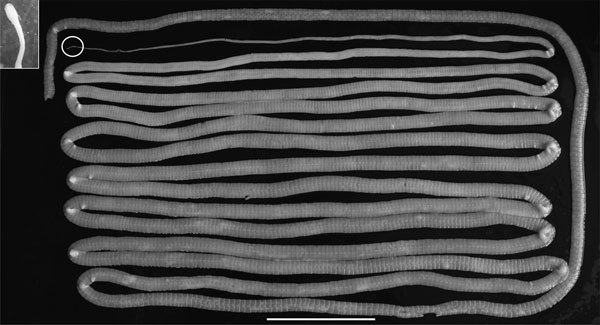
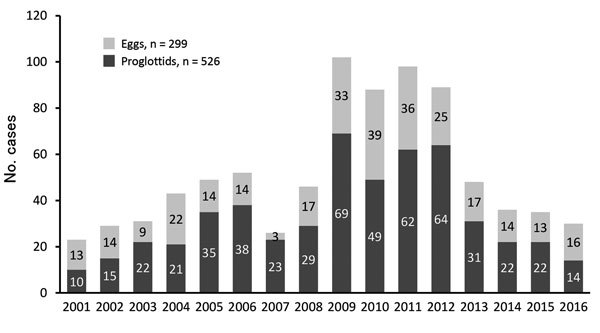
Description:We report 958 cases of cestodiasis occurring in Japan during 2001-2016. The predominant pathogen was Diphyllobothrium nihonkaiense tapeworm (n = 825), which caused 86.1% of all cases. The other cestode species involved were Taenia spp. (10.3%), Diplogonoporus balaenopterae (3.3%), and Spirometra spp. (0.2%). We estimated D. nihonkaiense diphyllobothriasis incidence as 52 cases/year. We observed a predominance of cases during March-July, coinciding with the cherry salmon and immature chum salmon fishing season, but cases were present year-round, suggesting that other fish could be involved in transmission to humans. Because of increased salmon trade, increased tourism in Japan, and lack of awareness of the risks associated with eating raw fish, cases of D. nihonkaiense diphyllobothriasis are expected to rise. Therefore, information regarding these concerning parasitic infections and warnings of the potential risks associated with these infections must be disseminated to consumers, food producers, restaurant owners, physicians, and travelers.
-
Subjects:
-
Source:Emerg Infect Dis. 24(8):1428-1434
-
Pubmed ID:30016246
-
Pubmed Central ID:PMC6056094
-
Document Type:
-
Place as Subject:
-
Location:
-
Volume:24
-
Issue:8
-
Collection(s):
-
Main Document Checksum:urn:sha256:188585d0656cfa380087107564584356581661ab7bea6a133d2b7218fb31cb2d
-
Download URL:
-
File Type:
 [PDF
- 1.09 MB
]
[PDF
- 1.09 MB
]
Supporting Files


File Language:
English
ON THIS PAGE






CDC STACKS serves as an archival repository of CDC-published products including
scientific findings,
journal articles, guidelines, recommendations, or other public health information authored or
co-authored by CDC or funded partners.
As a repository, CDC STACKS retains documents in their original published format to ensure public access to scientific information.
As a repository, CDC STACKS retains documents in their original published format to ensure public access to scientific information.
You May Also Like
COLLECTION
Emerging Infectious Diseases