



Geographically Diverse Clusters of Nontoxigenic Corynebacterium diphtheriae Infection, Germany, 2016–2017
Supporting Files
Public Domain

-
Jul 2018
File Language:
English
Details
-
Alternative Title:Emerg Infect Dis
-
Personal Author:
-
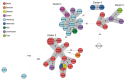
Description:From 2016 through the middle of 2017, the German Consiliary Laboratory on Diphtheria noted an increase in nontoxigenic Corynebacterium diphtheriae isolates submitted from cities in northern Germany. Many patients for whom epidemiologic data were available were homeless, alcohol or drug abusers, or both. After performing routine diagnostics and multilocus sequence typing (MLST), we analyzed isolates of sequence type (ST) 8 and previously submitted isolates by whole-genome sequencing. Results were analyzed for phylogenetic relationship by core genome MLST (cg-MLST) and whole-genome single-nucleotide polymorphism profiles. Next-generation sequencing-based cg-MLST revealed several outbreak clusters caused by ST8; the geographic focus was in the metropolitan areas of Hamburg and Berlin. To achieve enhanced analytical depth, we used additional cg-MLST target genes and genome-wide single-nucleotide polymorphisms. We identified patient characteristics and detected transmission events, providing evidence that nontoxigenic C. diphtheriae infection is a potential public health threat in industrialized countries.
-
Subjects:
- Research
- Corynebacterium Infections/epidemiology
- Corynebacterium Infections/history
- Corynebacterium Infections/microbiology
- Corynebacterium diphtheriae/classification
- Corynebacterium diphtheriae/genetics
- Disease Outbreaks
- Female
- Genome, Bacterial
- History, 21st Century
- Humans
- Male
- Multilocus Sequence Typing
- Polymorphism, Single Nucleotide
- Public Health Surveillance
- Whole Genome Sequencing
-
Source:Emerg Infect Dis. 24(7):1239-1245.
-
Pubmed ID:29912709
-
Pubmed Central ID:PMC6038752
-
Document Type:
-
Place as Subject:
-
Location:
-
Volume:24
-
Issue:7
-
Download URL:
-
File Type:
 [PDF - 1.34 MB]
 -
Collection(s):
-
Main Document Checksum:urn:sha256:34c21c1db6fa27b0f5de83fea2b161296f2ca75d34e70b7c4477ad7ef6a86102
Supporting Files


File Language:
English
 Was this page helpful?
 Found an issue?



CDC STACKS serves as an archival repository of CDC-published products including
scientific findings, journal articles, guidelines, recommendations, or other public health information authored or
co-authored by CDC or funded partners.
As a repository, CDC STACKS retains documents in their original published format to ensure public access to scientific information.
As a repository, CDC STACKS retains documents in their original published format to ensure public access to scientific information.
You May Also Like
COLLECTION
Emerging Infectious Diseases