


Toenail mercury levels are associated with amyotrophic lateral sclerosis (ALS) risk
Supporting Files

-
January 04 2018
-
File Language:
English
Details
-
Alternative Title:Muscle Nerve
-
Personal Author:
-
Description:Introduction
Mercury is a neurotoxic metal that is potentially a risk factor for amyotrophic lateral sclerosis (ALS). Consumption of methylmercury contaminated fish is the primary source of U.S. population exposure to mercury.
Methods
We used inductively coupled plasma mass spectrometry to measure levels of mercury in toenail samples from ALS patients (n=46) and from controls (n=66), as a biomarker of mercury exposure.
Results
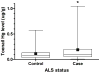
ALS patients had higher toenail mercury levels (OR 2.49 95%CI 1.18–5.80, P=0.024) compared to controls, adjusted for age and gender. We also estimated the amount of mercury consumed from finfish and shellfish and found toenail mercury levels elevated overall among ALS patients and controls in the top quartile for consumption (P=0.018).
Discussion
Biomarker data show ALS associated with increased with mercury levels, which were related to estimated methylmercury intake via fish. Replication of these associations in additional populations is warranted.
-
Subjects:
-
Source:Muscle Nerve.
-
Pubmed ID:29314106
-
Pubmed Central ID:PMC6034986
-
Document Type:
-
Funding:
-
Collection(s):
-
Main Document Checksum:urn:sha256:bbef3018e54fca4b9b0ce3cf0e5d6964abe3a731b690cc65d12758d68eeece42
-
Download URL:
-
File Type:
 [PDF
- 522.25 KB
]
[PDF
- 522.25 KB
]
Supporting Files


File Language:
English
ON THIS PAGE



CDC STACKS serves as an archival repository of CDC-published products including
scientific findings,
journal articles, guidelines, recommendations, or other public health information authored or
co-authored by CDC or funded partners.
As a repository, CDC STACKS retains documents in their original published format to ensure public access to scientific information.
As a repository, CDC STACKS retains documents in their original published format to ensure public access to scientific information.
You May Also Like
COLLECTION
CDC Public Access