



Influenza D Virus Infection in Feral Swine Populations, United States
Supporting Files

-
Jun 2018
-
File Language:
English
Details
-
Alternative Title:Emerg Infect Dis
-
Personal Author:
-
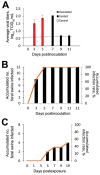
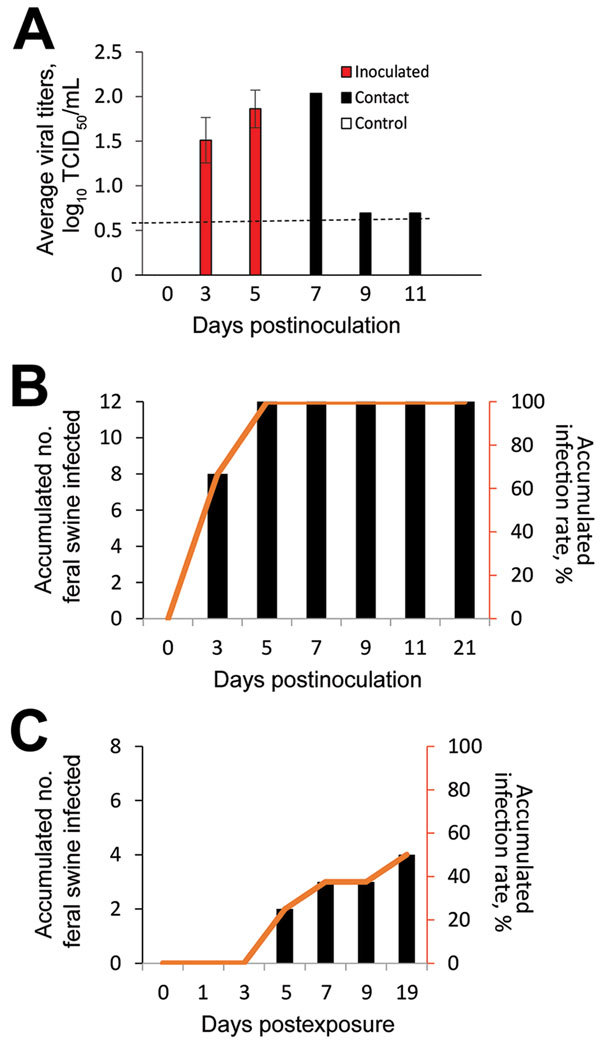
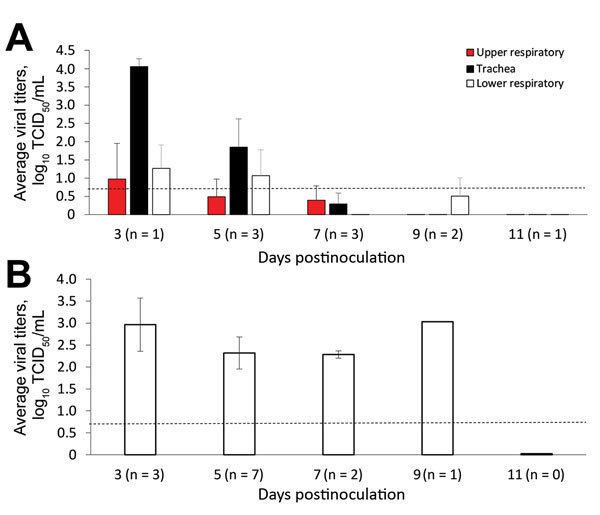
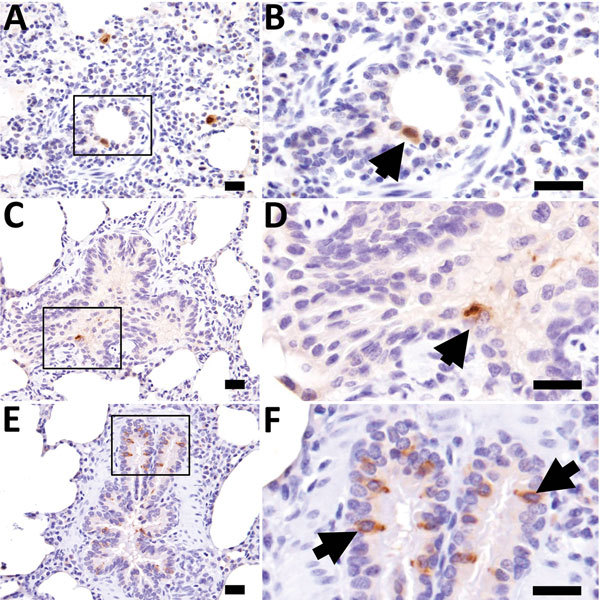
Description:Influenza D virus (IDV) has been identified in domestic cattle, swine, camelid, and small ruminant populations across North America, Europe, Asia, South America, and Africa. Our study investigated seroprevalence and transmissibility of IDV in feral swine. During 2012-2013, we evaluated feral swine populations in 4 US states; of 256 swine tested, 57 (19.1%) were IDV seropositive. Among 96 archived influenza A virus-seropositive feral swine samples collected from 16 US states during 2010-2013, 41 (42.7%) were IDV seropositive. Infection studies demonstrated that IDV-inoculated feral swine shed virus 3-5 days postinoculation and seroconverted at 21 days postinoculation; 50% of in-contact naive feral swine shed virus, seroconverted, or both. Immunohistochemical staining showed viral antigen within epithelial cells of the respiratory tract, including trachea, soft palate, and lungs. Our findings suggest that feral swine might serve an important role in the ecology of IDV.
-
Subjects:
-
Source:Emerg Infect Dis. 24(6):1020-1028.
-
Pubmed ID:29774857
-
Pubmed Central ID:PMC6004836
-
Document Type:
-
Funding:
-
Place as Subject:
-
Volume:24
-
Issue:6
-
Collection(s):
-
Main Document Checksum:urn:sha256:606bbbef6451f80c5ee623ac5173b60a1ea3bcbfa9a13cf174fa39a40a1c8d65
-
Download URL:
-
File Type:
 [PDF
- 3.18 MB
]
[PDF
- 3.18 MB
]
Supporting Files


File Language:
English
 Was this page helpful?
 Found an issue?


CDC STACKS serves as an archival repository of CDC-published products including
scientific findings,
journal articles, guidelines, recommendations, or other public health information authored or
co-authored by CDC or funded partners.
As a repository, CDC STACKS retains documents in their original published format to ensure public access to scientific information.
As a repository, CDC STACKS retains documents in their original published format to ensure public access to scientific information.
You May Also Like
COLLECTION
Emerging Infectious Diseases