



Comparing residence-based to actual path-based methods for defining adolescents’ environmental exposures using granular spatial data
Supporting Files

-
1 2018 ; 1-2018
-
Available in CDC Stacks on 2019-01-01T00:00:00Z
File Language:
English
Details
-
Alternative Title:Health Place
-
Personal Author:
-
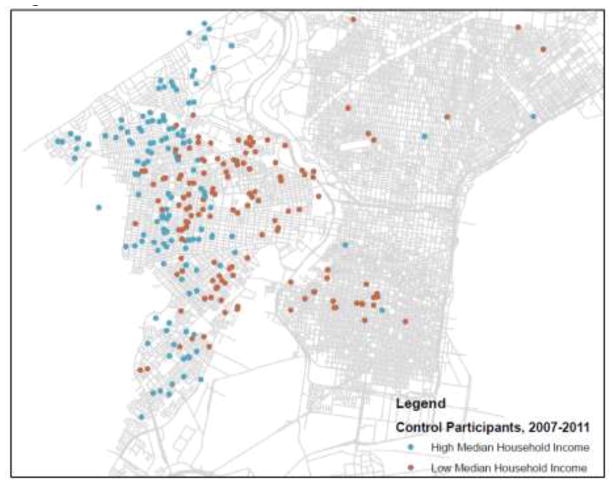
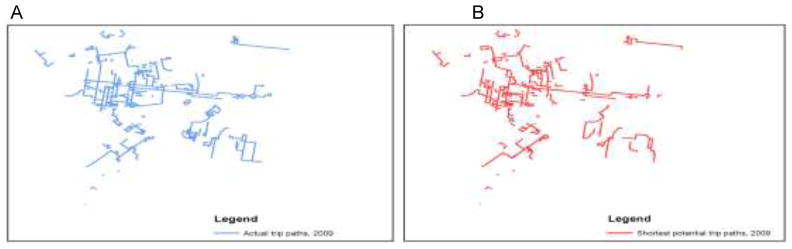
Description:This paper uses data from a population-based case control study of daily activities and assault injury to examine residence-based versus actual path-based approaches to measuring environmental exposures that pose risks for violence among adolescents. Defining environmental exposures based on participant home address resulted in significant misclassification compared to gold standard daily travel path measures. Dividing participant daily travel paths into origin-destination segments, we explore a method for defining spatial counterfactuals by comparing actual trip path exposures to shortest potential trip path exposures. Spatial methods explored herein can be utilized in future research to more accurately quantify environmental exposures and associations with health outcomes.
-
Subjects:
-
Keywords:
-
Source:Health Place. 49:39-49
-
Pubmed ID:29190517
-
Pubmed Central ID:PMC5807191
-
Document Type:
-
Funding:
-
Volume:49
-
Download URL:
-
File Type:
 [PDF - 965.44 KB]
 -
Collection(s):
-
Main Document Checksum:urn:sha256:5ceb0f055e60cba339ef31f62700bac8e028d447477acf98fe77a4ac44de5710
Supporting Files


File Language:
English
 Was this page helpful?
 Found an issue?








CDC STACKS serves as an archival repository of CDC-published products including
scientific findings, journal articles, guidelines, recommendations, or other public health information authored or
co-authored by CDC or funded partners.
As a repository, CDC STACKS retains documents in their original published format to ensure public access to scientific information.
As a repository, CDC STACKS retains documents in their original published format to ensure public access to scientific information.
You May Also Like
COLLECTION
CDC Public Access