



Estimated Brain Tissue Response Following Impacts Associated With and Without Diagnosed Concussion
Supporting Files

-
February 22 2018 ; 6-2018
-
Available in CDC Stacks on June 01, 2019, 12:00 AM
File Language:
English
Details
-
Alternative Title:Ann Biomed Eng
-
Personal Author:Beckwith, Jonathan G. ; Zhao, Wei ; Ji, Songbai ; Ajamil, Amaris G. ; Bolander, Richard P. ; Chu, Jeffrey J. ; McAllister, Thomas W. ; Crisco, Joseph J. ; Duma, Stefan M. ; Rowson, Steven ; Broglio, Steven P. ; Guskiewicz, Kevin M. ; Mihalik, Jason P. ; Anderson, Scott ; Schnebel, Brock ; Brolinson, P. Gunnar ; Collins, Michael W. ; Greenwald, Richard M.
-
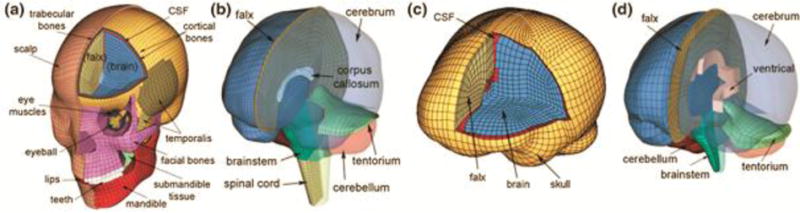
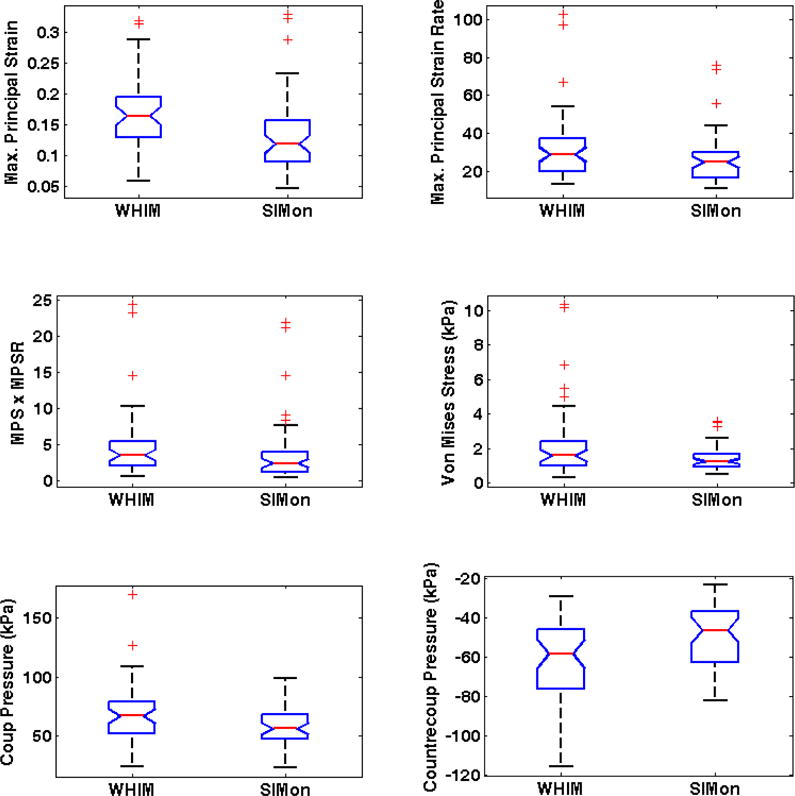
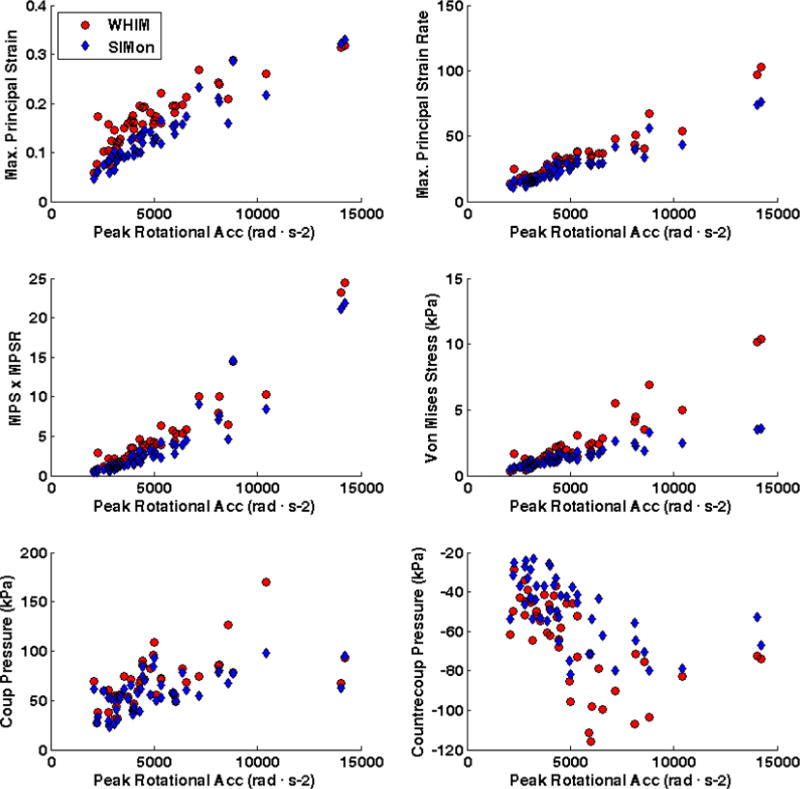
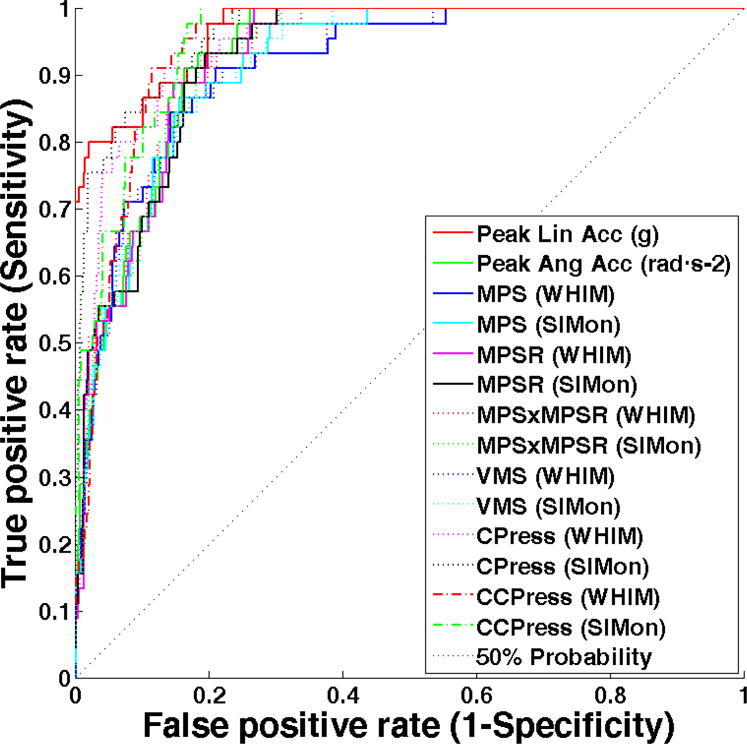
Description:Kinematic measurements of head impacts are sensitive to sports concussion, but not highly specific. One potential reason is these measures reflect input conditions only and may have varying degrees of correlation to regional brain tissue deformation. In this study, previously reported head impact data recorded in the field from high school and collegiate football players were analyzed using two finite element head models (FEHM). Forty-five impacts associated with immediately diagnosed concussion were simulated along with 532 control impacts without identified concussion obtained from the same players. For each simulation, intracranial response measures (max principal strain, strain rate, von Mises stress, and pressure) were obtained for the whole brain and within four regions of interest (ROI; cerebrum, cerebellum, brain stem, corpus callosum). All response measures were sensitive to diagnosed concussion; however, large inter-athlete variability was observed and sensitivity strength depended on measure, ROI, and FEHM. Interestingly, peak linear acceleration was more sensitive to diagnosed concussion than all intracranial response measures except pressure. These findings suggest FEHM may provide unique and potentially important information on brain injury mechanisms, but estimations of concussion risk based on individual intracranial response measures evaluated in this study did not improve upon those derived from input kinematics alone.
-
Subjects:
-
Source:Ann Biomed Eng. 46(6):819-830
-
Pubmed ID:29470745
-
Pubmed Central ID:PMC5935583
-
Document Type:
-
Funding:R01 CE001254/CE/NCIPC CDC HHS/United States ; R01 NS094410/NS/NINDS NIH HHS/United States ; 07-04/National Operating Committee on Standards for Athletic Equipment/ ; R01NS094410/National Institutes of Health/ ; 5R49CE000196/Centers for Disease Control and Prevention/ ; R01 NS092853/NS/NINDS NIH HHS/United States ; R01 NS055020/NS/NINDS NIH HHS/United States ; R01HD048638/National Institutes of Health/ ; R01 HD048638/HD/NICHD NIH HHS/United States ; R21NS088781/National Institutes of Health/ ; R44HD40473/National Institutes of Health (US)/ ; R01NS092853/National Institutes of Health/ ; R01NS055020/National Institute of Neurological Disorders and Stroke/ ; R01CE001254/Centers for Disease Control and Prevention/ ; 14-19/National Operating Committee on Standards for Athletic Equipment/ ; R21 NS088781/NS/NINDS NIH HHS/United States ; R49 CE000196/CE/NCIPC CDC HHS/United States
-
Volume:46
-
Issue:6
-
Download URL:
-
File Type:
 [PDF - 1.04 MB]
 -
Collection(s):
-
Main Document Checksum:urn:sha256:cf89cb828b6c585dce397e95b8d983af6a59532a1d75aee2db9f97e8664f3837
Supporting Files


File Language:
English
 Was this page helpful?
 Found an issue?







CDC STACKS serves as an archival repository of CDC-published products including
scientific findings, journal articles, guidelines, recommendations, or other public health information authored or
co-authored by CDC or funded partners.
As a repository, CDC STACKS retains documents in their original published format to ensure public access to scientific information.
As a repository, CDC STACKS retains documents in their original published format to ensure public access to scientific information.
You May Also Like
COLLECTION
CDC Public Access