


Influence of Population Immunosuppression and Past Vaccination on Smallpox Reemergence
Supporting Files
Public Domain

-
Apr 2018
-
File Language:
English
Details
-
Alternative Title:Emerg Infect Dis
-
Personal Author:
-
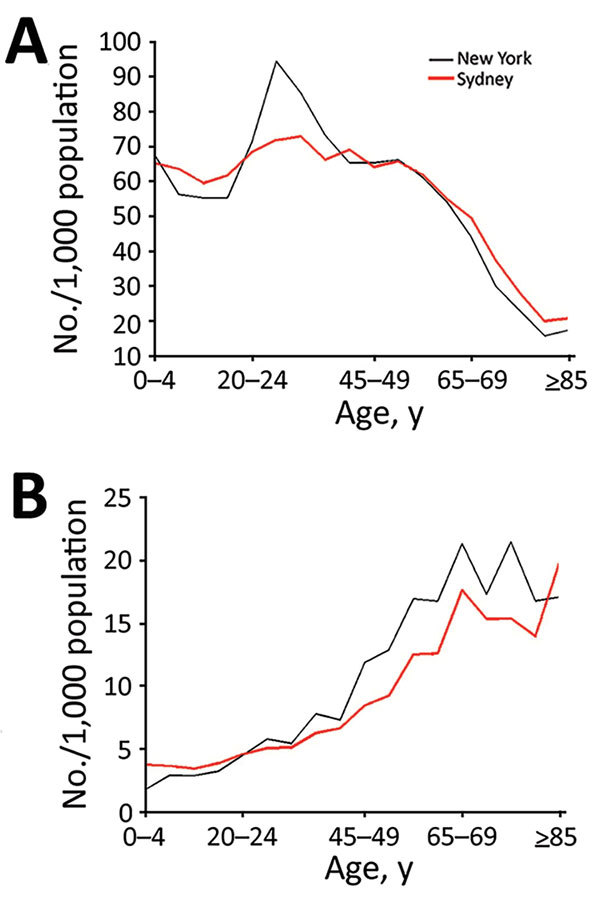
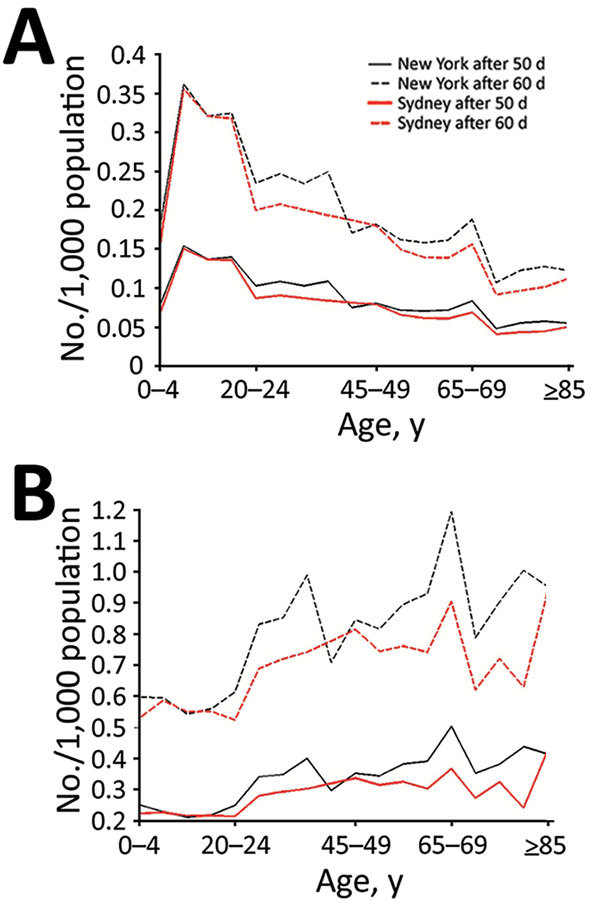
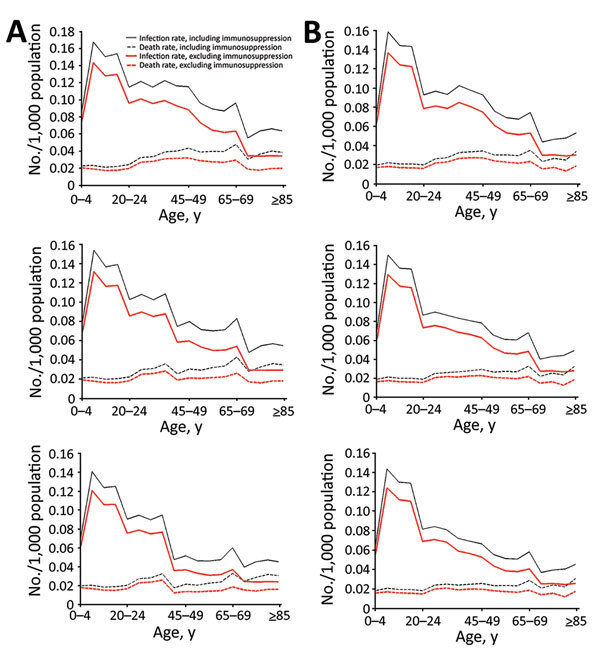
Description:We built a SEIR (susceptible, exposed, infected, recovered) model of smallpox transmission for New York, New York, USA, and Sydney, New South Wales, Australia, that accounted for age-specific population immunosuppression and residual vaccine immunity and conducted sensitivity analyses to estimate the effect these parameters might have on smallpox reemergence. At least 19% of New York's and 17% of Sydney's population are immunosuppressed. The highest smallpox infection rates were in persons 0-19 years of age, but the highest death rates were in those >45 years of age. Because of the low level of residual vaccine immunity, immunosuppression was more influential than vaccination on death and infection rates in our model. Despite widespread smallpox vaccination until 1980 in New York, smallpox outbreak severity appeared worse in New York than in Sydney. Immunosuppression is highly prevalent and should be considered in future smallpox outbreak models because excluding this factor probably underestimates death and infection rates.
-
Subjects:
-
Source:Emerg Infect Dis. 24(4):646-653.
-
Pubmed ID:29553311
-
Pubmed Central ID:PMC5875263
-
Document Type:
-
Volume:24
-
Issue:4
-
Collection(s):
-
Main Document Checksum:urn:sha256:6c67b398552337c0bd16c837ccfc00e01994bd0e5cffa589b917caa6c948012d
-
Download URL:
-
File Type:
 [PDF
- 3.01 MB
]
[PDF
- 3.01 MB
]
Supporting Files


File Language:
English
ON THIS PAGE




CDC STACKS serves as an archival repository of CDC-published products including
scientific findings,
journal articles, guidelines, recommendations, or other public health information authored or
co-authored by CDC or funded partners.
As a repository, CDC STACKS retains documents in their original published format to ensure public access to scientific information.
As a repository, CDC STACKS retains documents in their original published format to ensure public access to scientific information.
You May Also Like
COLLECTION
Emerging Infectious Diseases