


Applying Machine Learning to Workers’ Compensation Data to Identify Industry-Specific Ergonomic and Safety Prevention Priorities
Supporting Files

-
Jan 2018
File Language:
English
Details
-
Alternative Title:J Occup Environ Med
-
Personal Author:
-
Description:Objective
This study leveraged a state workers’ compensation claims database and machine learning techniques to target prevention efforts by injury causation and industry.
Methods
Injury causation auto-coding methods were developed to code more than 1.2 million Ohio Bureau of Workers’ Compensation claims for this study. Industry groups were ranked for soft-tissue musculoskeletal claims that may have been preventable with biomechanical ergonomic (ERGO) or slip/trip/fall (STF) interventions.
Results
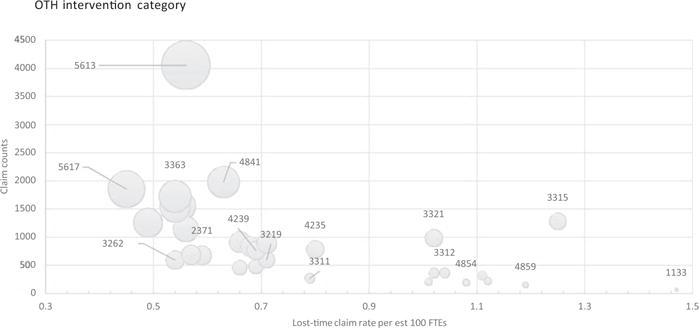
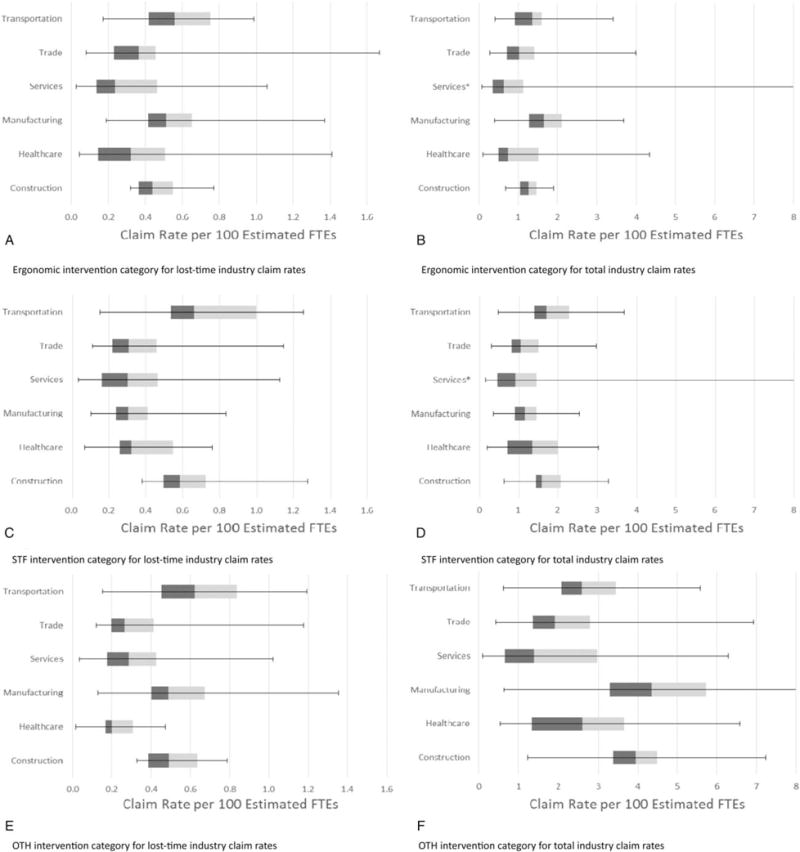
On the basis of the average of claim count and rate ranks for more than 200 industry groups, Skilled Nursing Facilities (ERGO) and General Freight Trucking (STF) were the highest risk for lost-time claims (>7 days).
Conclusion
This study created a third, major causation-specific U.S. occupational injury surveillance system. These findings are being used to focus prevention resources on specific occupational injury types in specific industry groups, especially in Ohio. Other state bureaus or insurers may use similar methods.
-
Subjects:
-
Source:J Occup Environ Med. 60(1):55-73
-
Pubmed ID:28953071
-
Pubmed Central ID:PMC5868484
-
Document Type:
-
Funding:
-
Volume:60
-
Issue:1
-
Collection(s):
-
Main Document Checksum:urn:sha256:ed9f1df2de89bcb78f630955b560b60fdb7ed5bec2369c89cb2372207162369b
-
Download URL:
-
File Type:
 [PDF
- 574.89 KB
]
[PDF
- 574.89 KB
]
Supporting Files


File Language:
English
ON THIS PAGE




CDC STACKS serves as an archival repository of CDC-published products including
scientific findings,
journal articles, guidelines, recommendations, or other public health information authored or
co-authored by CDC or funded partners.
As a repository, CDC STACKS retains documents in their original published format to ensure public access to scientific information.
As a repository, CDC STACKS retains documents in their original published format to ensure public access to scientific information.
You May Also Like
COLLECTION
CDC Public Access