



Neonatal Encephalopathy With Group B Streptococcal Disease Worldwide: Systematic Review, Investigator Group Datasets, and Meta-analysis
Supporting Files

-
Nov 06 2017
File Language:
English
Details
-
Alternative Title:The Burden of Group B Streptococcus Worldwide for Pregnant Women, Stillbirths, and Children
-
Personal Author:Tann, Cally J ; Martinello, Kathryn A ; Sadoo, Samantha ; Lawn, Joy E ; Seale, Anna C ; Vega-Poblete, Maira ; Russell, Neal J ; Baker, Carol J ; Bartlett, Linda ; Cutland, Clare ; Gravett, Michael G ; Ip, Margaret ; Le Doare, Kirsty ; Madhi, Shabir A ; Rubens, Craig E ; Saha, Samir K ; Schrag, Stephanie ; Sobanjo-ter Meulen, Ajoke ; Vekemans, Johan ; Heath, Paul T
-
Corporate Authors:
-
Description:Background
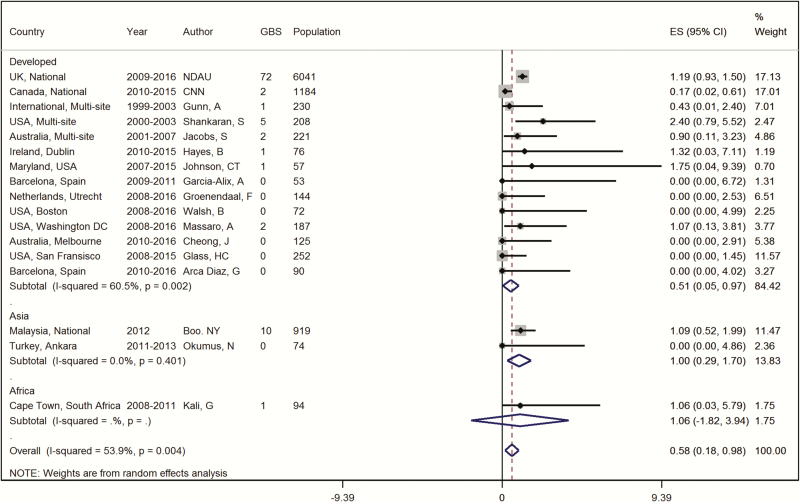
Neonatal encephalopathy (NE) is a leading cause of child mortality and longer-term impairment. Infection can sensitize the newborn brain to injury; however, the role of group B streptococcal (GBS) disease has not been reviewed. This paper is the ninth in an 11-article series estimating the burden of GBS disease; here we aim to assess the proportion of GBS in NE cases.
Methods
We conducted systematic literature reviews (PubMed/Medline, Embase, Latin American and Caribbean Health Sciences Literature LILACS, World Health Organization Library Information System WHOLIS, and Scopus) and sought unpublished data from investigator groups reporting GBS-associated NE. Meta-analyses estimated the proportion of GBS disease in NE and mortality risk. UK population-level data estimated the incidence of GBS-associated NE.
Results
Four published and 25 unpublished datasets were identified from 13 countries (N = 10436). The proportion of NE associated with GBS was 0.58% (95% confidence interval CI, 0.18%–.98%). Mortality was significantly increased in GBS-associated NE vs NE alone (risk ratio, 2.07 95% CI, 1.47–2.91). This equates to a UK incidence of GBS-associated NE of 0.019 per 1000 live births.
Conclusions
The consistent increased proportion of GBS disease in NE and significant increased risk of mortality provides evidence that GBS infection contributes to NE. Increased information regarding this and other organisms is important to inform interventions, especially in low- and middle-resource contexts. -
Subjects:
-
Source:Clin Infect Dis. 2017; 65(Suppl 2):S173-S189
-
Pubmed ID:29117330
-
Pubmed Central ID:PMC5850525
-
Document Type:
-
Funding:205184/Z/16/Z/WT_/Wellcome Trust/United Kingdom ; MR/K006355/1/MRC_/Medical Research Council/United Kingdom ; G0100126/MRC_/Medical Research Council/United Kingdom ; G0200270/MRC_/Medical Research Council/United Kingdom ; 001/WHO_/World Health Organization/International ; MR/N008405/1/MRC_/Medical Research Council/United Kingdom
-
Volume:65
-
Download URL:
-
File Type:
 [PDF - 6.14 MB]
-
Collection(s):
-
Main Document Checksum:urn:sha-512:714bd078372159fd74a70e6f119402260375adb2292c863209dab450aefc7762aae847806917a241326205e0dbec2bcd2d25cc1d9500dbce10dcebcb482f942c
Supporting Files


File Language:
English
 Was this page helpful?
 Found an issue?


CDC STACKS serves as an archival repository of CDC-published products including
scientific findings, journal articles, guidelines, recommendations, or other public health information authored or
co-authored by CDC or funded partners.
As a repository, CDC STACKS retains documents in their original published format to ensure public access to scientific information.
As a repository, CDC STACKS retains documents in their original published format to ensure public access to scientific information.
You May Also Like
COLLECTION
CDC Public Access