



Adjusted fluoride concentrations and control ranges in 34 states — 2006–2010 and 2015
Supporting Files

-
8 2017 ; 8-2017
-
Available in CDC Stacks on February 05, 2018, 12:00 AM
File Language:
English
Details
-
Alternative Title:J Am Water Works Assoc
-
Personal Author:
-
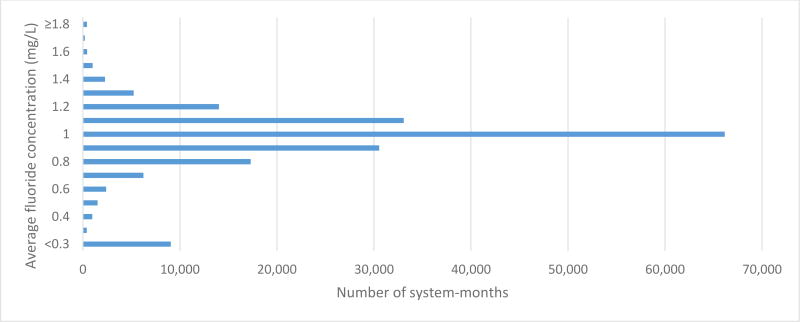
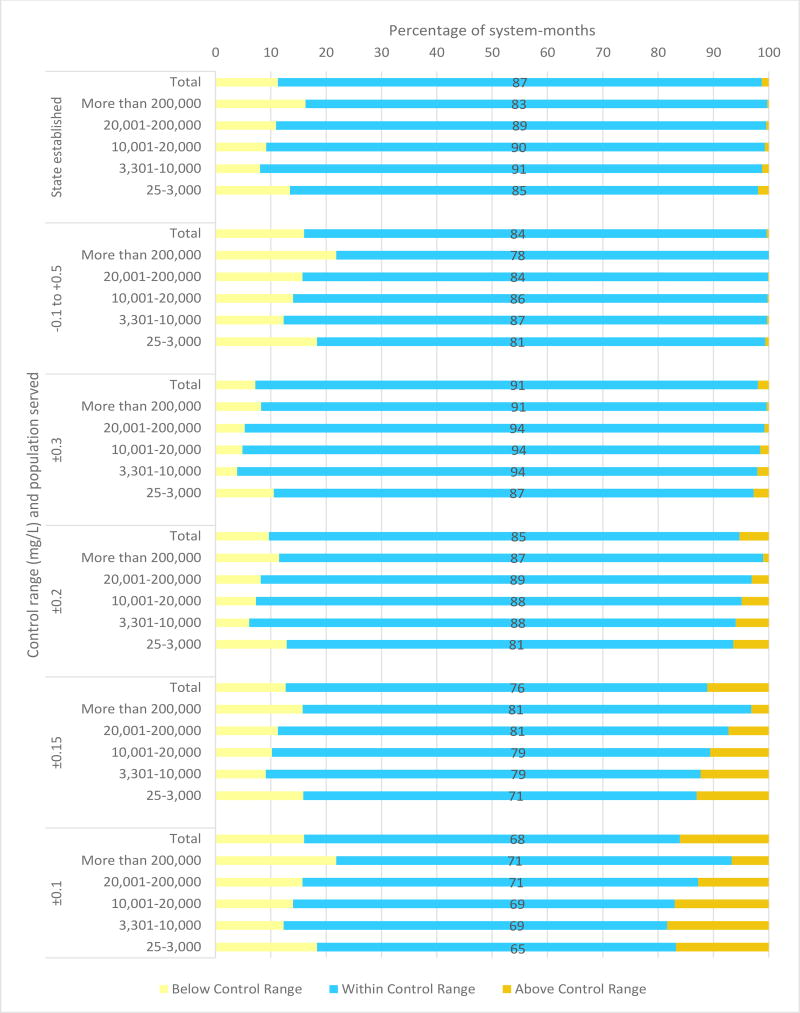
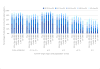
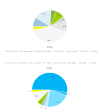
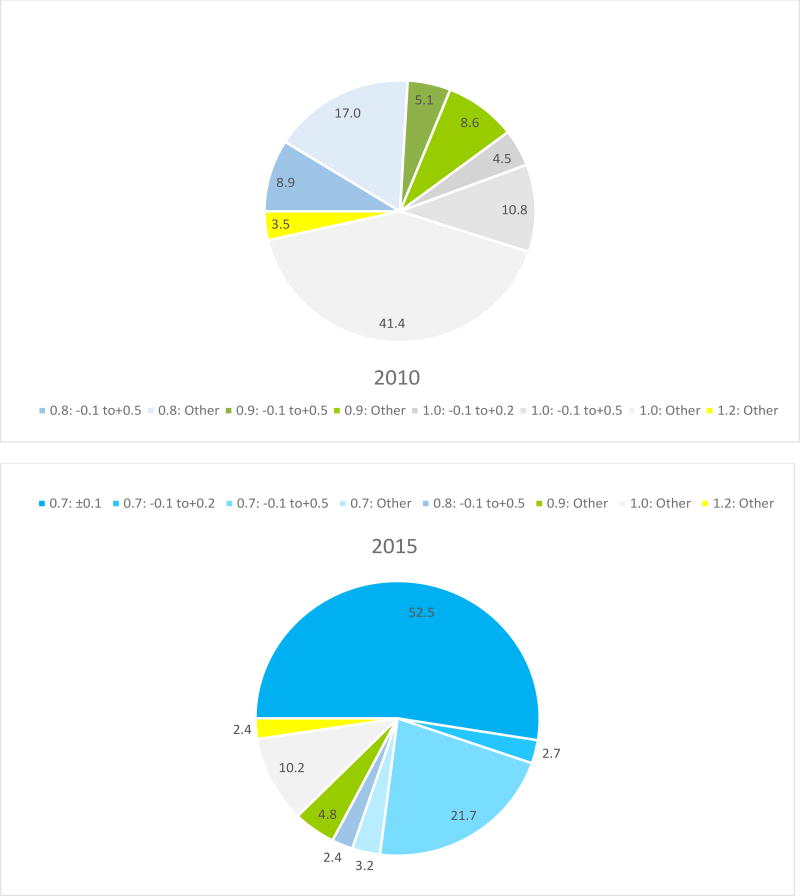
Description:To inform selection of a control range around the Public Health Service's recommended 0.7 mg/L drinking water fluoride concentration to prevent tooth decay, CDC's Water Fluoridation Reporting System data for 2006-2010 and 2015 were analyzed. Monthly average concentration data from 4,251 fluoride-adjusted community water systems for 191,266 of 255,060 system-months (2006-2010) were compared to control ranges 0.6 mg/L to 0.2 mg/L wide. Percentages of system-months within control ranges ≥0.4 mg/L wide (e.g., ±0.2 mg/L) were >83% versus 68% for 0.2 mg/L wide (±0.1 mg/L). In 2015, 70% of adjusted systems maintained averages within ±0.1 mg/L of their system's annual average for 9 of 12 months, 67% used the 0.7 mg/L target and 45% used it with a ±0.1 mg/L control range. Adoption of the 0.7 mg/L target was underway but not completed in 2015. Control ranges narrower than ±0.2 mg/L may be feasible for monthly average fluoride concentration.
-
Keywords:
-
Source:J Am Water Works Assoc. 109(8):13-15
-
Pubmed ID:29416142
-
Pubmed Central ID:PMC5798483
-
Document Type:
-
Funding:
-
Volume:109
-
Issue:8
-
Download URL:
-
File Type:
 [PDF - 1.22 MB]
 -
Collection(s):
-
Main Document Checksum:urn:sha256:e464a474febac64fc16385985b1940269a11e541e763c06f4009da9a77cccbae
Supporting Files


File Language:
English
 Was this page helpful?
 Found an issue?




CDC STACKS serves as an archival repository of CDC-published products including
scientific findings, journal articles, guidelines, recommendations, or other public health information authored or
co-authored by CDC or funded partners.
As a repository, CDC STACKS retains documents in their original published format to ensure public access to scientific information.
As a repository, CDC STACKS retains documents in their original published format to ensure public access to scientific information.
You May Also Like
COLLECTION
CDC Public Access