


Characterization of a Feline Influenza A(H7N2) Virus
Supporting Files

-
Jan 2018
-
File Language:
English
Details
-
Alternative Title:Emerg Infect Dis
-
Personal Author:Hatta, Masato ; Zhong, Gongxun ; Gao, Yuwei ; Nakajima, Noriko ; Fan, Shufang ; Chiba, Shiho ; Deering, Kathleen M. ; Ito, Mutsumi ; Imai, Masaki ; Kiso, Maki ; Nakatsu, Sumiho ; Lopes, Tiago J. ; Thompson, Andrew J. ; McBride, Ryan ; Suarez, David L. ; Macken, Catherine A. ; Sugita, Shigeo ; Neumann, Gabriele ; Hasegawa, Hideki ; Paulson, James C. ; Toohey-Kurth, Kathy L. ; Kawaoka, Yoshihiro
-
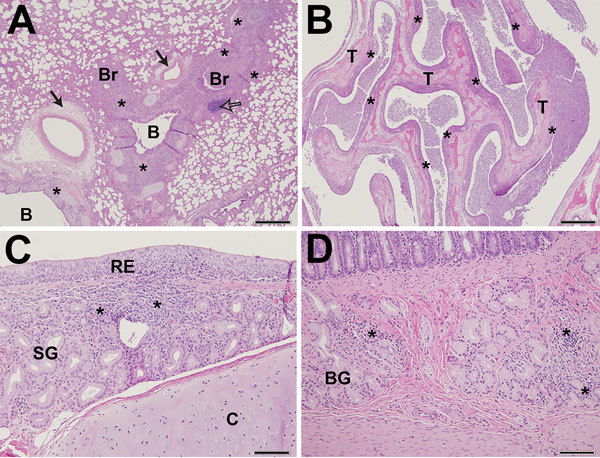
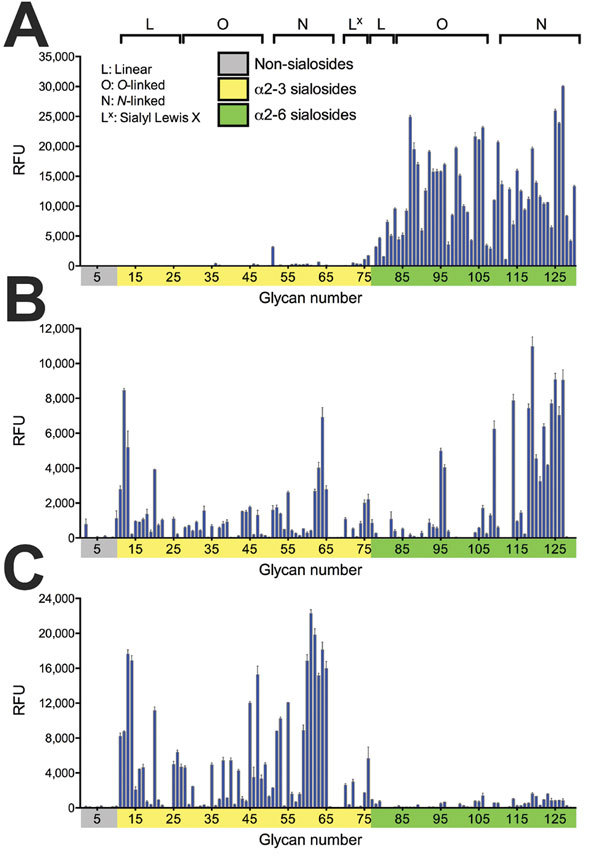
Description:During December 2016-February 2017, influenza A viruses of the H7N2 subtype infected ≈500 cats in animal shelters in New York, NY, USA, indicating virus transmission among cats. A veterinarian who treated the animals also became infected with feline influenza A(H7N2) virus and experienced respiratory symptoms. To understand the pathogenicity and transmissibility of these feline H7N2 viruses in mammals, we characterized them in vitro and in vivo. Feline H7N2 subtype viruses replicated in the respiratory organs of mice, ferrets, and cats without causing severe lesions. Direct contact transmission of feline H7N2 subtype viruses was detected in ferrets and cats; in cats, exposed animals were also infected via respiratory droplet transmission. These results suggest that the feline H7N2 subtype viruses could spread among cats and also infect humans. Outbreaks of the feline H7N2 viruses could, therefore, pose a risk to public health.
-
Subjects:
-
Source:Emerg Infect Dis. 24(1):75-86.
-
Pubmed ID:29260686
-
Pubmed Central ID:PMC5749472
-
Document Type:
-
Funding:
-
Place as Subject:
-
Location:
-
Volume:24
-
Issue:1
-
Collection(s):
-
Main Document Checksum:urn:sha256:9b59ef33e7b6abb5c03282eed00b10ecf7b63eb92c1d2bc72197374e3a1907c4
-
Download URL:
-
File Type:
 [PDF
- 5.90 MB
]
[PDF
- 5.90 MB
]
Supporting Files


File Language:
English
ON THIS PAGE



CDC STACKS serves as an archival repository of CDC-published products including
scientific findings,
journal articles, guidelines, recommendations, or other public health information authored or
co-authored by CDC or funded partners.
As a repository, CDC STACKS retains documents in their original published format to ensure public access to scientific information.
As a repository, CDC STACKS retains documents in their original published format to ensure public access to scientific information.
You May Also Like
COLLECTION
Emerging Infectious Diseases