



Residential cancer cluster investigation nearby a Superfund Study Area with trichloroethylene contamination
Supporting Files

-
Mar 17 2016
-
Available in CDC Stacks on 2018-01-09T00:00:00Z
File Language:
English
Details
-
Alternative Title:Cancer Causes Control
-
Personal Author:
-
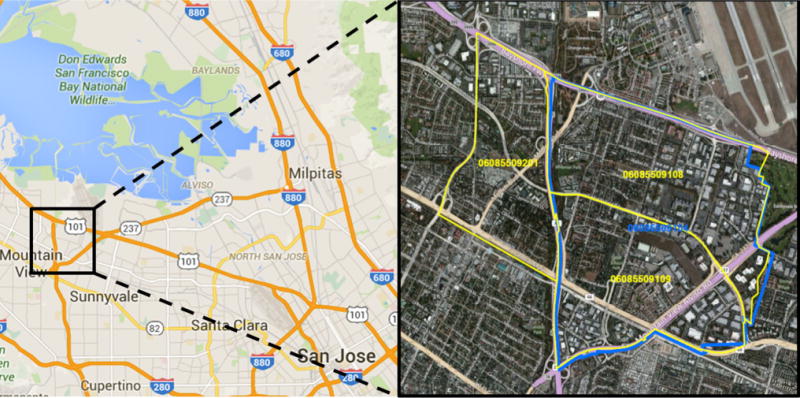
Description:Purpose ; Trichloroethylene (TCE) is an industrial solvent associated with liver cancer, kidney cancer, and non- Hodgkin’s lymphoma (NHL). It is unclear whether an excess of TCE-associated cancers have occurred surrounding the Middlefield–Ellis–Whisman Superfund site in Mountain View, California. We conducted a population- based cancer cluster investigation comparing the incidence of NHL, liver, and kidney cancers in the neighborhood of interest to the incidence among residents in the surrounding four-county region. ; Methods ; Case counts and address information were obtained using routinely collected data from the Greater Bay Area Cancer Registry, part of the Surveillance, Epidemiology, and End Results program. Population denominators were obtained from the 1990, 2000, and 2010 US censuses. Standardized incidence ratios (SIRs) with two- sided 99 % confidence intervals (CIs) were calculated for time intervals surrounding the US Censuses. ; Results ; There were no statistically significant differences between the neighborhood of interest and the larger region for cancers of the liver or kidney. A statistically significant elevation was observed for NHL during one of the three time periods evaluated (1996–2005: SIR = 1.8, 99 % CI 1.1–2.8). No statistically significant NHL elevation existed in the earlier 1988–1995 (SIR = 1.3, 99 % CI 0.5–2.6) or later 2006–2011 (SIR = 1.3, 99 % CI 0.6–2.4) periods. ; Conclusion ; There is no evidence of an increased incidence of liver or kidney cancer, and there is a lack of evidence of a consistent, sustained, or more recent elevation in NHL occurrence in this neighborhood. This evaluation included existing cancer registry data, which cannot speak to specific exposures incurred by past or current residents of this neighborhood.
-
Subjects:
-
Source:Cancer Causes Control. 27(5):607-613.
-
Pubmed ID:26983615
-
Pubmed Central ID:PMC5759954
-
Document Type:
-
Funding:HHSN261201000034C/PHS HHS/United States ; HHSN261201000035C/PC,CA/None/None ; HHSN261201000140C/CA/NCI NIH HHS/United States ; HHSN261201000035C/PHS HHS/United States ; U58 DP000807/DP/NCCDPHP CDC HHS/United States ; 1U58 DP000807-01/DP/NCCDPHP CDC HHS/United States ; HHSN261201000035I/CA/NCI NIH HHS/United States ; HHSN261201000034C/CA/NCI NIH HHS/United States ; HHSN261201000140C/PHS HHS/United States ; N01 PC035137/PC/NCI NIH HHS/United States
-
Place as Subject:
-
Volume:27
-
Issue:5
-
Download URL:
-
File Type:
 [PDF - 237.73 KB]
 -
Collection(s):
-
Main Document Checksum:urn:sha256:ab2d344396eeeb248ccf9a29093c533783e9be6ee0dc29f744d8292ab8648fcf
Supporting Files


File Language:
English
 Was this page helpful?
 Found an issue?


CDC STACKS serves as an archival repository of CDC-published products including
scientific findings, journal articles, guidelines, recommendations, or other public health information authored or
co-authored by CDC or funded partners.
As a repository, CDC STACKS retains documents in their original published format to ensure public access to scientific information.
As a repository, CDC STACKS retains documents in their original published format to ensure public access to scientific information.
You May Also Like
COLLECTION
CDC Public Access