


Chemokine (C‐C Motif) Receptor‐Like 2 is not essential for lung injury, lung inflammation, or airway hyperresponsiveness induced by acute exposure to ozone
Supporting Files
Public Domain

-
Dec 2017
-
Details
-
Alternative Title:Physiol Rep
-
Personal Author:
-
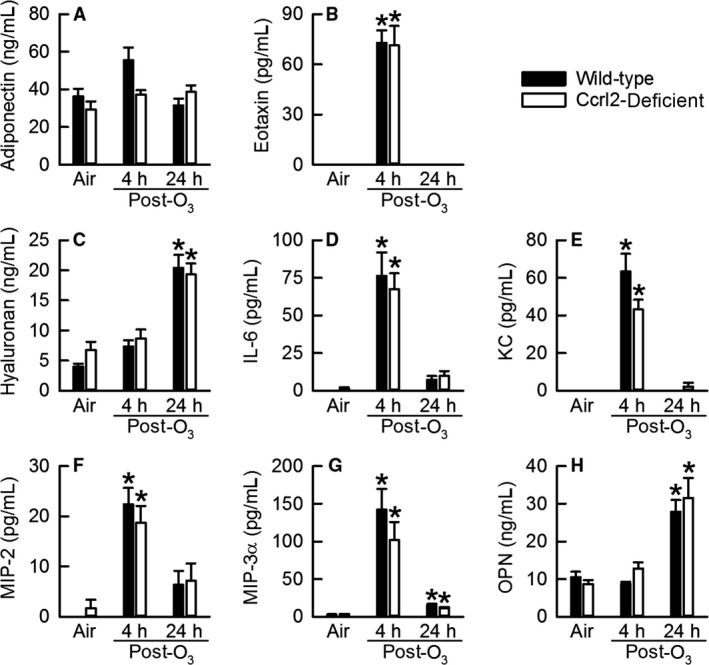
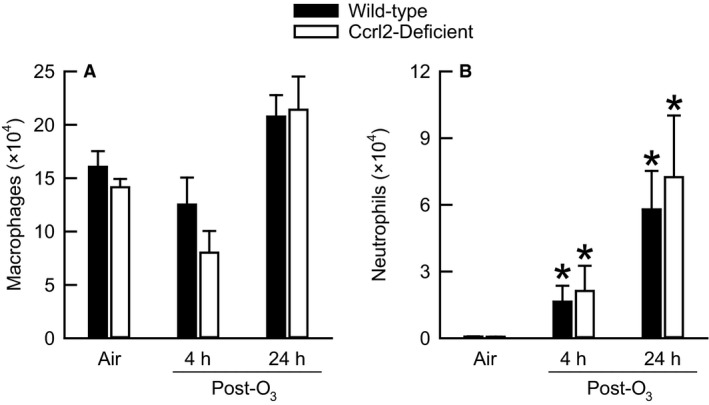
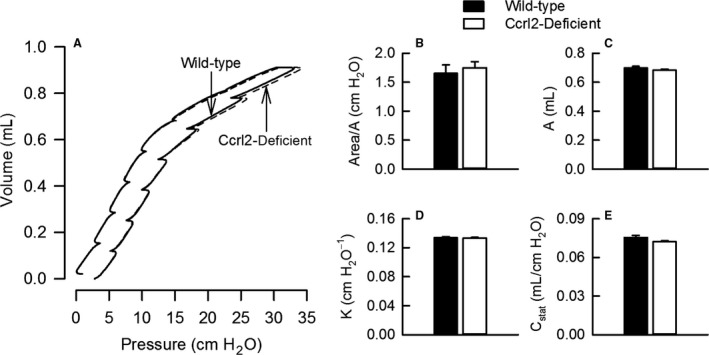
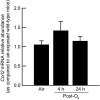
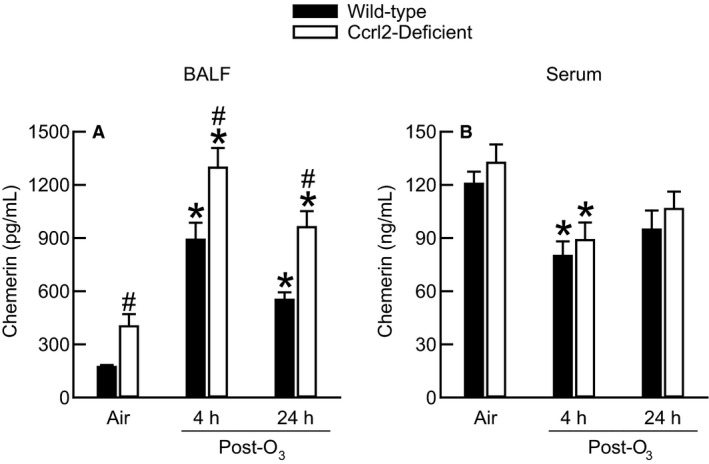
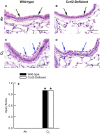
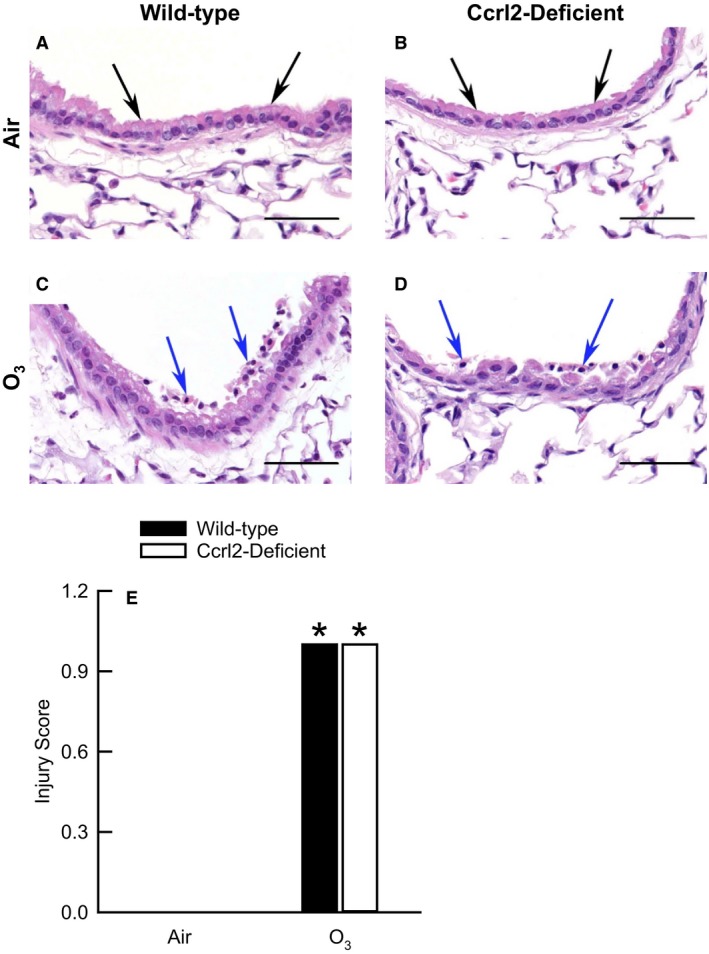
Description:Inhalation of ozone (O|), a gaseous air pollutant, causes lung injury, lung inflammation, and airway hyperresponsiveness. Macrophages, mast cells, and neutrophils contribute to one or more of these sequelae induced by O|Furthermore, each of these aforementioned cells express chemokine (C-C motif) receptor-like 2 (Ccrl2), an atypical chemokine receptor that facilitates leukocyte chemotaxis. Given that Ccrl2 is expressed by cells essential to the development of O|-induced lung pathology and that chemerin, a Ccrl2 ligand, is increased in bronchoalveolar lavage fluid (BALF) by O|, we hypothesized that Ccrl2 contributes to the development of lung injury, lung inflammation, and airway hyperresponsiveness induced by O|To that end, we measured indices of lung injury (BALF protein, BALF epithelial cells, and bronchiolar epithelial injury), lung inflammation (BALF cytokines and BALF leukocytes), and airway responsiveness to acetyl-|-methylcholine chloride (respiratory system resistance) in wild-type and mice genetically deficient in Ccrl2 (Ccrl2-deficient mice) 4 and/or 24 hours following cessation of acute exposure to either filtered room air (air) or O|In air-exposed mice, BALF chemerin was greater in Ccrl2-deficient as compared to wild-type mice. O|increased BALF chemerin in mice of both genotypes, yet following O|exposure, BALF chemerin was greater in Ccrl2-deficient as compared to wild-type mice. O|increased indices of lung injury, lung inflammation, and airway responsiveness. Nevertheless, no indices were different between genotypes following O|exposure. In conclusion, we demonstrate that Ccrl2 modulates chemerin levels in the epithelial lining fluid of the lungs but does not contribute to the development of O|-induced lung pathology.
-
Subjects:
-
Source:Physiol Rep. 5(24).
-
Pubmed ID:29242308
-
Pubmed Central ID:PMC5742705
-
Document Type:
-
Volume:5
-
Issue:24
-
Collection(s):
-
Main Document Checksum:urn:sha256:902eebeb6fff74a5ba28c87abc85c224f841c474f576055d62f4870436d06302
-
Download URL:
-
File Type:
 [PDF
- 1.20 MB
]
[PDF
- 1.20 MB
]
Supporting Files


ON THIS PAGE








CDC STACKS serves as an archival repository of CDC-published products including
scientific findings,
journal articles, guidelines, recommendations, or other public health information authored or
co-authored by CDC or funded partners.
As a repository, CDC STACKS retains documents in their original published format to ensure public access to scientific information.
As a repository, CDC STACKS retains documents in their original published format to ensure public access to scientific information.
You May Also Like
COLLECTION
CDC Public Access