


Mediation of the single-walled carbon nanotubes induced pulmonary fibrogenic response by osteopontin and TGF-β1
Supporting Files

-
10 2017
-
File Language:
English
Details
-
Journal Article:Exp Lung Res
-
Personal Author:
-
Description:Purpose of the study:
A number of in vivo studies have shown that pulmonary exposure to carbon nanotubes (CNTs) may lead to an acute local inflammatory response, pulmonary fibrosis, and granulomatous lesions. Among the factors that play direct roles in initiation and progression of fibrotic processes are epithelial-mesenchymal transition and myofibroblasts recruitment/differentiation, both mediated by transforming growth factor-β1 (TGF-β1). Yet, other contributors to TGF-β1 associated signaling, such as osteopontin (OPN) has not been fully investigated.
Materials and Methods:
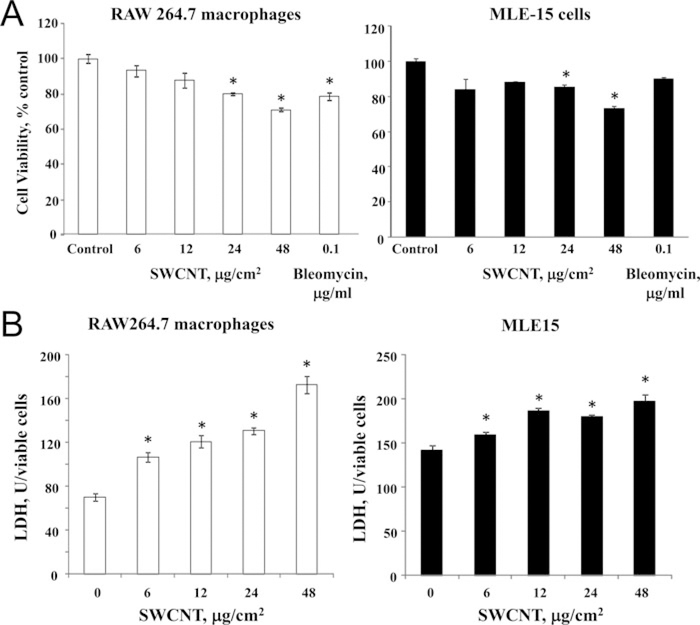
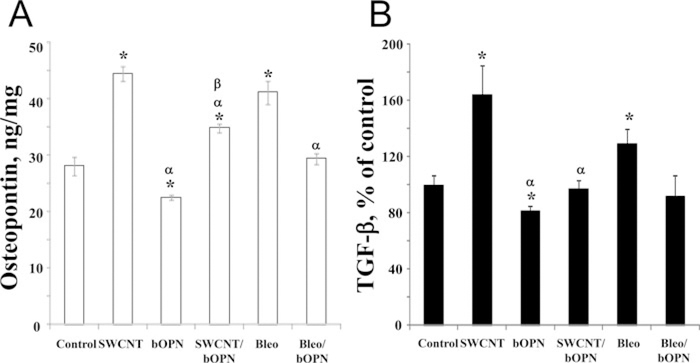
OPN-knockout female mice (OPN-KO) along with their wild-type (WT) counterparts were exposed to single-walled carbon nanotubes (SWCNT) (40 μg/mouse) via pharyngeal aspiration and fibrotic response was assessed 1, 7, and 28 days post-exposure. Simultaneously, RAW 264.7 and MLE-15 cells were treated with SWCNT (24 hours, 6 μg/cm2 to 48 μg/cm2) or bleomycin (0.1 μg/ml) in the presence of OPN-blocking antibody or isotype control, and TGF-β1 was measured in supernatants.
Results and Conclusions:
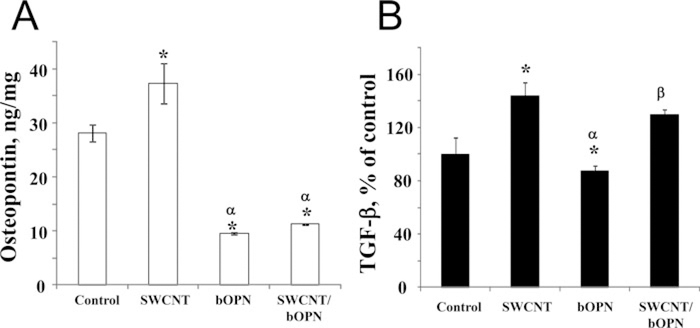
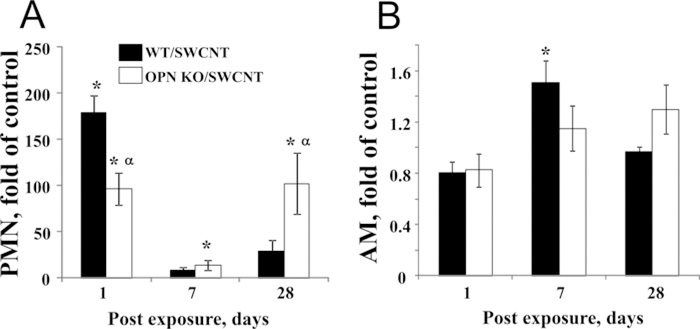
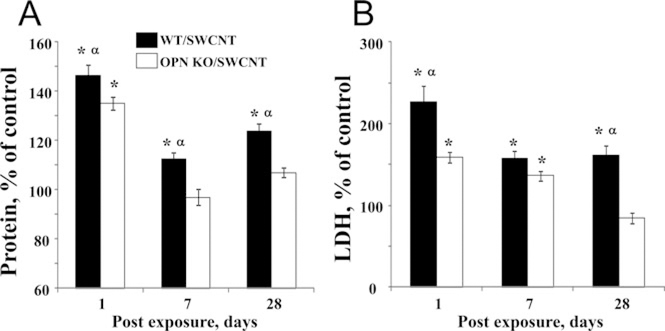
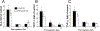
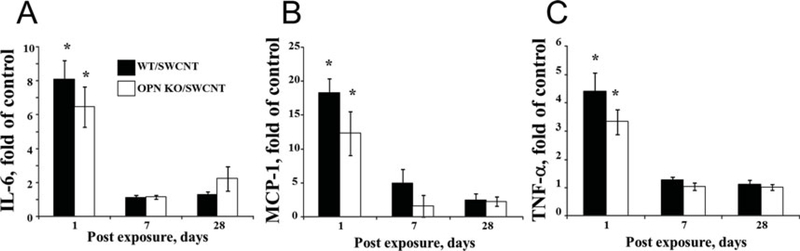
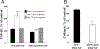
Diminished lactate dehydrogenase activity at all time points, along with less pronounced neutrophil influx 24 h post-exposure, were measured in broncho-alveolar lavage (BAL) of OPN-KO mice compared to WT. Pro-inflammatory cytokine release (IL-6, TNF-α, MCP-1) was reduced. A significant two-fold increase of TGF-β1 was found in BAL of WT mice at 7 days, while TGF-β1 levels in OPN-KO animals remained unaltered. Histological examination revealed marked decrease in granuloma formation and less collagen deposition in the lungs of OPN-KO mice compared to WT. RAW 264.7 but not MLE-15 cells exposed to SWCNT and bleomycin had significantly less TGF-β1 released in the presence of OPN-blocking antibody. We believe that OPN is important in initiating the cellular mechanisms that produce an overall pathological response to SWCNT and it may act upstream of TGF-β1. Further investigation to understand the mechanistic details of such interactions is critical to predict outcomes of pulmonary exposure to CNT.
-
Subjects:
-
Keywords:
-
Source:Exp Lung Res. 43(8):311-326
-
DOI:
-
Pubmed ID:29140132
-
Pubmed Central ID:PMC6432765
-
Document Type:
-
Funding:
-
Genre:
-
Volume:43
-
Issue:8
-
Collection(s):
-
Main Document Checksum:urn:sha-512:753e4e707c63eb6c0aeb4ab617a2cfa2d93046a633515a8bda8f3abad0f993d919f7a43b44f1f589585145e0bec940378bec6b62dcb668e607ff48c6642e2778
-
Download URL:
-
File Type:
 [PDF
- 1.35 MB
]
[PDF
- 1.35 MB
]
Supporting Files


File Language:
English
ON THIS PAGE




CDC STACKS serves as an archival repository of CDC-published products including
scientific findings,
journal articles, guidelines, recommendations, or other public health information authored or
co-authored by CDC or funded partners.
As a repository, CDC STACKS retains documents in their original published format to ensure public access to scientific information.
As a repository, CDC STACKS retains documents in their original published format to ensure public access to scientific information.
You May Also Like
COLLECTION
CDC Public Access