


Silica inhalation altered telomere length and gene expression of telomere regulatory proteins in lung tissue of rats
Supporting Files
Public Domain

-
Dec 11 2017
-
File Language:
English
Details
-
Alternative Title:Sci Rep
-
Personal Author:
-
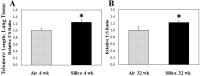
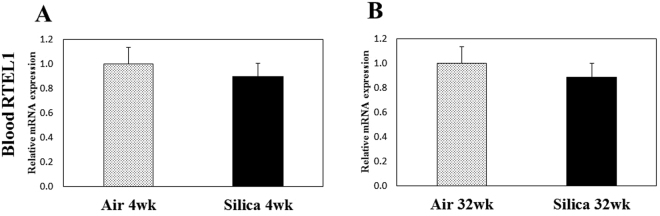
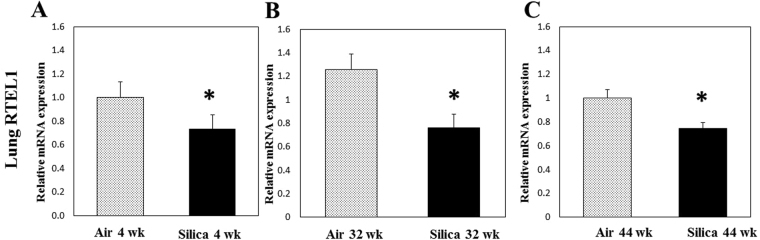
Description:Exposure to silica can cause lung fibrosis and cancer. Identification of molecular targets is important for the intervention and/or prevention of silica-induced lung diseases. Telomeres consist of tandem repeats of DNA sequences at the end of chromosomes, preventing chromosomal fusion and degradation. Regulator of telomere length-1 (RTEL1) and telomerase reverse transcriptase (TERT), genes involved in telomere regulation and function, play important roles in maintaining telomere integrity and length. The goal of this study was to assess the effect of silica inhalation on telomere length and the regulation of RTEL1 and TERT. Lung tissues and blood samples were collected from rats at 4, 32, and 44 wk after exposure to 15 mg/m3 of silica × 6 h/d × 5 d. Controls were exposed to air. At all-time points, RTEL1 expression was significantly decreased in lung tissue of the silica-exposed animals compared to controls. Also, significant increases in telomere length and TERT were observed in the silica group at 4 and 32 wk. Telomere length, RTEL1 and TERT expression may serve as potential biomarkers related to silica exposure and may offer insight into the molecular mechanism of silica-induced lung disease and tumorigeneses.
-
Subjects:
-
Source:Sci Rep. 7.
-
Pubmed ID:29230030
-
Pubmed Central ID:PMC5725592
-
Document Type:
-
Volume:7
-
Collection(s):
-
Main Document Checksum:urn:sha256:df5748d0204576a083a2c1c2ffc551102c1bf981ceae360a9661edb42520adbc
-
Download URL:
-
File Type:
 [PDF
- 1.41 MB
]
[PDF
- 1.41 MB
]
Supporting Files


File Language:
English
ON THIS PAGE




CDC STACKS serves as an archival repository of CDC-published products including
scientific findings,
journal articles, guidelines, recommendations, or other public health information authored or
co-authored by CDC or funded partners.
As a repository, CDC STACKS retains documents in their original published format to ensure public access to scientific information.
As a repository, CDC STACKS retains documents in their original published format to ensure public access to scientific information.
You May Also Like
COLLECTION
CDC Public Access