



Expression pattern of oxidative stress and antioxidant defense-related genes in the aging Fischer 344/NHsd rat cochlea
Supporting Files

-
Feb 01 2012
-
Available in CDC Stacks on 2014-07-01T00:00:00Z
File Language:
English
Details
-
Alternative Title:Neurobiol Aging
-
Personal Author:
-
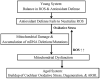
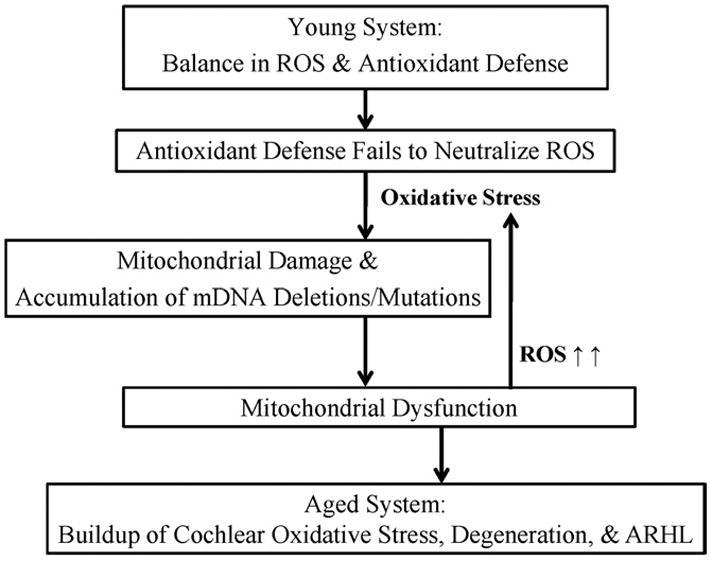
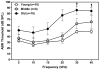
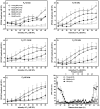
Description:The biological mechanisms that give rise to age-related hearing loss (ARHL) are still poorly understood. However, there is growing recognition that oxidative stress may be an important factor. To address this issue, we measured the changes in the expression of cochlear oxidative stress and antioxidant defense-related genes in young (2 months old), middle-aged (12 months old), and old (21-25 months old) Fischer 344/NHsd (F344/NHsd) rats and compared gene expression changes with ARHL. A quantitative real-time reverse transcription polymerase chain reaction array revealed a significant age-related downregulation of only 1 gene, stearoyl-coenzyme A desaturase 1, and upregulation of 12 genes: 24-dehydrocholesterol reductase; aminoadipate-semialdehyde synthase; cytoglobin; dual oxidase 2; glutathione peroxidase 3; glutathione peroxidase 6; glutathione S-transferase, kappa 1; glutathione reductase; nicotinamide adenine dinucleotide phosphate (NAD(P)H) dehydrogenase, quinone 1; solute carrier Family 38, Member 5; thioredoxin interacting protein; and vimentin. Statistical analyses revealed significant correlations between gene expression and auditory function in 8 genes. Our results identified specific subsets of oxidative stress genes that appear to play an important role in ARHL in the Fischer 344/NHsd rat.
-
Subjects:
-
Source:Neurobiol Aging. 33(8):1842.e1-1842.14.
-
Pubmed ID:22300951
-
Pubmed Central ID:PMC4077169
-
Document Type:
-
Funding:
-
Volume:33
-
Issue:8
-
Download URL:
-
File Type:
 [PDF - 477.67 KB]
 -
Collection(s):
-
Main Document Checksum:urn:sha256:af96f35726f27f55e9503d8b3ec814931c3a608379d2cd5308b1a21e60027d91
Supporting Files


File Language:
English
 Was this page helpful?
 Found an issue?



CDC STACKS serves as an archival repository of CDC-published products including
scientific findings, journal articles, guidelines, recommendations, or other public health information authored or
co-authored by CDC or funded partners.
As a repository, CDC STACKS retains documents in their original published format to ensure public access to scientific information.
As a repository, CDC STACKS retains documents in their original published format to ensure public access to scientific information.
You May Also Like
COLLECTION
CDC Public Access