



Genetic host specificity of hepatitis E virus
Supporting Files

-
6 2014 ; 6-2014
-
Available in CDC Stacks on 2017-12-28T00:00:00Z
File Language:
English
Details
-
Alternative Title:Infect Genet Evol
-
Personal Author:
-
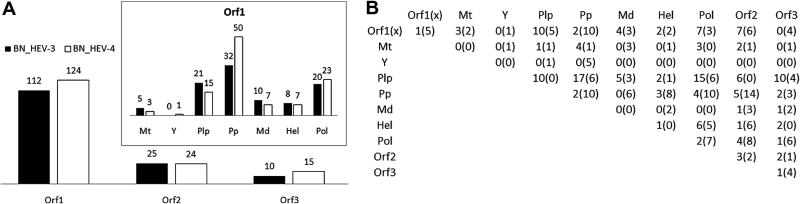
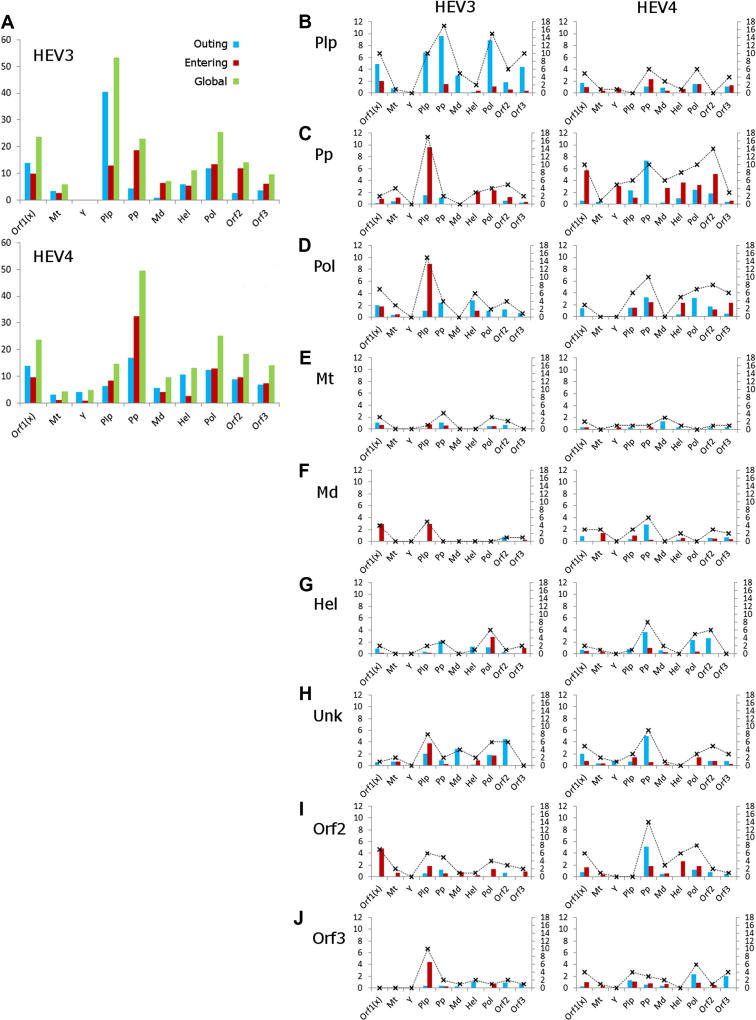
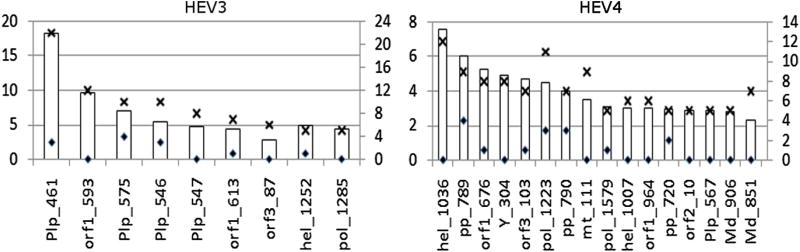
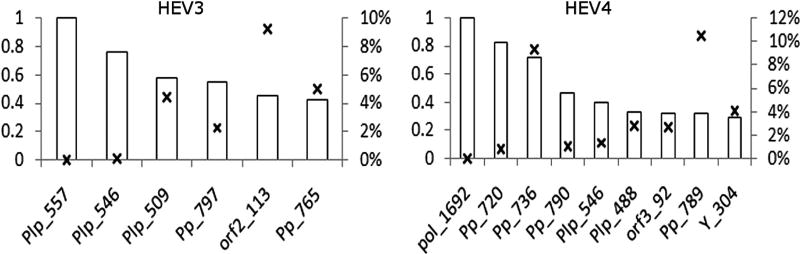
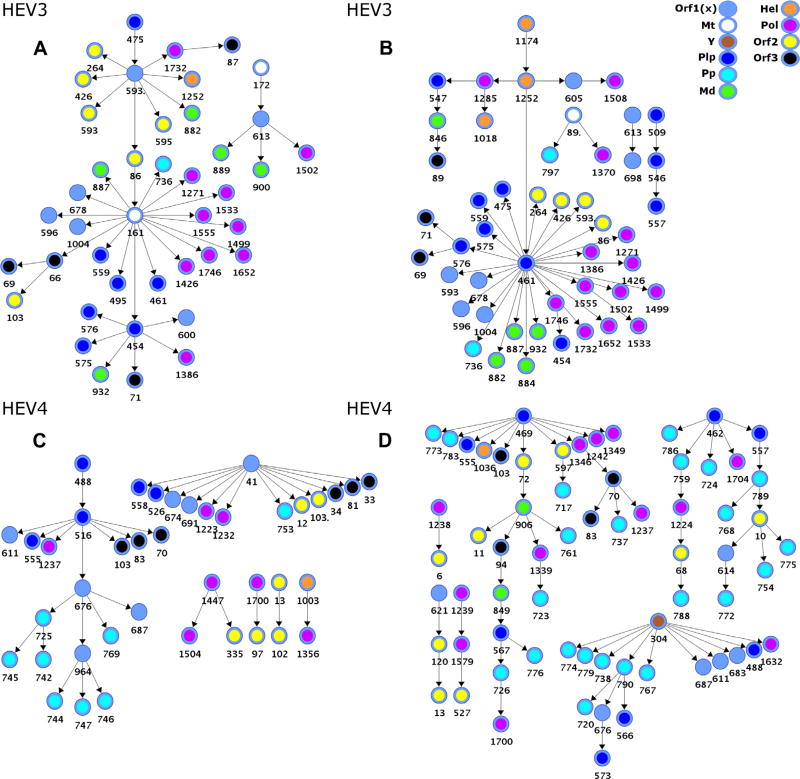
Description:Hepatitis E virus (HEV) causes epidemic and sporadic cases of hepatitis worldwide. HEV genotypes 3 (HEV3) and 4 (HEV4) infect humans and animals, with swine being the primary reservoir. The relevance of HEV genetic diversity to host adaptation is poorly understood. We employed a Bayesian network (BN) analysis of HEV3 and HEV4 to detect epistatic connectivity among protein sites and its association with the host specificity in each genotype. The data imply coevolution among ∼70% of polymorphic sites from all HEV proteins and association of numerous coevolving sites with adaptation to swine or humans. BN models for individual proteins and domains of the nonstructural polyprotein detected the host origin of HEV strains with accuracy of 74-93% and 63-87%, respectively. These findings, taken together with lack of phylogenetic association to host, suggest that the HEV host specificity is a heritable and convergent phenotypic trait achievable through variety of genetic pathways (abundance), and explain a broad host range for HEV3 and HEV4.
-
Subjects:
-
Keywords:
-
Source:Infect Genet Evol. 24:127-139
-
Pubmed ID:24667049
-
Pubmed Central ID:PMC5745802
-
Document Type:
-
Funding:
-
Volume:24
-
Download URL:
-
File Type:
 [PDF - 2.21 MB]
 -
Collection(s):
-
Main Document Checksum:urn:sha256:eb79c76fd7f31800734704fdeb78fd14277f9a3fd4d3179828ba26a8b02fbf6d
Supporting Files


File Language:
English
 Was this page helpful?
 Found an issue?




CDC STACKS serves as an archival repository of CDC-published products including
scientific findings, journal articles, guidelines, recommendations, or other public health information authored or
co-authored by CDC or funded partners.
As a repository, CDC STACKS retains documents in their original published format to ensure public access to scientific information.
As a repository, CDC STACKS retains documents in their original published format to ensure public access to scientific information.
You May Also Like
COLLECTION
CDC Public Access